Bronco Webinar 800x100 1

A Brief History of Forte Design Systems

A Brief History of Forte Design Systems
by Daniel Nenni on 03-21-2013 at 8:10 pm

When Semiwiki readers see the name Forte Design Systems, they may think of the live bagpipers’ performance that closes the yearly Design Automation Conference. Forte has been the sponsor of this moving end to DAC since 2001. Step with me behind the plaid kilts for a good look at this remarkable company headquartered in San Jose, Calif., enabling remarkable designs.

Forte finished 2012 with 22% growth, and boasted that 2012 was the seventh consecutive year of revenue growth. Better yet, it was named the #1 provider of electronic system-level (ESL) synthesis software by Gary Smith EDA. Forte prefers high-level synthesis (HLS) –– a way for hardware engineers to work at a higher level of design abstraction –– to the ESL acronym and, in fact, is credited with defining the market. Sean Dart, CEO, and Brett Cline, vice president of marketing and sales, cite a strong commitment to high-value software and top-notch support for moving into the top slot.

Forte has been around since 2001, not to sponsor the bagpipers but after CynApps and Chronology merged. The name was chosen appropriately enough because it’s a noun that means “good at” or “strength.” Long-time industry observers will remember that Dr. John Sanguinetti started CynApps in 1998 after Chronologic and VCS, the popular Verilog Compiled Simulator, were acquired by Viewlogic in 1994. (Synopsys acquired Viewlogic in 1997 and continues to sell VCS today.)

Dr. Sanguinetti is Forte’s CTO and knew back in the early 1990s that logic verification and logic synthesis were two big EDA problem areas. He took on logic verification at Chronologic, then turned his attention to logic synthesis, knowing that the change in abstraction levels from gates to register transfer level (RTL) would improve design and verification efficiency. That would be enabled by logic synthesis. In 1998, he and two other engineers founded CynApps to create a higher level design environment, along with a synthesis product that would produce RTL code from higher level designs.

Then came the 2001 merger of CynApps and Chronology with synthesis and verification offerings. Chronology was a verification provider, but not as well known or successful as Verisity (now part of Cadence). With a visible presence and good reputation in the synthesis space, CynApps could attract funding. The decision was made to continue to focus on high-level synthesis and use the verification tools to build a high-level synthesis environment with verification at its core. The move to a high-level synthesis business model was soon validated –– Fujitsu, Ricoh and Sony were among the first Forte customers that year.

Asia’s consumer electronics companies were the first to adopt a high-level synthesis methodology ahead of other regions. Japan’s consumer device designs were a natural fit for this kind of software because HLS can implement image-manipulation algorithms into hardware.

Cynthesizer, Forte’s SystemC high-level synthesis, is selected by development teams who want to reduce time-to-market pressures by designing at a higher level of abstraction and require substantial improvements in circuit size and power. In many cases, teams create designs that would be impossible using RTL. United States, Korea and Japan, in particular, are design centers where Cynthesizer is in use for custom processors, and wired and wireless communication devices.

In 2009, Forte acquired Arithmatica to complement its product offerings with a portfolio of intellectual property (IP) and datapath synthesis technology that has been integrated directly into Cynthesizer.

Moving design to a higher level of abstraction has been a tough challenge that Forte solved and its production-quality tools are going mainstream to prove it. Of course, Forte will be at the 50th DAC in Austin, Texas, and is planning already for the return of the bagpipers this year.

Mixed-Signal SoC verification has integrated solution

Mixed-Signal SoC verification has integrated solution
by Pawan Fangaria on 03-21-2013 at 8:10 pm

These days when we talk of SoC verification, what comes to our mind immediately is VirtualPlatform. Of course with the increasing size, complexity and different styles of designs, it is very much a need.

However, that is supported by actual verification engines and methodologies which are varying considerable with digital, analog and mixed-signal portions of the design. Gone are the days when we used to embed pre-verified analog block into digital design with identified signals interfacing between them. Conversely, digital blocks were imported into analog centric designs. Today, we have large analog, digital and mixed signal design content, all sitting together in an integrated design and interacting with multiple signals continuously. And almost in all designs, mixed-signal content is inevitable.

Typically, analog components are simulated by Spice and its variants and digital simulation is simplified by discrete data models simulated through Verilog or VHDL simulators. As design complexity has increased along with the need of analog and digital components staying together, various methodologies, languages and tools have emerged for modelling and verifying analog, digital and mixed-signal designs with trade-off between accuracy and performance/capacity.

Verilog-A, Verilog-AMS, VHDL_AMS, SystemVerilog and now SystemC (extended to
SystemC AMS for system level mixed signal modelling) provide tremendous capabilities to model analog and digital content together which can be efficiently simulated by a standard tool having single kernel in optimum time and desired level of accuracy. Cadence provides a suite of tools and techniques applicable in various contexts to solve this challenging problem of verifying complete SoC mixed-signal design. It provides a seamless environment with unified GUI which integrates its simulation engines, design environment and verification methodologies together to provide a unique experience to the user. I came across a white paper of Cadence which describes the verification solution with nice level of details. The white paper can be found at –
http://www.cadence.com/rl/Resources/white_papers/ms_soc_verification_wp.pdf

As an example Virtuoso AMS Designerlinks Virtuoso custom design platform with Incisive verification platform. It supports simulators like Spectre and Spectre RF Circuit Simulators, UltraSim Full Chip simulator, Accelerated Parallel Simulator and Incisive Enterprise Simulator; all integrated together in common GUI and used as per need.

For interface and translation between discrete levels of digital signals and continuous voltage levels of analog signals is done automatically through special connection modules. Common Power Format (CPF) is used with novel techniques to distinguish between a functional error and a false error due to power shut down in a particular digital or analog portion of the circuit (which usually is a case with low power design to save power that advocates to keep power ON only for active circuitry at a time). Again provisions for levels of abstractions from behavioural up to transistor level have been provided.

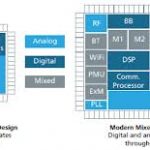
Just a glimpse of how the digital centric and analog centric methodologies are being unified has been represented as –

To sum it up, while Spice simulators help in verifying individual analog IP blocks, as we move up towards full chip verification of mixed signal SoCs, analog behavioural models embedded with digital languages and the techniques and tools associated with them provide up to 100x speed up in the complete SoC verification.


Data Management for Designers

Data Management for Designers
by Paul McLellan on 03-21-2013 at 8:05 pm

Back when I was a programmer at VLSI Technology in the mid-1980s, I was responsible for all the data management in the VLSI Design Tools. By responsible for, I mean that I designed the whole system and wrote all the code. Prior to the 5th release of our product, there was no data management, designers simply used filenames and it was up to them to keep track of what they were doing. Of course, as software developers, we had a source-code control system. We actually rolled our own before eventually we switched to ClearCase years later, then almost the standards before the open source alternatives like subversion and git took over.

The challenge with data management for designers is three fold. Firstly, designers are not software engineers and so complex configuration schemes the software people are used to are going to either baffle them or not get used. By complex configuration I’m talking about things like forks and merges. Secondly, designers often live in a graphical environment on their desktop and are not just typing commands into a command line interface. This means that any data management needs to be integrated into the tools so that it doesn’t require the designer to go somewhere different. The third thing is that the files involved are either binary or, even if text, are meaningless to the designer and only mean anything to the software engineers creating the tools. For example, looking for changes in a netlist the way it is represented in a file using a text diff type tool is not useful.

I implemented the standard checkout/checkin procedure, whereby each designer had their own sandbox (I called it a working library) and projects had a controlled library, and then there would usually be several read-only libraries that held things like standard cell data and could not simply be changed and usually formed part of the release of the process node from the foundry (or, in the case of VLSI, our own library development organization). These were integrated into the tools cleanly. If a designer in a layout editor changed a cell, it would automatically be checked out.

It is interesting how many of these basic concepts live on in ClioSoft’s data management. The implementation is more modern, and it has to be integrated into several different layout/schematic environments, not just one. Almost all designs teams are geographically distributed these days so that needs to be cleanly supported. Designs have grown so large, too, that optimizing the use of disk space is important, rather than duplicating every file many times.

But it is still the case that design is very different from software development:

  • Users are working at higher abstraction levels such as libraries and cells and are not necessarily aware of the directories and files that store the data.
  • Design tools create files that contain design data as well as temporary run files that need not be managed. End users do not know which files should be managed and which should not.
  • A design flow has several complex tools sometimes from different vendors. Each tool organizes data files in different ways.
  • A design object such as a schematic or layout is usually made up of multiple files created by the design tool with software-generated names.
  • The size of the data is much larger. There are many more files and several of them are large binary files.
  • Designers often think in terms of design hierarchy that is not apparent when looking at the file system.

The bottom line is that it is not appropriate to use a software-oriented configuration management system for managing design data. It is not integrated with the design tools, it requires designers to know far more than they should about how their data is actually represented on disk and it forces them to learn unfamiliar concepts.

ClioSoft’s data management addresses these concerns. It has a simple model, with the complexity hidden by the ClioSoft software. It is cleanly integrated into all the most popular layout environments (for example, the above picture shows the integration with Cadence’s Virtuoso environment, but it is also integrated with Synopsys Custom Designer and Mentor’s Pyxis). And it understands design representations so that it can show changes in the same graphical environment.

Also Read

Modern Data Management

Cadence ♥ ClioSoft!

A Brief History of ClioSoft


Simon Segars to be New CEO of ARM

Simon Segars to be New CEO of ARM
by Paul McLellan on 03-20-2013 at 4:15 pm

ARM announced today that Warren East, the CEO, would be retiring at the end of June. The new CEO will be Simon Segars, currently President of ARM and the de facto #2 guy. Currently Simon is based in the US and I don’t know if he plans to return to Britain or not. But he will live what will inevitably be a lifestyle that involves crossing the Atlantic a lot, no matter which side he picks.

It is interesting that ARM will have a new CEO this year since their big rival in the microprocessor business, Intel, will also have one. Intel announced that Otellini will be stepping down in May, but they have a search going on for the successor.

I installed the design tools used to design the first ARM processor, inside Acorn Computer. I was there when ARM was spun out of Acorn since VLSI Technology provided all the design tools ARM would need for an equity stake. I know many people who do or have worked there. At VLSI for a year or two I was responsible for our relationship with ARM and for renegotiating our licenses. So I inevitably follow ARM a bit more closely than any other company. It is clear that Simon is a “safe pair of hands”. ARM is in great shape right now so this is not a CEO change where a major course correction is expected (at least not by me). During Warren’s tenure as CEO, ARM’s partners shipped 40 billion ARM microprocessors. But ARM ships around 8B per year now, so that number will not take long to be exceeded on Simon’s watch.


View from the top: Brad Quinton

View from the top: Brad Quinton
by Daniel Payne on 03-20-2013 at 3:53 pm

Many engineers dream about starting their own company some day, and today I talked with an engineer that has gone beyond the dreaming stage to actually start an EDA company and then get that company acquired. His name is Brad Quinton and the start-up was called Veridae Systems, now part of Tektronix.


Brad Quinton
Continue reading “View from the top: Brad Quinton”


Interconnect Optimization of an SoC Architecture

Interconnect Optimization of an SoC Architecture
by Daniel Payne on 03-20-2013 at 11:41 am

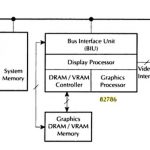
My last chip design at Intel was a GPU called the 82786and the architects of the chip wrote a virtual prototype using the MAINSAIL language. By using a virtual prototype they were able to:


Wally Rhines, Victor Peng and Chenming Hu to Speak at Mentor User2User Conference

Wally Rhines, Victor Peng and Chenming Hu to Speak at Mentor User2User Conference
by glforte on 03-20-2013 at 10:29 am

This year’s Mentor Graphics user group meeting, User2User, will be held at the DoubleTree by Hilton in San Jose, California on April 25, 2013. The featured keynote presenters include…

  • Dr. Walden C. Rhines, CEO and Chairman of Mentor Graphics, talking about “Organizing by Design”
  • Victor Peng, Senior VP, Xilinx presenting on “The Era of Heterogeneous Architectures and Integration Technologies”
  • Dr. Chenming Hu, creator of the 3D transistor, presenting “FinFET is a Beginning,” showing how FinFET overcomes the impending show stopper limits that device physics imposes

The event will share best practices through customer success stories and technical presentations. Sessions will discuss Calibre, Custom IC/AMS, Emulation, Functional Verification, PBC Flow, Place and Route and Silicon Test. Mentor Graphics customers can register at http://user2user.mentor.com/san-jose-registration-2013.html

See conference agenda:


Speech Recognition : Can it be the next game changer?

Speech Recognition : Can it be the next game changer?
by gauravjalan on 03-19-2013 at 8:10 pm

The cell phone phenomena has catalyzed the technology growth and coaxed the hardware and software to work more closely. The Apple effect further directed this technology growth to focus on enhanced user experience. The emphasis has been primarily on the display and touch aspects of the designs with limited adoption on other areas. The handsets have moved from buttons to touch display and the next wave under discussion is gesture recognition. Interestingly, direct human to human interaction is mainly through speech while human to machine interface still relies more on passive modes. As a first step to enable this, there is a need for the hardware to respond to the voice commands (pre-defined to start with). A ‘Speech Recognition’ hardware unit is required to interpret the human speech and translate it into text or commands. The applications include call routing for customer service calls, controlling consumer appliances or in-car systems, preparing transcripts and content navigation on cell phone.

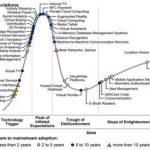
Gartner’s annual Hype Cycle Special Report on technologies and trends from cross industry perspective in 2011 revealed that it will take 2 to 5 years for mainstream adoption on this technology.

The main challenges preventing it from moving ahead include –

Developing a programmable user interface – There are a variety of languages across the globe and even for a single language the pronunciation varies widely. The solution should be able to overcome this hurdle with an easy to use interface.

Power – Speech Recognition is a computationally intensive technology requiring several million operations per second. Power dissipation is the key and limits the usage of SW based solutions especially in battery powered devices where continuous use of speech recognition or “Always Listening” as it is popularly known can drain the battery in no time.

While multiple groups might be working towards a solution, one from India claims to have a sophisticated solution available with them. 3iLogic-Designs, founded by seasoned professionals in 2011 recently uploaded multiple videos of their prototype solution. The product name is SimSim and is supposed to be the world’s first ultra compact language & speaker independent, zero connectivity, synthesizable speech recognition core with configurable vocabulary and grammar support. A high level block diagram of the SimSim architecture is given below –

The salient features include –

  • Highly accurate speaker independent Speech Recognition
  • Scalable vocabulary
  • Java Speech Grammar (JSGF) support
  • Based on proven HMM technology
  • Language independent architecture
  • 16Khz/8Khz audio support
  • VAD (Voice activity detection) support with auto calibration for ambient noise
  • Processor-independent, stand-alone operation
  • Independent of external memory type (DDR2/3, SDRAM, SRAM etc.)
  • Very compact solution in terms of memory requirements
  • Implemented with 135K Gates

The list above makes SimSim an ideal solution for localized Vocal-UI solutions for Cell Phones, Digital Cameras, PNDs, MFPs, Watches, Remote Controls, Microwaves, Washing machines etc.

Such a technology enhances user experience for regions with tech savvy population and becomes a prime selling point for the next generation of devices. Along with that it can also drive technology adoption in developing geographies. Countries like India where a majority of consumer market is still untapped primarily because of diversity in the languages spoken and high ramp up learning time on technology, this solution can be a game changer!

The magic of “SimSim” from Arabian Nights is awaiting to open the doors of fortunes once again 🙂


Tablets & smart phones driving electronics growth

Tablets & smart phones driving electronics growth
by Bill Jewell on 03-19-2013 at 8:10 pm

Worldwide electronics bounced back strongly in 2010 after the recession of 2008-2009. Every region experienced solid growth, ranging from high single-digit growth in the U.S. to over 20% in the key Asian countries. However in the last two years electronics has slowed down significantly. Several factors contributed to this weakness: a sluggish recovery in the U.S., the European debt crisis, the Japan earthquake and tsunami, and slowing growth in China. Recent signs point to an improvement in electronics. The chart below shows government data on three-month-average electronics production versus a year ago for China, the U.S. and Japan. Total industrial production is shown for Europe and South Korea since electronics production statistics are not available. The black line shows three-month-average change versus a year ago for worldwide semiconductors, from WSTS.

China remains the key driver of electronics. December 2012 growth picked up to 12.7% after falling to 10% in August through October. South Korea’s industrial production growth was 3% in January 2013 after five months below 1%. U.S. electronics remains lethargic with January 2013 down 1.3%, the sixth consecutive month of year-to-year declines. Europe industrial production (for the 27 countries in the European Union) has shown year-to-year declines for 12 straight months. Japan electronics production recovered to positive year-to-year growth in April 2012, but has since fallen to a 16% decline in December 2012.

The recent moderate growth in overall electronics is reflected by three-month-average world semiconductor shipments from WSTS. December 2012 and January 2013 each showed 3.8% growth versus a year ago. Previously the WSTS data showed 16 months of year-to-year declines from July 2011 to October 2012.

What are the key drivers of this pickup in electronics? The PC has been a major factor in the electronics and semiconductors industries for 30 years. In the last two years PC units have been stagnant, based on reports from International Data Corporation (IDC). Over the same time period growth of media tablets has been explosive. Since the current wave of tablets began with Apple’s iPad in 2Q 2010 shipments have grown to 52.5 million units in 4Q 2012, according to IDC (as shown in the chart below). Tablet units in 4Q 2012 were equal to 58% of PC units. Tablets are obviously displacing some PC sales as well as creating a new market. Adding together the unit shipments of PCs and tablets reveals the healthy growth of the combined markets. The blue line shows the change versus a year ago for PCs plus tablets. The combined growth rate was over 20% in the second half of 2011, moderating to low double digits in the first half of 2012. Growth dropped to 1% in 3Q 2012 due to slow Apple iPad shipments as consumers waited for new models. Growth bounced back to 13% in 4Q 2012.

Mobile phones are another major driver of electronics and semiconductors. Overall mobile phone unit growth was weak in 2012, up only 1% from 2011 according to IDC. All the growth has been driven by smart phones, which grew 41% in 2012 as basic phones declined 15%. As shown in the chart below, smart phones accounted for 45% of total mobile phone units in 4Q 2012. Smart phones should account for the majority of mobile phone units in 2013. The high semiconductor content of smart phones compared to basic phones will drive higher semiconductor growth.

Continued growth in the electronics and semiconductor markets is dependent on improvement in the world economy. As shown in last month’s newsletter, the International Monetary Fund (IMF) expects improving economic growth in 2013 and 2014. (See “Semiconductors Down 2.7% in ’12, May Grow 7.5% in ’13” at http://www.semiconductorintelligence.com). Although PCs and total mobile phones are experiencing slower growth, media tablets and smart phones will be key elements in the electronics and semiconductor market recoveries.


A Brief History of Chips and Technologies

A Brief History of Chips and Technologies
by Paul McLellan on 03-19-2013 at 4:26 pm

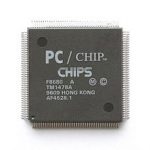
I talked to Dado Banatao today. He is managing partner at Tallwood Venture Capital today but back in the mid-1980s he was the founder of Chips and Technologies, the first fabless semiconductor company. The rumors that they had a hard time raising money because VCs couldn’t comprehend a fabless semiconductor company are true. Even his friends told him it “wasn’t a real semiconductor company.” In fact the first $1M was raised from a real-estate investor! Only once they were further along were they able to raise another $3M from various Japanese investors including Mitsui.

Dado decided to use gate-arrays to get to market fast since the PC market was developing fast and the opportunity to build chipsets to serve it was there and then. They went with Toshiba, who they reckoned had the best gate-array technology at the time. But the design was too large for even the biggest gate-array so they partitioned it into a logic CMOS gate-array and all the drivers on a separate bipolar chip that Hitachi fabbed. Hitachi had a completely empty fab due to the semiconductor downturn at the time. C&T filled it completely. Since Hitachi were desperate for something in that fab they got unbelievably low prices.

The business took off fast. By the time they had their IPO, they still had $1M of their original $4M investment in the bank. The fact that Mitsui was an investor turned out to be fortuitous, since it meant that they could just order from Toshiba and Hitachi, without having to pay up-front with working capital that they didn’t have. Mitsui financed $50M in inventory.

There was no really competitive product for 2 years until VLSI had its first chipset. The bipolar chip turned out to be an edge since at that time ESD protection on CMOS was in its infancy and was still at least a potential problem, which meant C&T could create FUD about reliability against VLSI’s all-CMOS solution. 3 years later C&T had a solution that was all-CMOS too, but by then ESD protection was up to 20KV and those issues had gone away.

C&T got into Dell very early and they rode that rocket together. But in the meantime Compaq was king but they didn’t believe in using chipsets at that point. But then Taiwan, Korea and Japan were suddenly all making PCs and Compaq couldn’t compete so they had to switch too. Interestingly, at that point in the industry history, C&T were making more on each PC that Intel was. C&T was eventually acquired by Intel in 1997.

Dado went on to found S3 (graphics processors) again using gate-arrays initially to get to market fast once they decided what the market needed. They looked around for who had the biggest arrays at the time and found one at Seiko-Epson that they decided to use. In order to get data moved around fast enough they developed their own interconnect that they called Advanced Chip Interconnect, which, when Intel basically adopted it became PCI and PCIe.