




Once upon a time there was a struggle for verification completion of semiconductor designs at gate level. Today, beyond imagination, there is a struggle to verify a design with billions of gates at the RTL level which may never complete. The designs are large SoCs with complex architectures and several constraints of area, performance,… Read More

Tag: systemverilog
A Brief History of Functional Verification
Usually these brief history pieces are totally written by the SemiWiki blogger whose name is at the top. Often me since that was how I prototyped book chapters (buy). Well, OK, I did actually write this but it is completely cribbed from a presentation earlier this week by Wally Rhines who gave a sort of keynote at the announcement of… Read More
AMS Verification and Regression Testing of SoC Designs
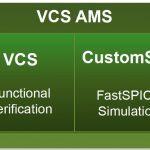
Digital verification engineers on SoC designs have adopted many techniques to help ensure first silicon success: using compiled simulators, constrained random test, simulation farms, SystemVerilog methodology, and self-checking testbenches. AMS verification has tended to be ad-hoc or sharply divided into separate analog… Read More
Mark your Date for Semiconductor Design Vision

A very popular acronym is ‘WYSIWYG’ – What You See Is What You Get! This is very true and is important to visualize things to make it better in various aspects such as aesthetics, compactness, organization, structure, understandable for correction and so on; the most important, in case of semiconductor design, is being able to identify… Read More
Effective Verification Coverage through UVM & MDV

In the current semiconductor design landscape, the design size and complexity of SoCs has grown to large extent with stable tools and technologies that can take care of integrating several IPs together. With that mammoth growth in designs, verification flows are evolving continuously to tackle the verification challenges … Read More
SoC Verification Closure Pushes New Paradigms
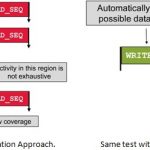
In the current decade of SoCs, semiconductor design size and complexity has grown by unprecedented scale in terms of gate density, number of IPs, memory blocks, analog and digital content and so on; and yet expected to increase further by many folds. Given that level of design, it’s imperative that SoC verification challenge has… Read More
How Do You Verify a NoC?
Networks-on-chip (NoCs) are very configurable, arguably the most configurable piece of IP that you can put on a chip. The only thing that comes close are highly configurable extensible VLIW processors such as those from Tensilica (Cadence), ARC (Synopsys) and CEVA but Sonics would argue their NoCs are even more flexible. But … Read More
Cadence & ARM Optimize Complex SoC Performance
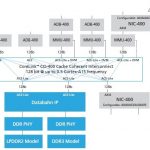
Now a day, a SoC can be highly complex, having 100s of IPs performing various functionalities along with multi-core CPUs on it. Managing power, performance and area of the overall semiconductor design in the SoC becomes an extremely challenging task. Even if the IPs and various design blocks are highly optimized within themselves,… Read More
Because X doesn’t always mark the exact spot

Digital hardware has a habit of deciding – based on the bias and behavior of transistors – to drive outputs to a 0, or a 1, or if commanded a high-impedance Z state. SystemVerilog recognizes a fourth state: X, the “unknown” state a simulator has trouble inferring.
Simulators have a choice. Under X-optimism, they can convert the unknown… Read More
Assertions verifying blocks to systems at Broadcom

Speaking from experience, it is very difficult to get an OEM customer to talk about how they actually use standards and vendor products. A new white paper co-authored by Broadcom lends insight into how a variety of technologies combine in a flow from IP block simulation verification with assertions to complete SoC emulation with… Read More