You are currently viewing SemiWiki as a guest which gives you limited access to the site. To view blog comments and experience other SemiWiki features you must be a registered member. Registration is fast, simple, and absolutely free so please,
join our community today!
Preamble
Hardware-assisted verification (HAV) platforms, including hardware emulators and FPGA-based prototyping systems, are the two dominant methodologies for validating long workloads on complex System-on-Chip (SoC) designs before tape-out. HAV sits within a broader continuum of verification engines: simulation… Read More
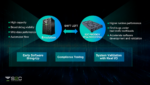
For modern SoC teams, “shift left” no longer means finding a few more RTL bugs before tape-out. It means moving meaningful system validation earlier—far enough left that firmware, operating systems, drivers, applications, and external interfaces can be exercised before first silicon arrives. This change is essential as software… Read More
For the past decade, the semiconductor industry has been moving in one direction: shift-left, specifically, shifting more validation into the pre-silicon phase. The idea was straightforward: if software ultimately determines how a system behaves, then software should become a primary vehicle for verification.
The industry… Read More
As semiconductor designs continue to grow in complexity, FPGA prototyping has become an essential component of modern pre-silicon validation strategies. While FPGA capacity and gate-count equivalence often dominate discussions around prototyping platforms, the true value of an FPGA prototype lies elsewhere: its ability… Read More
FPGA prototyping and hardware emulation originated from two independent demands that emerged at roughly the same time, namely, the necessity to implement digital designs in reconfigurable hardware. This was conceivable given the newly introduced field programmable gate array (FPGA) device.
Yet from the very beginning they… Read More
The 40-Year Evolution of Hardware-Assisted Verification — From In-Circuit Emulation to AI-Era Full-Stack Validation
For more than a decade, Hardware-Assisted Verification platforms have been the centerpiece of the verification toolbox. Today, no serious semiconductor program reaches tapeout without emulation or FPGA-prototyping… Read More
At DVCon U.S. 2026, Accellera Systems Initiative reinforces its central role in shaping the future of electronic design and verification through a focused program of workshops, tutorials, and community engagement. As system complexity continues to rise across AI, automotive, HPC, and communications markets, the need for… Read More
System-on-Chip designs continue to grow in scale and interface diversity, placing greater demands on prototype capacity, interconnect planning, and bring-up efficiency. These challenges arise not only in large multi-FPGA programs but also in smaller designs implemented on a single device or a small FPGA cluster. In all cases,… Read More
Modern chip design verification often encounters challenges when connecting peripherals, primarily due to drastic differences in operating speed or hardware limitations. Designs running on hardware emulators or FPGA prototyping platforms typically operate at clock frequencies of tens of megahertz, and in some cases even… Read More
As AI and 5G technologies burgeon, the rise of interconnected devices is reshaping everyday life and driving innovation across industries. This rapid evolution accelerates the transformation of the chip industry, placing higher demands on SoC design. Moore’s Law indicates that while chip sizes shrink, the number of… Read More