You are currently viewing SemiWiki as a guest which gives you limited access to the site. To view blog comments and experience other SemiWiki features you must be a registered member. Registration is fast, simple, and absolutely free so please,
join our community today!
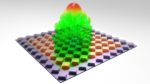
The electromagnetism problems upon which we spent many hours laboring away on homework in college has a mathematical formulation originally developed by Maxwell, Lorentz, Gauss, Faraday and others. In their full forms, these formulas are partial differential equations that come in many versions – both differential and integral.… Read More
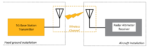
In our previous blog installments, we examined the ingredient for modeling the potential for interference between a 5G C-band base station and an aviation radar altimeter. Using candidate emissions models for the transmitter, wideband susceptibility models for a candidate radar altimeter receiver and antenna and propagation… Read More
In our previous blog installment, we introduced the components of RF interference modeling, and established models for wideband peak emissions of a 5G C-band transmitter and the wideband receiver susceptibility for a radar altimeter receiver. Here, we consider the third component: the wireless channel, which considers the… Read More
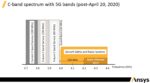
In our first blog installment, we outlined the interference concerns surrounding the coexistence of the new C-band 5G telecom service spanning the band from 3.7 to 3.98 GHz with aviation radar altimeters. Radar altimeters are essential components for safety during landing and takeoff, as they offer precise measurements from… Read More
As a pilot and semiconductor professional I was a bit shocked to get an Airworthiness Directive due to the 5G rollout. Airworthiness Directives are legally enforceable regulations issued by the FAA to correct an unsafe condition in a product:
“Airworthiness Directive (AD) 2021-23-12 was issued for all fleets in December… Read More
For 5G to really deliver on its promise of high bandwidth and good coverage, it needs to use an RF band known as C-Band (3.7 to 4.4 GHz). This band is ideal because its frequency is high enough to offer 100MHz wide channels and also low enough that signal attenuation, especially in urban areas, is minimal. In 2020 the FCC auctioned off… Read More
Exciting times for the semiconductor industry! Last week Intel announced a billion dollar fund to build a foundry ecosystem and today Intel announced they are acquiring foundry Tower Semiconductor for $5.6 billion dollars, WOW! Some people doubted Intel’s commitment to the foundry market this time. I think we can now put that… Read More
Multi-die design is not a new concept. It has been around for a long time and has evolved from 2D level integration on to 2.5D and then to full 3D level implementations. Multiple driving forces have led to this progression. Whether the forces are driven by market needs, product needs, manufacturing technology availability or EDA… Read More
Automatic adaptive meshing in Ansys HFSS is a critical component of its finite element method (FEM) simulation process. Guided by Maxwell’s Equations, it efficiently refines a mesh to deliver a reliable solution, guaranteed. Engineers around the world count on this technology when designing cutting-edge electronic products.… Read More
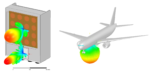
Ansys and Keysight wanted to see if they could answer the question, If we put virtual cellphones in different locations in a city, can we predict what kind of 5G signal we’re going to get in those locations? To find out, they created and tested a detailed virtual model of a city, including a variety of 5G antennae, receivers, and transmitters… Read More