You are currently viewing SemiWiki as a guest which gives you limited access to the site. To view blog comments and experience other SemiWiki features you must be a registered member. Registration is fast, simple, and absolutely free so please,
join our community today!
Search Results for "ISO 26262"
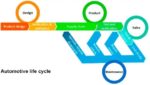
Over the last decade, automobiles have been morphing from stand-alone mechanical objects to highly connected systems with ever-increasing usage of electronics. Semiconductor supply disruptions (OEM factory shutdowns) caused by the recent situation with Covid and the political tensions and China have demonstrated the… Read More
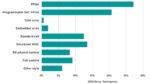
Earlier I blogged about IC and ASIC functional verification, so today it’s time to round that out with the state of FPGA functional verification. The Wilson Research Group has been compiling an FPGA report every two years since 2018, so this marks the third time they’ve focused on this design segment. At $5.8 billion… Read More
On big chip design projects the logic verification effort can be larger than the design effort, taking up to 70% of the project time based on data from the 2022 Wilson Research Group findings. Sadly, the first silicon success rate has gone downwards from 31 percent to just 24 percent in the past 8 years, causing another spin to correct… Read More
Automotive engineers are familiar with the ISO 26262 standard, as it defines a process for developing functional safety in electronic systems, where human safety is preserved as all of the electronic components are operating correctly and reliably. Automotive electronics have now grown to cover dozens of applications, and… Read More
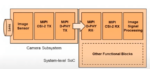
I’ve written on and off about sensors, ML inference of the output of those sensors and the application of both in modern cars. Neither ADAS nor autonomous/semi-autonomous driving would be possible without these. But until now I have never covered the transport between sensors and the compute that safely turns what they produce… Read More
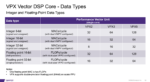
The tremendous growth in edge devices has focused the spotlight on Edge-AI processing for low latency, low power and low-DDR bandwidth compute needs. Many of these Edge-AI applications depend on effective and efficient processing of image and video streams which in turn relies on computer vision technology. In early September,… Read More
This is a topic worth coverage for those of us who aim to know more about safety. There are devils in the details on how ISO 26262 quantifies fault metrics, where I consider my understanding probably similar to other non-experts: light. All in all, a nice summary of the topic.
Permanent and transient faults 101
The authors kick off … Read More
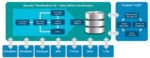
In a two-part series, Lauro Rizzatti examines why three kinds of hardware-assisted verification engines are a must have for today’s semiconductor designs. To do so, he interviewed Siemens EDA’s Vijay Chobisa and Juergen Jaeger to learn more about the Veloce hardware-assisted verification systems.
What follows is part one,… Read More
Whether we realize it or not, everyday applications we use depend on data gathered by sensors. We can bet that pretty much every application uses at least a couple of different types of sensors, if not more. That is because different types of sensors are better suited to collect data depending on the application, the environment … Read More
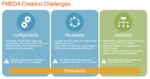
Scalability – A Looming Problem in Safety Analysis
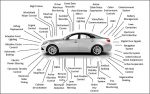
The boundless possibilities of automation in cars and other vehicles have captivated designers to the point that electronic content is now a stronger driver of differentiation than any other factor. It accounts for a substantial fraction of material cost in any of these vehicles.… Read More















Things From Intel 10K That Make You Go …. Hmmmm