You are currently viewing SemiWiki as a guest which gives you limited access to the site. To view blog comments and experience other SemiWiki features you must be a registered member. Registration is fast, simple, and absolutely free so please,
join our community today!
WP_Term Object
(
    [term_id] => 109
    [name] => Imagination Technologies
    [slug] => imagination-technologies
    [term_group] => 0
    [term_taxonomy_id] => 109
    [taxonomy] => category
    [description] =>
    [parent] => 178
    [count] => 39
    [filter] => raw
    [cat_ID] => 109
    [category_count] => 39
    [category_description] =>
    [cat_name] => Imagination Technologies
    [category_nicename] => imagination-technologies
    [category_parent] => 178
    [is_post] =>
)
Since Imagination’s acquisition of MIPS at the end of last year, the MIPS product line has been given a new lease of life. There are two things driving this. The first is simply that with its new home, the MIPS architecture has a solid future whereas before it was uncertain. Secondly, Imagination moved their own general purpose… Read More
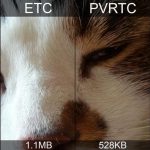
In the first post of this series, we named the popular methods for texture compression in OpenGL ES, particularly Imagination Technologies PVRTC on all Apple and many Android mobile devices. Now, let’s explore what texture compression involves, what PVRTC does, and how it differs from other approaches.… Read More
Increasingly, a GPU is misnamed as a “graphics” processing unit. They are really specialized architecture highly parallel compute engines. You can use these compute engines for graphics, of course, but people are inventive and find ways of using GPUs for other tasks that can take advantage of the highly parallel… Read More
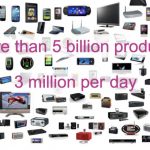
Imagination seems to be well known for a couple of things. Firstly, everyone knows that it is the graphics processor used in the iPhone and the iPad and lots of other phones. And they know that Imagination acquired MIPS at the start of this year.
But what people don’t seem to really appreciate is just what a huge portfolio of IP… Read More
How do you benchmark a processor? It seems like it should be easy, just run some code and see how fast it is. Traditionally processors were indeed benchmarked by raw performance like GMACS, GFLOPS, memory bandwidth and so on. But in today’s world where systems have become very complex and applications very compute intensive, the… Read More
The 80s called, and they want lazy programming back. Remember “Mr. Mom”? Michael Keaton is talking about rewiring the house, and Martin Mull asks if he’s going to use all 220V, and Keaton responds “Yeah, 220, 221, whatever it takes.” Not knowing what’s inside can make you look silly.
Such is the case with OpenGL ES. Taking a look at … Read More
Scott Fitzgerald is supposed to have said “the rich are not like other people” to Ernest Hemingway (he didn’t). In the same way, processors are not like other blocks, and not because they have more gates (they don’t). However, special approaches to optimizing processors are important because the clock… Read More
You are probably aware that Imagination Technologies, perhaps most well known for creating the GPU that is in the iPhone and iPad, acquired MIPS, which was originally a spinout from Silicon Graphics and licenses a line of general purpose microprocessors.
MIPS considers that they have a purer implementation of the RISC philosophy… Read More
Once upon a time, ASIC designers involved in Processor design, like I was, for the first time in 1987 for Thomson CSF and again in 1994 for Texas Instruments, at that time supporting height (8) ASIC designed by another French company, the Advanced Computer Research Institute (ACRI), had to re-invent the wheel almost every day. When… Read More
The last session of the day for Linley Mobile was about processors to go into smartphones. One surprise was that there is a core that nobody seems to have heard of since it is only really used in Taiwan up until now, and it is used in several Mediatek chips.
The most “glamorous” processor in a smartphone is the one in the application… Read More