You are currently viewing SemiWiki as a guest which gives you limited access to the site. To view blog comments and experience other SemiWiki features you must be a registered member. Registration is fast, simple, and absolutely free so please,
join our community today!
WP_Term Object
(
    [term_id] => 157
    [name] => EDA
    [slug] => eda
    [term_group] => 0
    [term_taxonomy_id] => 157
    [taxonomy] => category
    [description] => Electronic Design Automation
    [parent] => 0
    [count] => 4623
    [filter] => raw
    [cat_ID] => 157
    [category_count] => 4623
    [category_description] => Electronic Design Automation
    [cat_name] => EDA
    [category_nicename] => eda
    [category_parent] => 0
    [is_post] =>
)
Aftkhar Aslam is the Co-Founder and Chief Executive Officer of yieldWerx and a semiconductor industry veteran with more than 30 years of experience spanning manufacturing, test engineering, yield management, IP strategy, and enterprise digital transformation.
Under his leadership, yieldWerx has become a trusted data and… Read More
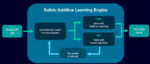
Custom IC design has demanding technical requirements to produce accurate simulation results for timing and power analysis in the shortest run times. EDA vendors have been rushing to use AI and ML technology to meet these analysis requirements. I attended a webinar from Siemens on accelerating iterative design cycles with Solido… Read More
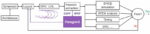
IC layout parasitics dominate the performance of custom digital, analog and mixed-signal designs, so the challenge becomes how to identify the root causes and to quantify the effects of parasitics during early design stages. The old method of iterating between layout, extraction, SPICE simulation, followed by manual debug… Read More
As analog and mixed-signal designs become increasingly complex, parasitic effects dominate both design time and cost, consuming 30–50% of engineers’ effort in debugging and reanalyzing circuits. Addressing these multiphysics effects requires early verification strategies and reliable simulation solutions. Modern … Read More
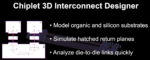
High-speed digital (HSD) design is one of the more exciting areas in EDA right now, with design practices, tools, and workflows evolving to keep pace with increasing design complexity. With the annual Chiplet Summit and DesignCon festivities right around the corner, we sat down with Keysight’s Hee-Soo Lee, HSD Segment Lead, … Read More
I wrote last year about a company called Bronco, offering an agentic approach to one of the hottest areas in verification – root-cause debug. I find Bronco especially interesting because their approach to agentic is different than most. Still based on LLMs of course but emphasizing playbooks of DV wisdom for knowledge capture … Read More
TSMC continues to reinforce its leadership in advanced semiconductor manufacturing through its deepening collaboration with Cadence Design Systems. The expanded partnership focuses on enabling next-generation artificial intelligence and high-performance computing innovations by aligning advanced electronic design… Read More
A few weeks ago, I had the chance to work with AMIQ EDA as they introduced a new product: DVT MCP Server. I was quite intrigued by the role it will play in AI-assisted chip design and verification, so I wanted to learn more. I spoke with Gabriel Busuioc, the AI Assistant team leader at AMIQ EDA, to understand more about the product and how… Read More
The semiconductor industry is on track to exceed one trillion dollars in annual revenue by the end of the decade, propelled by AI, advanced computing, and edge applications. Yet beneath this growth lies a structural shift. Manufacturing complexity is rising faster than the industry’s ability to manage it. As architectures move… Read More
Dr. Raj Gautam Dutta is the Co-Founder and Chief Executive Officer of Silicon Assurance, where he defines the company’s strategic direction and leads its technology and product vision. He is responsible for driving the development of differentiated hardware security solutions, executing growth and partnership strategies,… Read More










ChipAgent Raises $134Million and Why it Matters