You are currently viewing SemiWiki as a guest which gives you limited access to the site. To view blog comments and experience other SemiWiki features you must be a registered member. Registration is fast, simple, and absolutely free so please,
join our community today!
WP_Term Object
(
    [term_id] => 157
    [name] => EDA
    [slug] => eda
    [term_group] => 0
    [term_taxonomy_id] => 157
    [taxonomy] => category
    [description] => Electronic Design Automation
    [parent] => 0
    [count] => 4440
    [filter] => raw
    [cat_ID] => 157
    [category_count] => 4440
    [category_description] => Electronic Design Automation
    [cat_name] => EDA
    [category_nicename] => eda
    [category_parent] => 0
    [is_post] =>
)
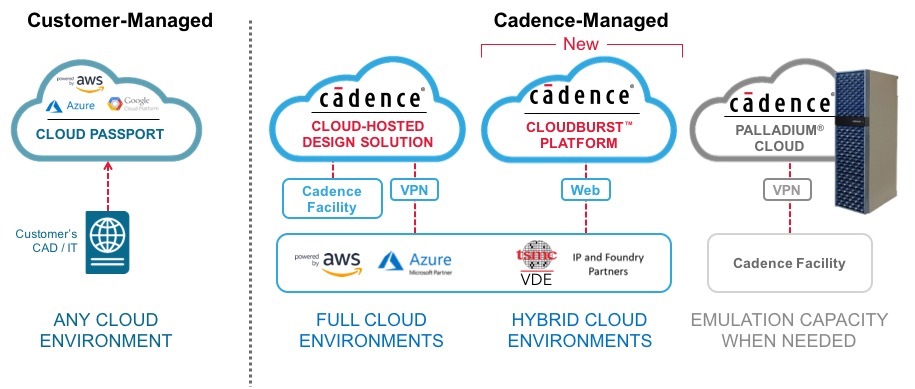
The cloud is a highly popular term that a lot of people don’t fully understand. If you are one of those people please read on as I will share my experience, observations, and opinions. Even if you are a cloud aficionado you may want to catch up on what’s new with EDA cloud services so again read on.
When we first started SemiWiki 9 years … Read More
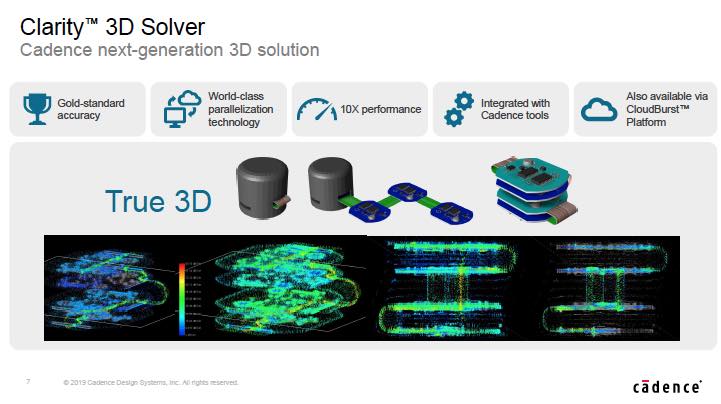
The need for full wave EM solvers has been creeping into digital design for some time. Higher operating frequencies – like those found in 112G links, lower noise margins – caused by multi level signaling such as in PAM-4, and increasing design complexity – as seen in RDL structures, interposers, advanced connector… Read More
It used to be that at the mention of libraries, people would think of foundry PDK deliverables. However, now a host of factors such as automotive thermal requirements, nanometer FinFET processes, near threshold voltages, higher clock rates, high volumes, etc., have dramatically changed library development. These factors … Read More
Every system-on-chip (SoC) designer worries about power. Many widely used electronics applications run on batteries, including smartphones, tablets, autonomous vehicles, and many Internet-of-Things (IoT) devices. Even “big iron” products such as network switches and compute servers must be careful when it comes to power… Read More
Spring Forward with AIby admin on 03-28-2019 at 5:00 amCategories: AI, EDA, Security
The euphoria of NCAA March Madness seems to spill over into the tech world. The epicenter of many tech talks this month spanning from GPU conference, OCP, SNUG to CASPA has evolved around an increased AI endorsement by many companies and its integration into many silicon driven applications. At this year CASPA Spring Symposium,… Read More
The Synopsys Formal group have a reputation for putting on comprehensive tutorials/workshops at DVCon and this year again they did not disappoint. The theme for the Thursday workshop was tackling complexity in control and datapath designs using formal. Ravindra Aneja, who I know from Atrenta days, kicked off the session with… Read More
Two central concepts have led to the growth of our ability to manage and implement larger and larger designs: hierarchy and higher levels of abstraction. Without these two approaches the enormous designs we are seeing in SOCs would not be possible. Hierarchy in particular allows the reuse of component blocks, such as CPU cores.… Read More
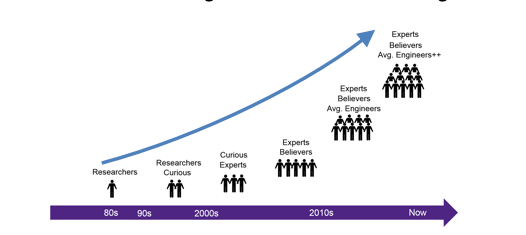
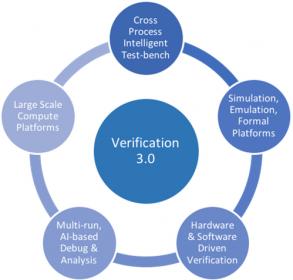
Last week I attended the first Verification 3.0 Innovation Summit held at Levi’s Stadium in Santa Clara along with about 90 other interested engineers and former engineers (meaning marketing and sales people, like me). There was a great vibe and feel to the event as it exuded an energy level that I have not felt at an EDA event in years.… Read More
Update on SystemC for High-Level Synthesisby Tom Dillinger on 03-26-2019 at 12:00 amCategories: Cadence, EDA
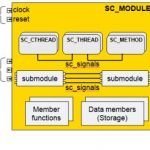
The scope of current system designs continues to present challenges to verification and implementation engineering teams. The algorithmic complexity of image/voice processing applications needs a high-level language description for efficient representation. The development and testing of embedded firmware routines… Read More
Many electronic product ideas start out as sketches on the back of a napkin, then migrate over to diagrams drawn in Visio or PowerPoint, finally entered into EDA-specific tools. With that methodology there’s a big disconnect between the diagrams drawn with a purely graphical tool and the EDA tools, because there’s… Read More







Musk’s Orbital Compute Vision: TERAFAB and the End of the Terrestrial Data Center