You are currently viewing SemiWiki as a guest which gives you limited access to the site. To view blog comments and experience other SemiWiki features you must be a registered member. Registration is fast, simple, and absolutely free so please,
join our community today!
            WP_Term Object
(
    [term_id] => 497
    [name] => Arteris
    [slug] => arteris
    [term_group] => 0
    [term_taxonomy_id] => 497
    [taxonomy] => category
    [description] =>
    [parent] => 178
    [count] => 177
    [filter] => raw
    [cat_ID] => 497
    [category_count] => 177
    [category_description] =>
    [cat_name] => Arteris
    [category_nicename] => arteris
    [category_parent] => 178
    [is_post] =>
)

WP_Term Object
(
    [term_id] => 497
    [name] => Arteris
    [slug] => arteris
    [term_group] => 0
    [term_taxonomy_id] => 497
    [taxonomy] => category
    [description] =>
    [parent] => 178
    [count] => 177
    [filter] => raw
    [cat_ID] => 497
    [category_count] => 177
    [category_description] =>
    [cat_name] => Arteris
    [category_nicename] => arteris
    [category_parent] => 178
    [is_post] =>
)
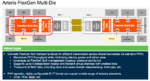
Last year I wrote about Arteris’ introduction of multi-die support for coherent NoCs. This is a very big deal because hyperscalers and OEMs are now building large systems that depend on multi-chiplet architectures and require efficient traffic management between chiplets, in one case as many as 12 compute, fabric/cache and … Read More
The industry is moving from simple documentation chatbots to agentic workflows capable of performing complex, multi-step tasks like design creation, verification, and library characterization. These agents are intended to enhance engineering productivity by roughly 50%. A panel of industry experts met at DAC to discuss… Read More
Arteris has expanded its partnership with Arm to deploy Cycuity Radix hardware security assurance technology across additional next-generation Arm central processing unit (CPU) programs. The expansion follows five years of collaboration and successful use of Cycuity Radix on select Arm CPU designs, and it moves hardware… Read More
The semiconductor industry has entered a new era as AI workloads, chiplets, heterogeneous computing, software-defined vehicles, and intelligent edge devices are transforming how chips are designed.
Silicon success is no longer determined by transistor counts alone, but by how efficiently data moves across increasingly… Read More
Daniel is joined by Dr. Andreas Kuehlmann, General Manager of Security Solutions at Arteris. He has over 35 years of experience in semiconductor design, software, and cybersecurity, including roles at IBM Research, UC Berkeley, Cadence, and Synopsys. Previously, he was CEO of Cycuity, which was acquired by Arteris.
Dan explores… Read More
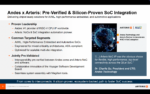
At the recent RISC-V Now event hosted by Andes, the discussion underscored the fact that RISC-V is no longer just about instruction set architecture advantages or customizable cores. The real focus has moved up the stack to system-level design. This is where connectivity, integration, and security define whether an innovation… Read More
The semiconductor industry is undergoing a profound transformation as system complexity, performance expectations, and time-to-market pressures continue to rise. Traditional monolithic system-on-chip (SoC) designs are increasingly giving way to modular, chiplet-based architectures that enable flexibility, scalability,… Read More
The increasing complexity of advanced driver assistance systems (ADAS) and automated driving architectures has driven a transition from traditional bus-based interconnects to scalable Network-on-Chip (NoC) fabrics. Renesas’ next-generation R-Car automotive SoC platforms adopt Arteris FlexNoC interconnect intellectual… Read More
As edge AI systems become more centralized and compute-dense, on-chip data movement is increasingly the architectural bottleneck. NXP’s expanded deployment of Arteris network-on-chip (NoC) and cache-coherent interconnect IP highlights a broader industry trend: interconnect architecture is now a first-order design … Read More
At the recent Chiplet Summit, presentations, discussions and general participation could be broken down into a few broad categories. There were presentations of actual chiplet designs, either as building blocks or end products. There were presentations regarding design tools and methodologies to support and accelerate … Read More