



QED (Quick Error Detection) can be a powerful complementary addition to verification but can be subject to size constraints. This month’s paper looks at a fix for that limitation. Paul Cunningham (GM, Verification at Cadence), Raúl Camposano (Silicon Catalyst, entrepreneur, former Synopsys CTO and lecturer at Stanford, EE292A)… Read More
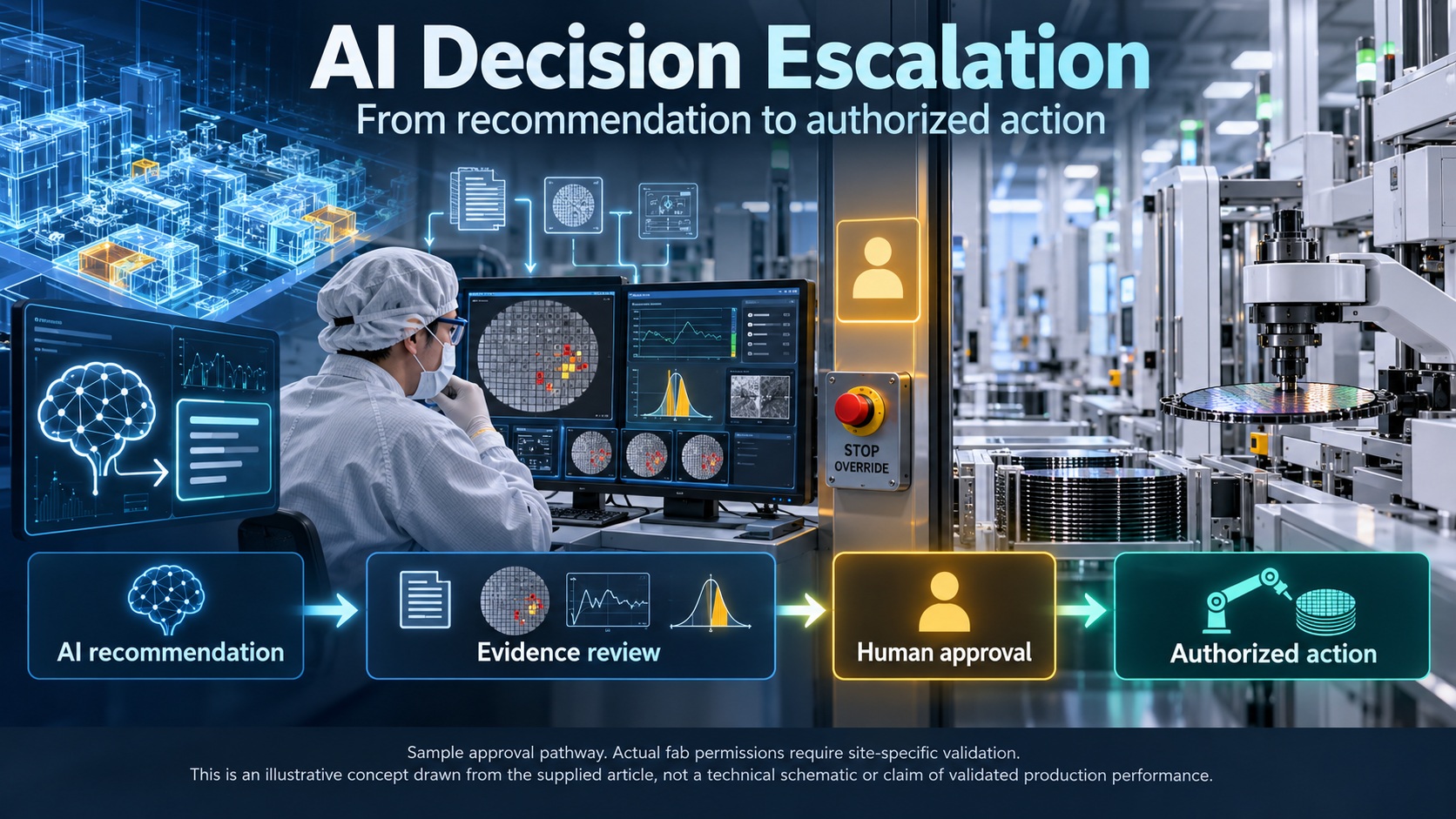
Available Is Not In Control: Balancing Output, Quality, and Risk in High-Volume FabsA deposition chamber drops out of production at…Read More
AI-native Virtual Chiplet Eco-systems: Shift Left, Shift Up, and Shift Out to accelerate Chiplet adoptionSystems-in-package (SIPs) with 2.5D and 3D heterogenous integration,…Read More
The Yield Partnership: Intel and PDF Solutions Tackle Advanced NodesOne of the most difficult things to do…Read More
Webinar: Faster Design Spec to Implementation using IP-XACTAs SoC design flows grow increasingly complex, IP-XACT…Read MoreWhen Software Outruns Silicon: Hardware-Assisted Test Generation to the Rescue
For the past decade, the semiconductor industry has been moving in one direction: shift-left, specifically, shifting more validation into the pre-silicon phase. The idea was straightforward: if software ultimately determines how a system behaves, then software should become a primary vehicle for verification.
The industry… Read More
From Tokens to Infrastructure: Why Compute, Memory, and Power Will Determine the Future of AI
Based on Dylan Patel’s SEMI Industry Strategy Symposium (ISS): Tokens to Infrastructure presentation, one of the most important themes is the emergence of the AI Economic Stack, where every layer of artificial intelligence—from semiconductor manufacturing to cloud infrastructure, model providers, and applications—is… Read More
8051: The Core That’s Still Probably in Your House or Car
When a small team at Intel began work on its second-generation 8-bit microcontroller in the summer of 1978, they took lessons from their first effort, the 8048, hoping to create something more flexible and enduring. Approaching five decades later, their creation, the 8051, is still going strong, although the current offerings… Read More
CEO Interview with Tom (TJ) Jackson of Softchip
Tom Jackson is a serial entrepreneur who founded multiple successful technology ventures with expertise in turning around struggling companies. Experienced in developing strategic partnerships across the technology sector. Skilled at translating complex technical innovations into compelling, value propositions for… Read More
CEO Interview with Yossi Meyouhas of Xsight Labs
Yossi Meyouhas is the CEO of Xsight Labs. Yossi joined Xsight Labs in May 2021 as Chief Operating Officer. Prior to Xsight Labs, Yossi was SVP R&D in Valens Semiconductors (2017-2021), and before that served in multiple senior positions in Marvell Technology Group, the last being SVP Engineering and General Manager of Marvell
Podcast EP352: The Path to High Impact Parallel AI Agents with ChipAgents CEO and Founder William Wang
Daniel is joined by William Wang the CEO and Founder of ChipAgents.ai, the category-leading agentic AI platform for advancing agent-based AI approaches for semiconductor workflows. He is also the Mellichamp Endowed Chair Professor of AI and Designs at UC Santa Barbara, and a global leader in fundamental AI research. He founded… Read More
Intel 18A vs Intel 18A-P: What Is the Difference and Why Does It Matter?
Intel’s 18A process technology has become one of the most scrutinized semiconductor manufacturing nodes in the industry. It represents Intel’s introduction of two major innovations: RibbonFET gate-all-around (GAA) transistors and PowerVia backside power delivery (BSPD). These technologies are intended to improve transistor… Read More
WEBINAR: Why Google Cloud NetApp Volumes Matter for Modern EDA Workloads
In this webinar, Google Cloud and NetApp explore how semiconductor companies can address the growing infrastructure demands of modern Electronic Design Automation (EDA) workflows. As process technologies continue to advance and chip designs become increasingly complex, engineering teams require scalable, high-performance… Read More
How to Free Yourself from Inconsistent Engineering Documentation Before It’s Too Late
Embedded systems programs often fail because critical engineering documentation drifts out of alignment over time and distance. This results in a team that is correctly following the wrong instructions. All forms of engineering documentation suffer from this problem, and it really is the silent killer of many programs.
llmda.ai… Read More


Intel 18A vs Intel 18A-P: What Is the Difference and Why Does It Matter?