You are currently viewing SemiWiki as a guest which gives you limited access to the site. To view blog comments and experience other SemiWiki features you must be a registered member. Registration is fast, simple, and absolutely free so please,
join our community today!
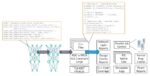
Designing AI inference hardware for edge applications often requires building custom hardware accelerated solutions to meet the demands for ultra-low power consumption and strict real-time response requirements. This webinar introduces Catapult™ AI NN, which provides an automated flow that starts with a Python neural… Read More
In the fast-evolving world of semiconductor design, creating a complex System-on-Chip (SoC) requires meticulous planning to ensure performance, power efficiency, and cost-effectiveness. Aion Silicon’s white paper, authored by Piyush Singh, outlines a streamlined methodology that leverages advanced modeling… Read More
I’ve blogged about Methodics before they were acquired by Perforce back in 2020, so I wanted to get an update on Perforce IPLM (IP Lifecycle Management) by attending their recent webinar. Hassan Ali Shah, Senior Product Manager and Rien Gahlsdor, Perforce IPLM Product Owner were the two webinar presenters. Their IPLM enables … Read More
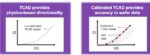
We live in an exploding AI world, and this has put pressure on foundries to deliver new products faster than ever before. Any help to accelerate the semiconductor R&D goes a long way to make the life of Fab engineers easier. EDA tools in the TCAD (Technology Computer Aided Design) category are critical for TCAD engineers to accelerating… Read More
Hardware designers have been using RTL and hardware description languages since the 1980s, yet many attempts at moving beyond RTL have tried to gain a foothold. At the #62DAC event I spent some time with Mike Fingeroff, the Chief High-Level Synthesis Technologist to understand what his company Rise Design Automation is up to. … Read More
Bing Xue is a dedicated Formal Verification Engineer at Axiomise, with a strong academic and professional foundation in hardware verification. He completed his PhD at the University of Southampton, where he conducted cutting-edge research on Formal Verification, RISC-V, and the impact of Single Event Upsets. Bing is … Read More
In the fast-evolving world of semiconductor design, chip designers are constantly on the lookout for EDA tools that can enhance their productivity, streamline workflows, and push the boundaries of innovation. Although Tcl is currently the most widely used language, it seems to be reaching its limits in the face of the growing… Read More
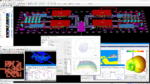
The upcoming Keysight EDA 2025 launch has three familiar tracks: RF circuit design, high-speed digital circuit design, and device modeling and characterization. However, this update features a common thread between the tracks – AI-enhanced design workflows. AI speeds modeling and simulation, opening co-optimization for… Read More
AI and ML techniques are popular topics, yet there are considerable challenges to those that want to design and build an AI accelerator for inferencing, as you need a team that understands how to model a neural network in a language like Python, turn that model into RTL, then verify that your RTL matches Python. Researchers from CERN,… Read More
The opening day at DAC was Monday and I had an appointment with Simon Rance (Cliosoft) and Stephen Slater, Product Manager of Keysight EDA in their suite. Back in February Daniel Nenni wrote about Keysight EDA acquiring Cliosoft, adding design data and IP management to their software offerings. I really wanted to hear how that … Read More