You are currently viewing SemiWiki as a guest which gives you limited access to the site. To view blog comments and experience other SemiWiki features you must be a registered member. Registration is fast, simple, and absolutely free so please,
join our community today!
Semiconductor designers today face a critical hurdle: how to smoothly transition from an open-source hardware blueprint to a commercially hardened, production-ready silicon implementation. As semiconductors play an increasingly essential role in powering the AI era, safeguarding these hardware foundations has become… Read More
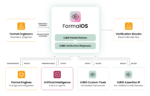
LUBIS EDA is introducing FormalOS, a platform designed to make formal verification more systematic, scalable and predictable. Built on the company’s five-stage methodology, it combines structured workflows, verification playbooks, automation, reusable verification assets and sign-off evidence within customers’ existing… Read More
As the threat of quantum computing to modern cybersecurity becomes increasingly real, the technology industry is accelerating efforts to develop cryptographic systems capable of resisting quantum attacks. One of the most significant developments in this field was presented at Embedded World 2026 in Nuremberg, Germany, … Read More
IoT permeates every aspect of our lives, in payment systems, access authorization, vehicles, utilities, factories, hospitals, and in so many other fields. Which makes these systems attractive targets for hacking and social disruption while also challenging to protect given the highly constrained resources that many such… Read More
Formal verification is becoming essential in the design and implementation of cryptographic systems, particularly as the industry prepares for post-quantum cryptography (PQC). While traditional testing techniques validate correctness over a finite set of scenarios, formal verification uses mathematical proofs to guarantee… Read More
In today’s rapidly evolving digital landscape, the security of electronic systems is of the highest priority. This importance is underscored by technological advancements and increasing regulatory demands. Multi-die designs which integrate multiple dies (also called chiplets) into a single package, introduce … Read More
Quantum computing promises to deliver vast increases in processing power. The technology exploits the properties of quantum mechanics to create revolutionary increases in performance. Medical and material science research are examples of fields that will see dramatic improvement when production-worthy quantum computers… Read More
Dan is joined by Sebastien Riou. Director of Product Security Architecture at PQShield. Sebastien has more than 15 years of experience in the semiconductor industry, focusing on achieving “banking grade security” on resource-constrained ICs such as smart cards and mobile secure elements. Formerly of Tiempo-Secure, he helped… Read More
While researchers continue a march for more powerful quantum computers, cybersecurity measures are already progressing on an aggressive timeline to avoid potential threats. The urgency is partly in anticipation of a “store-now-decrypt-later” attack where compromised data, seemingly safe under earlier generations of … Read More
In the late 1970s, cryptographic history saw the emergence of two seminal algorithms: McEliece and RSA. At that time, quantum threats were theoretical, and the selection criteria for cryptographic algorithms prioritized public key length and execution time, leading to RSA’s prominence while McEliece remained obscure… Read More