You are currently viewing SemiWiki as a guest which gives you limited access to the site. To view blog comments and experience other SemiWiki features you must be a registered member. Registration is fast, simple, and absolutely free so please,
join our community today!
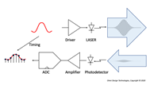
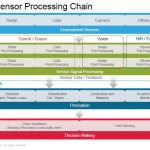
With all the advances in digital technology to serve mankind’s insatiable appetite for automation, it’s easy to lose sight of the reality that we still live in an analog world. It’s easy to take for granted that somewhere in the chain of events that takes place in the process of applying state-of-the-art computational technology… Read More
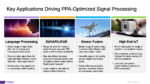
On Sep 20th, Synopsys announced an expansion of its DesignWare® ARC® Processor IP portfolio with new 128-bit ARC VPX2 and 256-bit ARC VPX3 DSP Processors targeting low-power embedded SoCs. In 2019, the company had launched a 512-bit ARC VPX5 DSP processor for high-performance signal processing SoCs. Due to the length, format… Read More
One of the key differentiating characteristics of companies working on autonomous vehicles is the willingness to explain or disclose the manner in which this technology works. Tesla and Mobileye have been standouts in the explainer category. Companies like Waymo and Cruise have been less distinguished.
Tesla, though, … Read More
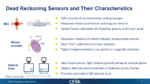
One meaning of the word “reckoning” says it is the action or process of calculating or estimating something. But dead reckoning? What does that mean? Believe it or not, we have all deployed dead reckoning to varying degrees of success on different occasions. As an example, when driving on a multi-lane winding highway and direct … Read More
The ARC Processor has a rich history. Originally named the Argonaut RISC Processor, it was designed for the Nintendo Game Systems in the 1990s. Argonaut Technologies Limited later became ARC International. My first intimate exposure to ARC was in 2009 when Virage Logic acquired ARC. A year later Virage was acquired by Synopsys… Read More
Time to Change our Thinking:
It is time to work the other side of the communications equation. Send less data. But apply new synthetic data science and machine learning to get more and richer information: a way that requires the transfer of radically fewer actual bits – perhaps 1 or 2% of the bits – but with higher model fidelity.… Read More
In the past, I’ve focused my annual predictions on electronics – ICs and EDA – but recently I’ve turned my focus to photonics, so my 2020 predictions are primarily in this area.
Historically, photonics has been the Gallium Arsenide of technologies; it was, is and always will be the technology of the future. Analysts have forever … Read More
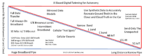
Forget about 5Gby Roger C. Lanctot on 09-20-2019 at 10:00 amCategories: 5G, Automotive
There is a vast amount of hubbub in the automotive industry regarding the onset of 5G technology. Industry excitement is manifest in the 5G Automotive Association (5GAA) which is facilitating collaboration (among 120+ member) between the automotive industry and the wireless industry, possibly for the first time ever.
For … Read More
LIDAR is a controversial topic, with even Elon Musk weighing in on whether it will ever be feasible for use in self driving cars. His contention is that the sensors will remain too expensive and potentially be unreliable because of their mechanical complexity. However, each of the sensors available for autonomous driving have … Read More
To replace a human driver, autonomous car will have to “see” and do it in a better way than human being. The available solution, based on camera, radar, lidar, is not perfect and need to be improved. Radar is great for “seeing” in bad weather but has insufficient resolution to distinguish distant objects. Lidar produces high-resolution… Read More