You are currently viewing SemiWiki as a guest which gives you limited access to the site. To view blog comments and experience other SemiWiki features you must be a registered member. Registration is fast, simple, and absolutely free so please,
join our community today!
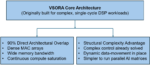
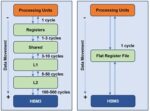
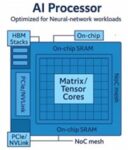
Instead of tweaking existing designs, VSORA built an AI chip from scratch to fix the real bottleneck: moving data fast enough to keep the math circuits busy.
There’s a version of the AI hardware story that everyone in the chip industry has heard a hundred times. A startup raises money on a clever chip design, promises to topple… Read More
A recent analysis highlighted by MIT Technology Review puts the energy cost of generative AI into stark perspective. Generating a simple text response from Llama 3.1-405B—a model with 405 billion parameters, the adjustable “knobs” that enable prediction—requires on average 3,353 joules, nearly 1 watt-hour (Wh). Once cooling… Read More
The 40-Year Evolution of Hardware-Assisted Verification — From In-Circuit Emulation to AI-Era Full-Stack Validation
For more than a decade, Hardware-Assisted Verification platforms have been the centerpiece of the verification toolbox. Today, no serious semiconductor program reaches tapeout without emulation or FPGA-prototyping… Read More
Sandra Rivera, a Silicon Valley veteran who is the former CEO of Altera, an Intel FPGA spinout, and long-time Intel executive, recently became Chair of the Board of Directors of Paris-based VSORA. VSORA, a technology leader redefining AI inference for next-generation data centers, cloud infrastructure and edge, is focused … Read More
The competitive landscape of hardware-assisted verification (HAV) has evolved dramatically over the past decade. The strategic drivers that once defined the market have shifted in step with the rapidly changing dynamics of semiconductor design.
Design complexity has soared, with modern SoCs now integrating tens of billions… Read More
VSORA, a pioneering high-tech company, has engineered a novel architecture designed specifically to meet the stringent demands of AI inference—both in datacenters and at the edge. With near-theoretical performance in latency, throughput, and energy efficiency, VSORA’s architecture breaks away from legacy designs optimized… Read More
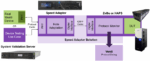
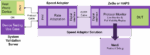
Recently, I had the opportunity to speak with Synopsys’ distinguished experts in speed adapters and in-circuit emulation (ICE). Many who know my professional background see me as an advocate for virtual, transactor-based emulation, hence I was genuinely surprised to discover the impressive results achieved by today’s speed… Read More
Introduction: The Historical Roots of Hardware-Assisted Verification
The relentless pace of semiconductor innovation continues to follow an unstoppable trend: the exponential growth of transistor density within a given silicon area. This abundance of available semiconductor fabric has fueled the creativity of design… Read More
Rick Carlson, Verific Design Automation’s Vice President of Sales, is an EDA trends spotter. I was reminded of his prescience when he recently called to catch up and talk about Verific’s role as provider of front-end platforms powering an emerging EDA market.
Verific, he said, is joining forces with a group of well-funded startups… Read More
Hot on the heels of DVConUS 2025, the 35th annual Synopsys User Group (SNUG) Conference made its mark as a defining moment in the evolution of Synopsys—and the broader electronic design automation (EDA) industry. This year’s milestone event not only underscored Synopsys’ continued innovation but also affirmed the vision… Read More