


The Chancellor of Germany visited Fab 1 in Dresden today. I did not get to speak with her personally so I will send her a message here. The fabless semiconductor industry is a force of nature. You can either harness the power or be overwhelmed by it. The United States, Taiwan, China, and South Korea have certainly figured this out. Hopefully… Read More

Tag: imagination technologies
Cadence is all about Semiconductor IP!
Cadence continues on its quest to be a top semiconductor IP supplier which is a good thing since the semiconductor world now revolves around IP. Cadence CEO Lip-Bu Tan mentioned IP 14 times during his keynote and he was followed by the president of Imagination Technologies and the CEO of recently acquired Tensilica. I was not afforded… Read More
It’s about the mobile GPU memory bandwidth per watt, folks

There has been a lot of huffing and puffing lately about 64-bit cores making it into the Apple A7 and other mobile SoCs, and we could probably dedicate a post to that discussion. However, there are a couple other wrinkles to the Apple A7 that should be getting a lot more attention.
There are two primary causes of user frustration in multimedia… Read More
What’s in your network processor?

Recently, one of those very restrained press releases – in this case, Mentor Graphics and Imagination Technologiesextending their partnership for MIPS software support– crossed my desk with about 10% of the story. The 90% of this story I want to focus on is why Mentor is putting energy into this partnership… Read More
Texture decompression is the point for mobile GPUs

In the first post of this series, we named the popular methods for texture compression in OpenGL ES, particularly Imagination Technologies PVRTC on all Apple and many Android mobile devices. Now, let’s explore what texture compression involves, what PVRTC does, and how it differs from other approaches.… Read More
How Do You Do Computational Photography at HD Video Rates?

Increasingly, a GPU is misnamed as a “graphics” processing unit. They are really specialized architecture highly parallel compute engines. You can use these compute engines for graphics, of course, but people are inventive and find ways of using GPUs for other tasks that can take advantage of the highly parallel… Read More
Compressing OpenGL ES textures

The 80s called, and they want lazy programming back. Remember “Mr. Mom”? Michael Keaton is talking about rewiring the house, and Martin Mull asks if he’s going to use all 220V, and Keaton responds “Yeah, 220, 221, whatever it takes.” Not knowing what’s inside can make you look silly.
Such is the case with OpenGL ES. Taking a look at … Read More
Can we really find a way to speed-up Processor & DSP core designs?
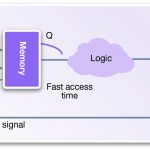
Once upon a time, ASIC designers involved in Processor design, like I was, for the first time in 1987 for Thomson CSF and again in 1994 for Texas Instruments, at that time supporting height (8) ASIC designed by another French company, the Advanced Computer Research Institute (ACRI), had to re-invent the wheel almost every day. When… Read More
Did the MIPS acquisition just doom Vivante?

By now, you’ve probably read about the Imagination Technologies acquisition of MIPS somewhere, hopefully in the Eric Esteve article here. There’s an interesting side effect not being talked about much.… Read More
Smart mobile SoCs: Texas Instruments
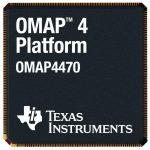
TI has parlayed its heritage in digital signal processing and long-term relationships with mobile device makers into a leadership position in mobile SoCs. They boast a relatively huge portfolio of design wins thanks to being the launch platform for Android 4.0. On the horizon, the next generation OMAP 5 could change the entire… Read More