You are currently viewing SemiWiki as a guest which gives you limited access to the site. To view blog comments and experience other SemiWiki features you must be a registered member. Registration is fast, simple, and absolutely free so please,
join our community today!
Moore’s Law has transcended computing expectations; however, its promise will eventually reach scalability limitations due to extraordinary consumer demands. Future technology encompasses breakthroughs capable of interaction with the outside world, which the More than Moore movement achieves. Through integrating … Read More
Tanner EDA is a pleasure to work with, they are big on collaboration and customers absolutely love their tools. With the Synopsys acquisition of SpringSoft, Tanner needs to step up and fill the void of the affordable Laker tools. Take a close look at their new v16 release and let me know how they are doing.
New capabilities for back-end… Read More
We have frequently said in Semiwiki how crucial is it for the SC industry to benefit from high quality PHY IP… even if, from a pure business point of view (MBA minded), PHY IP business does not look so attractive. In fact, to be able to design on-the-edge SerDes and PLL (the two key pieces), you need to build and maintain a highly skilled… Read More
The fundamental economics of the semiconductor industry are summed up in the phrase “fill the fab.” Building a fab is a major investment. With a lifetime of just a few years, the costs of owning a fab are dominated by depreciation of the fixed capital assets (the building, the air and water purification equipment, the manufacturing… Read More
I used my secret powers (being a blogger will get you a press pass) to go to the first day of the SPIE conference on advanced lithography a couple of weeks ago. Everything that happens to with process nodes seems to be driven by lithography, and everything that happens in EDA is driven by semiconductor process. It is the place to find … Read More
During DVCon I met with Steve Bailey to get an update on Mentor’s verification. They were also announcing some new capabilities. I also attended Wally Rhines keynote (primarily about verification of course, since this was DVCon; I blogged about that here) and the Mentor lunch (it was pretty much Mentor all day for me) on the… Read More
Watch the Clockby Paul McLellan on 03-05-2013 at 2:24 pmCategories: Ansys, Inc., EDA
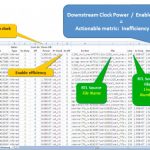
Clock gating is one of the most basic weapons in the armoury for reducing dynamic power on a design. All modern synthesis tools can insert clock gating cells to shut down clocking to registers when the contents of the register are not changing. The archetypal case is a register which sometimes loads a new value (when an enable signal… Read More
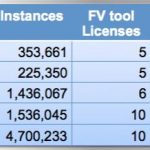
Formal verification can be used for many things, but one is to ensure that synthesis performs correctly and that the behavior of the output netlist is the same as the behavior of the input RTL. But designs are getting very large and formal verification is a complex tool to use, especially if the design is too large for the formal tool… Read More
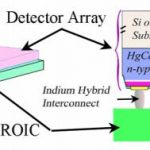
Image sensors are all around us with the cell phone being a popular example, and 35mm DSLR camera being another one. Last week I spoke with Kenton Veeder, an engineer at Senseeker that started his own image sensor IP and consulting services company. Instead of focusing on the consumer market, Kenton’s company does sensor … Read More
Cavium designs some very complex SoCs containing multiple ARM or MIPS cores at 32 and 64 bit. This complexity leads to major challenges in validating the overall chip architecture to ensure that their designs will meet the requirements of their customers once they are completed, with performance as high as 100Gbps.
Cavium have… Read More












ChipAgent Raises $134Million and Why it Matters