




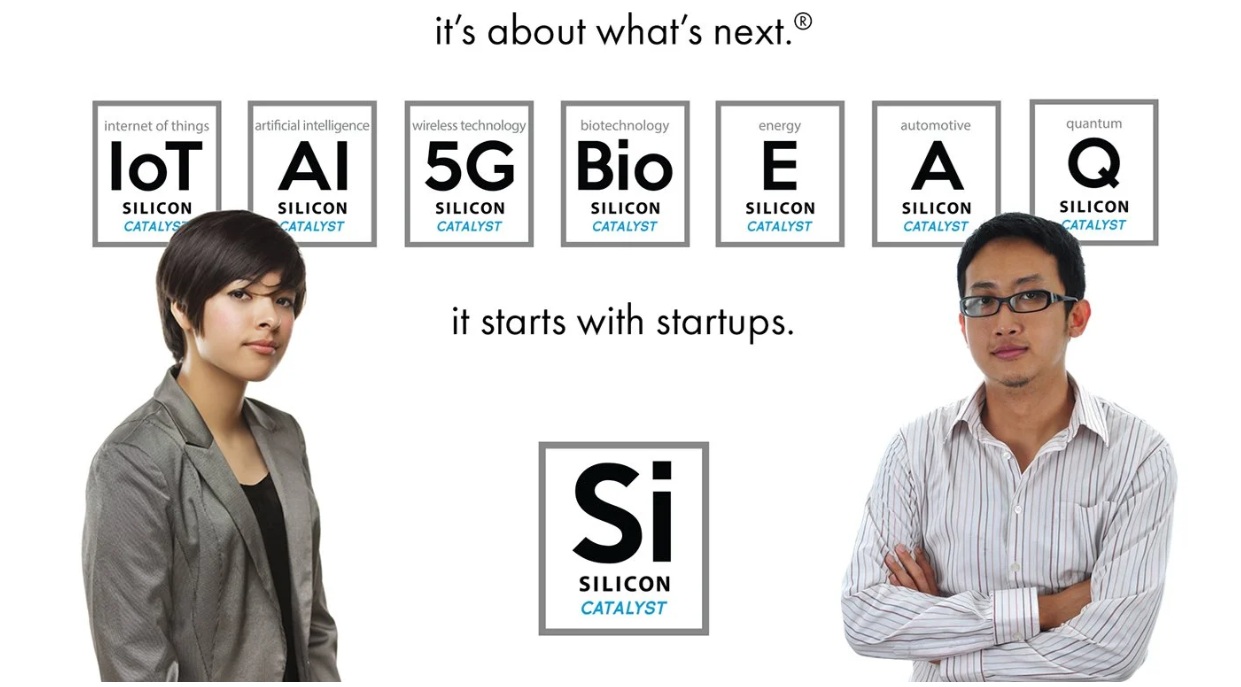

Tarun Verma, Managing Partner of Silicon Catalyst, delivered a keynote at Verification Futures Austin titled “Revitalizing Semiconductor StartUps.” Drawing from his role in the world’s only accelerator focused on the global semiconductor industry, Tarun outlined the sector’s resurgence, persistent challenges for startups, and pathways to innovation. Silicon Catalyst, founded in 2015 in Silicon Valley, has screened over 1,500 early-stage companies, admitted more than 150 into its programs, and built a portfolio valued at over $3 billion. With expansions to Israel (2019), the UK (2021), and the EU (2024), it boasts over 400 advisors, 500 partners, and investments exceeding $1 billion in venture capital, plus $200 million each in in-kind partnerships and grants. The accelerator spans chips, chiplets, materials, IP, photonics, MEMS, sensors, life sciences, and quantum technologies.
Tarun’s bottom-line-up-front emphasized semiconductors’ revival: they claim 16 of the top 20 tech market caps and rank as the third most profitable industry. AI’s hardware limitations fuel a “gold rush,” while geopolitics shifts from globalism, positioning chips as essential national assets. Yet startups face hurdles like escalating prototyping costs, declining venture capital, elusive product-market fit, and customers’ reluctance for design wins. A surge in investments, via CHIPS Acts worldwide, sovereign wealth funds, and green shoots in deep tech VC, offers hope. Chiplets and advanced packaging could level the playing field, but commercialization demands an aggressive startup playbook: urgent CHIPS Act implementation, supplemented government funding, and a robust ecosystem for research translation.
Tracing the industry’s history, Verma highlighted milestones: the 1950s transistor invention at Bell Labs; 1960s integrated circuits and VC emergence in Silicon Valley; 1970s microprocessors; 1980s Japanese threats spurring SIA/SRC/SEMATECH; 1990s TSMC’s foundry model; 2000s consolidation and VC decline; 2010s Moore’s Law slowdown, AI rise, and Chinese competition; 2020s pandemic shortages, CHIPS Acts, export curbs, and generative AI. This evolution reflects a virtuous Moore’s Law cycle, lowering costs, expanding applications, boosting R&D and revenue—now fragmented by supply chains.
Future forces include system companies like Apple, Google, and Nvidia becoming “silicon houses” with extensive chip design and manufacturing. Domain-specific architectures, AI/data center buildouts (with hyperscalers investing billions in CapEx), and power-hungry data centers (projected U.S. consumption rising sharply) drive growth. Chiplets enable die disaggregation, optimizing yields and nodes, with standards like UCIe addressing interfaces and known-good-die challenges. TSMC’s packaging roadmap underscores this shift, expanding computing volume through 2.5D/3D integration.
From 2020-2025, AI compute booms, geopolitical tensions, sovereignty pushes (via SWFs), and in-house designs reshaped the landscape. By 2030, revenues could exceed $1 trillion, propelled by edge AI in wearables and IoT, electrification (SiC/GaN for EVs/grids), and packaging bottlenecks. Beyond, quantum, photonic, and neuromorphic chips promise efficiency leaps.
VC trends reveal semis’ struggles: investments dipped to under 2% of total VC, favoring software’s quicker returns. Typical startup timelines span 10 years, with funding from angels/grants early, escalating to VC/CVC later. The VC model—seeking 3-5x returns via hits—disfavors semis’ capital intensity and timelines. U.S. VC surged overall, but semis lagged; AI captures a growing share. Key players include Intel Capital (74 deals) and Celesta (26), per PitchBook (2014-2024).
Silicon Catalyst counters these via its ecosystem: 70+ in-kind partners, 400+ advisors, 450+ investors, accelerators, and universities. Its timeline shows evolution from concept (2014) to ventures (2024). Verma spotlighted a track on emerging hardware, featuring AI/EDA trends, edge inference, and battery sensing.
In conclusion, revitalizing startups requires bridging research to industry. Tarun urged aggressive prototyping funds, ecosystem strengthening, and contrarian VC opportunities. Contact: Silicon Catalyst.
Also Read:
Podcast EP320: The Emerging Field of Quantum Technology and the Upcoming Q2B Event with Peter Olcott
Silicon Catalyst on the Road to $1 Trillion Industry
The 2025 Semi Industry Forum: On the Road to a $1 Trillion Industry
Share this post via:



Comments
There are no comments yet.
You must register or log in to view/post comments.