You are currently viewing SemiWiki as a guest which gives you limited access to the site. To view blog comments and experience other SemiWiki features you must be a registered member. Registration is fast, simple, and absolutely free so please,
join our community today!
            WP_Term Object
(
    [term_id] => 14
    [name] => Synopsys
    [slug] => synopsys
    [term_group] => 0
    [term_taxonomy_id] => 14
    [taxonomy] => category
    [description] =>
    [parent] => 157
    [count] => 784
    [filter] => raw
    [cat_ID] => 14
    [category_count] => 784
    [category_description] =>
    [cat_name] => Synopsys
    [category_nicename] => synopsys
    [category_parent] => 157
    [is_post] =>
)

WP_Term Object
(
    [term_id] => 14
    [name] => Synopsys
    [slug] => synopsys
    [term_group] => 0
    [term_taxonomy_id] => 14
    [taxonomy] => category
    [description] =>
    [parent] => 157
    [count] => 784
    [filter] => raw
    [cat_ID] => 14
    [category_count] => 784
    [category_description] =>
    [cat_name] => Synopsys
    [category_nicename] => synopsys
    [category_parent] => 157
    [is_post] =>
)
In a landmark announcement at NVIDIA’s GTC Washington, D.C. conference Synopsys unveiled deepened collaborations with NVIDIA to revolutionize semiconductor design and engineering through agentic AI, GPU-accelerated computing, and AI-driven physics simulations. This partnership, building on over three decades… Read More
Daniel is joined by Robert Kruger, product management director at Synopsys, where he oversees IP solutions for multi-die designs, including 2D, 3D, and 3.5D topologies. Throughout his career, Robert has held key roles in product marketing, business development, and roadmap planning at leading companies such as Intel, Broadcom,… Read More
AI’s rapid expansion is reshaping semiconductor design. The compute and I/O needs of modern AI workloads have outgrown what traditional SoC scaling can deliver. As monolithic dies approach reticle limits, yields drop and costs rise, while analog and I/O circuits gain little from moving to advanced process nodes. To sustain … Read More
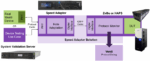
Recently, I had the opportunity to speak with Synopsys’ distinguished experts in speed adapters and in-circuit emulation (ICE). Many who know my professional background see me as an advocate for virtual, transactor-based emulation, hence I was genuinely surprised to discover the impressive results achieved by today’s speed… Read More
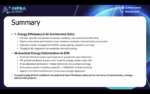
It is well-known that semiconductor growth is driven by AI. That simple statement breaks down into many complex use cases, each with its own requirements and challenges. A webinar will be presented by Synopsys on October 23 that focuses on the specific requirements for one of the most popular use cases – AI at the edge. The speaker… Read More
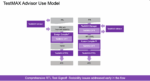
Many years ago, not long after we first launched SpyGlass, I was looking around for new areas where we could apply static verification methods and was fortunate to meet Ralph Marlett, a guy (now friend) with extensive experience in DFT. Ralph joined us and went on to build the very capable SpyGlass DFT app. So capable that SpyGlass… Read More
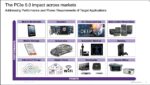
Synopsys recently held a webinar session on this topic and Gustavo Pimentel, Principal Product Marketing Manager at the company led the webinar session. Going into the webinar session, I found myself wondering: why focus on PCIe 5.0, eight years after its release? With the industry buzzing about Edge AI, cloud computing, and … Read More
In a rapidly evolving semiconductor landscape, where AI demands unprecedented computational power and efficiency, Synopsys has deepened its partnership with TSMC to pioneer advancements in AI-driven designs and multi-die systems. Announced during the TSMC OIP Ecosystem Summit last week, this collaboration leverages … Read More
At the AI Infra Summit 2025, Synopsys showed how artificial intelligence has become inseparable from the process of creating advanced silicon. The company’s message was clear: AI is an end-to-end engine that drives every phase of chip development. Three Synopsys leaders illustrated this from distinct vantage points. Godwin… Read More
Synopsys has deepened its collaboration with TSMC certifying the Ansys portfolio of simulation and analysis tools for TSMC’s cutting-edge manufacturing processes including N3C, N3P, N2P, and A16. This partnership empowers chip designers to perform precise final checks on designs, targeting applications in AI acceleration,… Read More