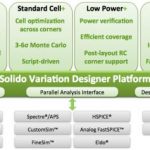
Standard cell, memory, and I/O library characterization is a necessary, but time-consuming, resource intensive, and error-prone process. With the added complexity of advanced and low power manufacturing processes, fast and accurate statistical and non-statistical characterization is challenging, creating the need … Read More
CEO Interview: Amit Gupta of Solido Design
Solido Design Automation is rapidly making a name for itself in EDA. Amit Gupta is founder and CEO of Solido Design Automation, based in Saskatoon, Canada. You should also know that Solido is one of the founding members of SemiWiki.com. In the last six years we have published 44 Solido related blogs that have racked up more than 200,000… Read More
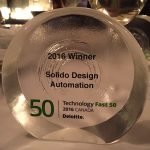
Solido DA is One of Deloitte’s Fastest 50!
As a longtime EDA professional this really made my day. At a time where emerging EDA companies struggle for public validation, it warms my heart to see some very public recognition for an EDA job well done.
Deloitte, a leading Canadian professional financial services firm, announced the winners of their Technology Fast 50 program… Read More
Webinar Offers View into TSMC IP Design Methodology
Standard cell and memory IP are key enablers for new process node availability. These two items must be in place early and be completely ready for a process node to scale to volume. Development of both leaves no room for error and they require the highest performance possible. Foundries are extremely focused on this and spend a lot… Read More
TSMC and Solido to Share Experiences with Managing Variation in Webinar
TSMC knows better than anyone the effect that variation can have at advanced process nodes. Particularly in memory designs and in standard cell designs, variation has become a very critical because of its effects on yield and because of the high-cost of compensating for it. Smaller feature sizes combined with lower voltage thresholds… Read More
Statistical Simulation Provides Insight into 6T SRAM Optimization
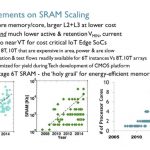
ARM’s Azeez Bhavnagarwala recently gave a talk hosted by Solido on the benefits of variation aware design in optimizing 6T bit cells. Azeez sees higher clock rates, increasing usage of SRAM per processor and the escalating number of processors, shown in the diagram below, as trends that push designers toward 6T. Six Transistor… Read More
Solido Saves Silicon with Six Sigma Simulation
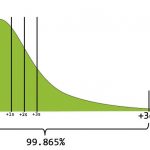
When pushing the boundaries of power and performance in leading edge memory designs, yield is always an issue. The only way to ensure that memory chips will yield is through aggressive simulation, especially at process corners to predict the effects of variation. In a recent video posted on the Solido website, John Barth of Invecas… Read More
How TSMC Tackles Variation at Advanced Nodes
The design community is always hungry for high-performance, low-power, and low-cost devices. There is emergence of FinFET and FDSOI technologies at ultra-low process nodes to provide high-performance and low-power requirements at lower die-size. However, these advanced process nodes are prone to new sources of variation.… Read More
Stop FinFET Design Variation @ #53DAC and get a free book!
If you plan on visiting Solido (the world leader in EDA software for variation-aware design of integrated circuits) at the Design Automation Conference next month for a demonstration of Variation Designer, register online now and get an autographed copy of “Mobile Unleashed”. Such a deal!
Solido Variation Designer is used by… Read More
TSMC and Solido on Variation-Aware Design of Memory and Standard Cell at Advanced Process Nodes
Being that TSMC and Solido are founding members of SemiWiki, you should be able find out everything you ever wanted to know on their respective landing pages. If not, just ask a question in the SemiWiki forum and I can assure you it will be answered in great detail. And here are some other interesting 2015 factoids from Solido:… Read More