




Maybe it’s my competitive analysis gene, or too many years spent hanging out with consortium types, but I’m always both curious and skeptical when a new consortium arises – especially in a crowded field of interest. The dynamics of who aligns with a new initiative, and how they plan to go to market compared to other entities, prompts deeper exploration. Continue reading “Chip side of the Open Interconnect Consortium”

Mark Adams Keynote at #semiconwest
The first surprise of the opening keynote for Semicon West was on the slides that were cycling on the screen as the room filled up. Somehow our book Fabless had managed to be in the rotation.
The opening keynote was by Mark Adams, the President of Micron. He was talking about upcoming big changes in the semiconductor environment, although given his background there was an especial interest in memory. Memory has been a weird market. From 2002-2012 nobody made any money. It was basically a commodity DRAM market and the companies in it, of which there were over 40 at the beginning of the era, overbuilt capacity leading to a price war. At the current node and with the worldwide downturn, the number of companies was down to 4 (Toshiba, SKHynix, Micron and Samsung) and they didn’t overbuild capacity. Indeed, a large part of the growth of the semiconductor industry in the last year or two has been simply the firming of prices in the DRAM market.
He sees several big challenges going forward, some of which are unique to memory but mostly not:
- the end markets are getting more diverse. The main market a decade ago was PC, that has already been eclipsed by mobile, and whatever the internet of things turns out to be it will for sure be consist of hundreds of products
- increased complexity of system level solutions, particularly 3D and novel packaging
- decisions about foundry vs captive. Well, for everyone except the memory manufacturers and Intel (and, I suppose, Samsung) that decision has already been made
- the fundamental semiconductor technology is at a crossroads, running into some fundamental limits requiring extensive innovation. In particular, for Micron, the upcoming end of planar in DRAM.
- changing capital allocation models making capital harder to deploy and raising the importance of just how it is deployed (not to mention the cost of fabs means more capital is needed to build one)
- economics don’t scale like they used to, a process node shrink does not generate as much return as before and so shrinking is less important than other innovation
- finally, the customer landscape is evolving, moving (for memory) from just PC and networking towards embedded, server, mobile, client storage and more
A new more cooperative partnership model is required since no one company can do it on its own and since even memory, never mind SoC, is no longer a commodity.
It is obviously more exaggerated for memory, but all semiconductor business face the fragmentation of their market. They will need to partner with their customers closely to ensure they build the right products, but also they will inevitably be building a broader portfolio of products with relatively lower volumes for each one.
And developing the basic semiconductor process will also require partnering to do the development, to develop the equipment needed to manufacture, and to develop the new materials that will be required.
Success will depend on 5 factors:
[LIST=1]
The Internet of Things @ SEMICON West 2014!
Clearly I’m a fan of IoT in regards to the future of the fabless semiconductor industry. The fabless semiconductor transformation unleashed all sorts of innovation giving us the SoC and the life changing mobile devices SoCs enable. Unfortunately modern SoC design is expensive and raising capital for semiconductor start-ups has turned from a dream to a nightmare. The answer of course is IoT where just about anyone can design a chip and get it into a fab, absolutely.
I will be part of the CASPA Summer Symposium this weekend at the Intel Auditorium in Santa Clara, CA which will discuss this in much more detail in regards to wearables:
“Enabling Technologies That Will Shape The Next Wearable Applications“
“Create Mainstream Market Opportunities For A Broad Range Of Industries“
I hope to see you there!
During the SEMICON Press conference (free lunch) Bob Johnson of Gartner had some slides on IoT that are definitely worth a read and which I will summarize here. One of the problems with IoT is branding. What does IoT really mean? Gartner defines IoT as “The network of physical objects that contain embedded technology to communicate and sense or interact with their internal state or the external environment.“ I’m good with that definition as long as you exclude PCs, Tablets, and Smartphones which Gartner does.
New IoT applications pop up just about every day. Some are smarter versions of existing products other are in a completely new category. The examples given were:
- Solar powered connected trash cans that tell you when they need collecting
- Sensor based logistics (time, temp, damage, and security sensitive packages)
The IoT market opportunities extend well beyond the actual chips used with infrastructure communications and networking, computing and storage, apps and services, and analytics (big data). According to Gartner we should expect 20 billion IoT shipments in 2020. Currently smartphones and tablets are expected to ship less than 10 billion in 2020.
The final slide in the presentation is the most telling:
What to Expect
- Thousands of products with widely varying volumes
- Start-ups and failure galore- think 1998-2000
- Things: Demand for legacy technologies will increase
- 30B MEMS chips per year require 22 200mm fabs
- MCU and Comms require 15 200mm fabs
- Things: Challenge the manufacturing supply chain
- The challenge is how to bring thousands of new products to market rapidly and cheaply
- Each product has unique functionality, but similar building blocks
- System in Package rather than System on Chip?
- One stop shop for product design through implementation?
Several of the keynotes and workshops here at SEMICON West are IoT centric discussing the challenges we are facing. Dr. Bob Metcalfe’s keynote on “Innovation with Startups Out of Research Universitieswas one of them.” If you have not heard of him check out his BIO,he invented Ethernet in 1973 at the Xerox Palo Alto Research Center (Parc), and he founded the billion-dollar networking company 3Com Corporation in 1979. If you still doubt IoT as a critical semiconductor market segment you should give Bob a call. Today he is Professor of Innovation and Murchison Fellow of Free Enterprise in the Cockrell School of Engineering at The University of Texas at Austin.
Take a drive on the IoT with V2V
What platform has become the most sophisticated and intimate personal electronic environment ever? The car. To paraphrase a famous automotive company’s top executive, car companies are transforming the car into a powerful smartphone that allows drivers to carry around, customize, and interact with their digital world. Automotive electronics are currently centered around people (infotainment and communications) and the machine itself (to run the car and provide safety and convenience). Now a third element is emerging; namely, Vehicle-to-Vehicle (V2V) communications.
Just like that sounds, cars will soon “talk and listen” to one another — automatically. They will share information like proximity, speed, direction, road conditions, as well as other things that have yet to been imagined. The chief driver of V2V is signaling impending collisions so that the cars can automatically take countermeasures. That, of course, means the V2V network will become a critical technology for self- and assisted-driving cars.
While it may seem revolutionary, V2V is really an evolutionary branch of Internet of Things (IoT) technologies, which are creating a world where smart, secure, and communicating, sensors will become ubiquitous in planes, trains, and automobiles; inside homes; inside commercial buildings; on highways; in cities and towns; in agriculture; in factories; in retail spaces; and worn by and implanted in humans and animals. The Internet of Things could eventually connect everything from cars to cats.
A term that is being used to describe the technologies making such a smart, sensor saturated world is “sensor dust,” which captures the Zeitgeist that super tiny, smart, communicating sensors will be everywhere — like dust. Sensors, of course, are never just sensors. They are always connected to other things–mainly microcontrollers (MCUs). With the advent of ultra-low power and energy harvesting technology, the sensor-MCU combination has become an ideal, clear, and present foundation for widespread sensor roll out. Sensing often implies by its very nature detection and communication from a distance, and that is where wireless communication comes into play.
The dark side is that remote sensing and communication open the door very wide for bad actors who want to intercept, spoof, and misuse the data streaming freely through the air. So, security (encryption and/or authentication) becomes the final piece of the picture, and arguably the element that makes IoT even possible to be widely adopted. Huge amounts of information are already being collected every day about traffic flow from phone users worldwide (without their knowing it). Such storehouses of data can be mined real time and used to provide personal traffic reports to subscribers while driving. At least that is the story. As the car moves from one place to the other, social networking can be effectuated in real time to locate friends or certain activities and happenings (automotive flash-mob, anyone?). But, what consumers really want their whereabouts and other information out in the open in a completely uncontrolled way? No one. People are becoming extremely sensitive to data insecurity and there is a growing need to trust how the information that is being collected will be used. Without some type of trust, the IoT could be doomed. Maybe the term “Internet of Trust” should be coined to make that point obvious.
V2V & IoT
The evolution of V2V and IoT are intimately related because they both will be composed of the very same technological blocks. The overlap is easy to see. The foundational components of each are miniaturized MCUs, sensors, wireless technology, and security devices that operate using ultra low power. Describing IoT and V2V as equations, they could be expressed in the following way:
IoT = (MCU + Sensor + Security + Wireless) [SUP]Low Power[/SUP]
V2V= IoT + Car
Equation one might imply that companies that can integrate the factors will lead in the build-out of the IoT market. Equation two effectively states that V2V is the IoT on wheels. In any case, there are certain basic blocks that must be integrated, and they must be integrated in the right way for the particular use-case. IoT and V2V design flexibility and time to market will matter, a lot. (But that is a topic for another time.) The growth of the connected car platform is expected to be remarkable. That makes sense since the car is the one place that GPS/NAV systems, smart phones, tablets, DVDs, CDs, MP3s, Bluetooth, satellite radio, high power stereo amps, speakers, voice control, and the Internet can all come together and interact with each other.
Such convergence is making the car into an advanced personal hub. Market researchers have estimated that revenue for the connected car market will grow from $17 billion in 2012 to $54.5 billion in 2018 for hardware and services (telematics, telecom, and in-vehicle). Unit sales of embedded, tethered, and smartphone equipped cars are expected to grow from around 10 million units in 2012 to 67 million by 2018, with over 50% of that volume being embedded systems that are controlled by media and sensor control systems.
Media control systems are not only becoming a standard feature in new cars, but according to consumer electronics and auto industry researchers, a chief reason that people are selecting certain cars over others. Electronics are becoming a main forethought rather than a minor afterthought for car buyers. Sophisticated electronic systems are becoming mandatory, and this powerful dynamic will only accelerate as more electronics products, features, and services are sped to the market by the car makers, consumer electronics companies, smartphone makers, and software providers.
However, all this electronic stuff has presented a huge challenge, which is safety. Using products such as the cell phone in the car actually interferes badly with driving. Anyone who has placed a call, or even worse tried to text while driving (and who hasn’t), can testify to the fact that dial-driving is a bad idea. So, what can be done to get cars electronics, phones, and humans to play well together in a safe way? The solution has been summed up succinctly by the CEO of a major auto maker who refers to in-car control systems as being able to free the user from the tyrannies and dangers of messing with that little phone while you drive. Rather than a car and phone (and other electronics) being at odds with each other, the car is transforming into the newest electronic platform: one that is highly integrated, easy to use, and distinct from anything else to date. It is easy to see that the emerging alloyed car-plus-consumer platform is primed for cars to talk to one another without the need of human intervention.
The list of electronics functions in cars is evolving fast and will likely include multi-person gaming; GPS with location-based services such as real time traffic and road condition updates; vehicle monitoring for maintenance status, performance, and eco-friendliness; vehicle and personal security; connection to home control/security systems; social networking opportunities related to location, and especially safety. In fact, the US Deportment and Transportation (DoT) and National Highway Traffic Safety Administration (NHTSA) are partnering with research institutions and auto companies to collaborate on technology development and interoperability of V2V to promote traffic safety. V2V can transform the automotive experience more than anything since Henry Ford’s assembly line made cars available to the working class. The notion of a car driving itself still sounds like pure science fiction, but prototypes are already driving themselves. So, it is just a question of time before we have auto-automobiles. (auto[SUP]2[/SUP]mobiles) where you simply have to tell your personal digital assistant where you want to go, then take a seat in your personal infotainment pod until you get there.
But, well before that happens we will see significant improvements in safety due to V2V. It is clear that the lucrative auto electronics platform is already right in the sights of all car makers, and they clearly plan to take it to the next level and the next level after that, with no end in sight. As noted, electronic things sell cars, and more advanced electronics will show up in the more advanced cars. Then, last year’s advanced systems will naturally move down-market, so even more advanced systems will be needed for next year’s up-market cars. This endless cycle of innovation will drive automotive companies to create V2V and self-driving ecosystems sooner rather than later. As we move towards the self-driving omega-point we will see V2V and IoT showing up very early in the journey.
V2V (the IoT on wheels) will make it hard to tell where the car ends and the phone, tablet, computer, and sensors begin.
Interested in learning more about Atmel’s automotive portfolio? Check out our automotive-qualified category breakdown below:
- Microcontrollers (MCUs)
- Serial EEPROMs
- Touch (maXTouch)
- Broadcast radio
- CAN/VAN networking
- Car access
- Drivers/high temperature ICs
- Battery management
- LIN networking
Bill Boldt, Sr. Marketing Manager, Crypto Products Atmel Corporation
Modeling and Analysis of Single Event Effects (SEE)

Single Event Effects (SEE) are important because we depend upon our consumer, industrial and aerospace products to work reliably. Protons, electrons, neutrons, or alpha particles may perturb the MOS or bipolar device operation in either a destructive or non-destructive fashion. Galactic cosmic rays are one source of these particles and by the time they reach Earth we have 10’s of particles per square cm. Even packaging materials have alpha particles as sources for SEE.
Continue reading “Modeling and Analysis of Single Event Effects (SEE)”
IMEC Technology Symposium
Yesterday I attended the IMEC Technology Forum at Semicon West. As always with IMEC, they present so much information it is like drinking from a firehose. I’ll say more about the future of process technology in a blog later this week, but this blog is about IMEC itself. It is an amazing success story. Let’s face it, if you were going to guess where the worlds most advanced semiconductor R&D is being coordinated, you probably wouldn’t have picked Belgium if you didn’t already know the answer.
IMEC is celebrating its 30[SUP]th[/SUP] anniversary this year. It is located in Leuven in Belgium. Originally it was called Interuniversity Microelectronics Centre but now IMEC is just its name. Luc van den Hove, the CEO of IMEC, gave a presentation on Creative Business Models in a Consolidating Semiconductor Landscape. Over the years its way of operating has changed. Originally it worked in individual partnerships with companies, and then it brought companies together to solve specific problems. In its current incarnation it partners with semiconductor manufacturers, and equipment manufacturers, at the pre-competitive stage, so currently focused on 7nm and beyond, two or three generations out beyond what is in current volume manufacturing.
The cost of semiconductor R&D has been rising faster than semiconductor revenue and has got so expensive that nobody can really go it alone. One way to get the costs down again is to share the costs. IMEC has gradually come to be the place where this sharing gets done. They are partnered with all 4 major logic manufacturers (Intel, TSMC, Samsung and GF) and with all 4 major memory manufacturers (Samsung, SKHynix, Micron and Toshiba/Sandisk). They are also partnered with almost all the equipment manufacturers.
They have a lot of clean room space (and more being built) and so can run experimental wafers, experimental equipment and so on. So the current semiconductor R&D model is that everyone cooperates at IMEC on the basic R&D. Currently a lot of work on new transistor architectures such as gate-all-around (GAA, silicon nanowires), vertical versions where source is on top of the gate on top of the drain with a silicon nanowire running vertically, and other futuristic approaches. Also new materials for the BEOL metal fabric. Not to mention lots of lithography work especially on the EUV roadmap and directed self-assembly (DSA).
I went to the Samsung Healthcare announcement about a month ago and I was surprised to find that they were partnering with IMEC, not just in semiconductor technology but in medical technology too. It turns out IMEC is a world leader in health innovation too, what they call the Internet of Healthy Things. Starting with fitness gadgets, then medical-grade ambulatory monitors, consumer-grade lab testing (sell for $10-20 in drugstores), on to DNA analysis, single cell analysis and even brain probes.
In fact using the foundation of their work in semiconductor they have built ecosystems of partners in areas other than medical: low power wireless, energy, sensor systems, automotive.
IMEC is the largest ecosystem in the world related to semiconductor technology.
From ARM7 to such a Large CPU cores Port-Folio
I have heard about ARM processor for the very first time in 1990, when I was interviewed by ES2 Design Center manager before being hired to subcontract an ASIC design for ES2. I don’t know why, but I remember very well that he told me about two of the ES2 partners: ARM as a processor IP core provider and TSMC as a Foundry partner if, by chance, one of the ASIC socket had to run into high production volume (at that time, ES2 was known to support fast prototyping, thanks to an ebeam based processing flow; good for prototypes, not really suited for large production volume). Then, in 1995, ES2 was bought by Atmel and the CEO Georges Perlegos decided to build a brand new fab supporting 350nm to 180nm in Rousset, France, in 1999. I joined Atmel at that time as (Standard Cell) ASIC PMM, reporting to the same person. Our job was not only to win ASIC design in front of the traditional competitors, but also to face not less than three internal competitors: Gate Array (US based group), MHS ASIC (France) and TEMIC ASIC (Germany). Thus, we had to severely brainstorm to highlight our differentiators! The most important was clearly our ability to support ASIC integrating ARM core, our group managing all the ARM-related developments in Rousset. This positioning was good, but the ASIC business decline was inevitable… That’s why my former boss is no more in charge of the ASIC business, but of ARM based Microcontroller family. Within Atmel, ARM based Microcontroller product line has grown from less than $10 million in 2003, to reach several $100 million in 2013…
Another short story, to provide another perspective: in 1998, working as an ASIC PME with TI, I have seen the explosion of the Wireless BU. The WBU success was clearly based on BaseBand IC, or the winning team made of TI DSP and ARM7TDMI IP core, evolving to the OMAP Application Processor of the 2000’s. The selection of the ARM7 core by the Ericsson, Nokia, Alcatel, Motorola (and many more) initially to support the GSM standard in the mid 1990’s, and later all the following standards, including CDMA, 2G, 3G, 4G, has defined ARM IP core as the “de facto” wireless Application Processor CPU. ARM position in such an exploding market has created a huge royalty flow, fueling ARM Ltd R&D and allowing the company to build and develop a complete IP core port-folio as we know it today, covering almost all potential applications, that we have called ubiquity in one of the very first (ARM vs Intel) blog on Semiwiki.
- Embedded: Automotive Infotainment Embedded Computing, General Purpose MCU, IoT, Smart Card, Smart Meter.
- Mobile: Computing, Smartphone, Feature Phone, Connectivity and Modem, Mobile Payment
- Home: Blu-Ray and DVD, Digital Set Top Box, Digital Still Camera, Digital TV, Gaming
- Enterprise: HDD/SSD, Flash cards and UFD, Home Networking, Network Infrastructure
This long list of application supported by ARM Processor core explains why ARM Holding (ARMH) stock has been x10 within 10 years!
If you take a look at ARM Cortex port-folio, you will face with a dilemma: which Cortex processor to choose, between Cortex A57 or A53, Cortex-A (7 cores), Cortex-R (R7, R5 or R4), Cortex-M (5 cores) or SecureCore families? A family like Cortex-A53 and Cortex-A57 seems to be dedicated to Smartphone. But if you take a look at the above picture (taken during ARM TechCon 2012), you can see a certain evolution, moving from Smartphone dedicated Application Processor counting four Cortex-A53 to Superphone/Tablet, integrating two Cortex-A57 cores on top the four A53. The next step according with ARM is “naturally” the Mobile Computer (four A53 + four A57). If you look at the last application, a MPU integrating 16 Cortex-A57 cores plus a Cache Coherent Network (CCN) and the Level 3 cache, the target is clearly the Server market, delivering today most of Intel margin in $, thanks to high chip ASP. As you can see, a family counting only two cores allows targeting multiple applications! If you consider that ARM CPU IP core portfolio is built around four more families, you will probably need some help to find the optimized solution…
Why not using the specific selector tool available on ARM web site?
We have mentioned the Wireless or Mobile market as the “cow” generating the huge cash flow, thanks to the high production level for ARM-based Application Processor and the related royalty payment. ARM Ltd. has been cleaver enough to get this cash… and even smarter in investing it, first into R&D and port-folio development, and also to build a very strong ecosystem with over 1000 partners delivering silicon, development tools and software. Such a strategy may appear as just common sense or good business practice today in 2014, but we have to remember that ARM has been a real innovator, and was the first company to really understand how important it will be for the future of their business to develop such an ecosystem. Companies like Intel, for example, could have done it 20 years in advance of ARM, but securing and reinforcing their MPU monopoly was their main concern, not building an ecosystem…
Eric Esteve from IPNEST –
Intel Custom Foundry Explained!
The exciting news is that Intel landed their first big SoC customer with Panasonic’s System LSI Business Division. These 14nm SoCs will be targeted to audio visual equipment markets. The significance here to me is that Intel not only has a big SoC customer, Intel now has a non-Silicon Valley based foundry customer. It is critical for a foundry to be able to operate world-wide and Japan, as a country, is an important market as they are leading the transition from IDM to the fabless business model.
Sunit Rikhi presented at SEMICON West today, Intel made the slides available (HERE) and I do greatly appreciate the transparency. They are an interesting read and I highly recommend you browse them. Before the presentation Sunit asked for a copy of “Fabless: The Transformation of the Semiconductor Industry” which I happily gave him with a custom inscription. Hopefully we can meet again and discuss the book in more detail. The better Intel understands the dynamics of the fabless semiconductor ecosystem the better the return on investment they will get and the more investment they will make, for the greater good, right?
Out of the 42 slides, here are my 6 favorite:
[LIST=1]
All in all it was a good presentation, absolutely. Intel is now in a quiet period for the Q2 2014 conference call so more detailed information was not available. The most interesting piece of information that I gleaned from this presentation is that Intel started 22nm CUSTOMER shuttles in 2011, 14nm in 2013, and 10nm will start in 2015 (slide #11). This means, according to my calculations, Intel 22nm was 2 years ahead of TSMC 20nm, Intel 14nm is less than 1 year ahead of TSMC and Samsung, and 10nm will be too close to call.
S-engine Moves up the Integration of IPs into SoCs
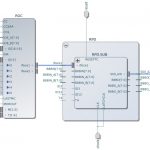
As the semiconductor design community is seeing higher and higher levels of abstraction with standard IPs and other complex, customized IPs and sub-systems integrated together at the system level, sooner than later we will find SoCs to be just assemblies of numerous IPs selected off-the-self according to the design needs and specifications. Does that sound so simple? No, it’s harder than we can think of. A major burden will be on the SoC integration and verification engineers to explore optimum connectivity, find best NoC (Network-on-Chip), check every connection, debug the design, and do chip finishing by editing at the system level. And all of that has to be done within a short span of time to meet the ever shrinking time-to-market window. I am sure, focus of EDA will increase towards seamless integration of IPs into SoC; on-the-fly, correct by construction and well tested which can provide better yield.
During the 51[SUP]st[/SUP] DAC, Concept Engineeringhas introduced S-engine[SUP]TM[/SUP], a specialized schematic generation capability at system level which is a step in the right direction and at an opportune time towards IP development and SoC integration. The design houses can integrate this capability into their design tools which can allow them to visualize, debug and edit schematics at higher levels of abstraction when they are working at the top level of SoC, trying to integrate various IPs together. It’s natural that a fair amount of editing of schematics will be required at the top level while stitching the IPs together; S-engine provides that smart editing feature at the system level.
The S-engine generates schematics automatically that allows visualization at any desired level, typically the interfaces at the system level which are used to configure the IP blocks and their assembly. The smart editing at this juncture, combined with high performance and capacity allows on-the-fly management of IPs with interactive visualization, assembly and architecture design of the system, thus enabling creation of complex, high quality SoCs, NoCs and IP sub-systems. A powerful P&R technology can handle complex SoC designs of these days and produce clean schematics at the system level.
The S-engine capability from Concept provides an opportunity for EDA vendors to integrate it into their tools for such high level editing, visualization and debugging needed for system level integration. As a matter of fact, the S-engine can be easily integrated into any HLS (High Level Synthesis) tool to provide it the required control and visibility over the entire synthesis process in order to produce an optimized design at a desired level. It supports a single schematic to have components at different levels such as system, RTL, and gate, thus supporting the inherent heterogeneity in IPs from various third parties.
There are many features in S-engine which enhance its flexibility and capability to analyze and edit at different localized regions of a schematic as desired by the user. For example an IGEN symbol can have collapsible or expandable interface pins as per requirement for ease of viewing and analyzing particular buses in a schematic. Similarly there is a provision for priority routing for interface nets.
A designer can have a separate toolbar for certain selected schematic objects for ease of viewing, analyzing and editing those objects. There are native images which can be used as graphical attributes. Also, there are specific comment graphic objects that can be used for easy reference.
Since the design complexity is growing at rapid pace with multiple functions being accommodated on the same chip, enabled by multiple IPs developed separately and integrated together, it becomes evident that the IPs must be visualized, analyzed and accommodated at the system level to produce a correct and optimized SoC. This initiates the need for a capability like S-engine which can be easily integrated into EDA tools through simple and robust APIs. It provides two-way communication with the host application for cross probing, highlighting, ballooning, and other operations. The Concept proprietary algorithms enhance performance for on-the-fly schematic creation with excellent interactive editing. Interactive modification of schematic fragments is allowed for incremental schematic editing. The built-in system- and IP-level symbols enable the application to work without specific symbol libraries.
The S-engine with its appropriate API interfaces is available on multiple platforms with customizable GUI environments such as Tcl/Tk, Qt, MFC, Java SDK, Perl/Tk and wxWidgets. If you are thinking of upgrading your tools for SoC designs involving multiple IPs, it’s worth exploring S-engine and integrating it into your tools.
More Articles by Pawan Fangaria…..
lang: en_US
Is Now the Time to Buy Bitcoin?
I have to admit I, thus far, have been the ultimate Bitcoin cynic. Watching the price go from $2 in the fall of 2011 to $1132 in December 2013 was dizzying. It seemed reminiscent of Dutch tulip mania. A bitcoin that is not backed by anything physical such as gold, or by a government, strikes me as only slightly less valuable than a tulip.
My son is a big Bitcoin fan. I told him that for old guys, like me, the bank tax is worthwhile. My favorite example is my Visa card. I pay it off every month so I’m immune to the usurious interest rates. I really like the fact that I get fraud protection for free. I like the fact that I get an email every time something is charged to my account. I like getting miles.
However, I am changing my tune. This is mostly because of my dislike of the banks.
Why I hate the banks
I recently applied for a home refi. I get the fact that regulations are tight and banks can’t make risky loans. I did a refi a couple of years ago with Quicken. The amount of information they require you to provide is painful. My expectation was set, and I was willing to grin and bear it. However, the refi with Chase took unreasonable to grandnew levels. I can’t imagine a less risky loan proposition than I presented. I finally said “no more” after the third round of requested documentation.
I read about Wall Street traders complaining because their bonuses are only in the small millions of dollars. This irritates me because these people add zero value to society. Why can’t these brilliant people actually make things?
Am I alone in thinking, and hoping, that the banks in their current form go away? Have you heard of peer to peer lending sites such as Lending Club or Prosper?Why not borrow from your peers at a cheaper rate than you can get from a bank?
How about IPOs? Investment bankers (underwriters) make millions. Morgan Stanley, and others, made $100M on the Facebook IPO. It’s too bad Facebook didn’t use the dutch auction that Google used for their IPO, and pay the bankers zip.
Back to Bitcoin
It continues to amaze me that Bitcoin has persevered through so many obstacles. These obstacles are many, but a few include:
“China has barred all financial institutions, such as Baidu, from handling Bitcoin transactions. In addition, the Russian prosecutor general announced on Feb. 6, 2014, that the use of Bitcoins and other digital currencies is illegal under its current law.”
You also can’t stop reading about the stolen, lost, or confiscated Bitcoins from likes of Mt Gox and Silk Road. See Business Insider’s article on $500 Million Worth Of Bitcoin Has Been Stolen Since 2010.
However, in the face of all this adversity, it seems the price of Bitcoin is starting to stabilize. California has lifted it’s ban on Bitcoin.Some very smart VC such as Andreeson Horowitz, Union Square Ventures, and Tim Draper are into Bitcoin in a big way. Coinbasehas come out with a secure Bitcoin wallet, so hopefully many of the thefts are behind us.
If you find getting started with Bitcoin a little daunting, check out https://trybtc.com/. It will walk you through the process, and make it a little fun.
If the price of a Bitcoin dips back down below $600 (it’s currently $635) I may buy some.