You are currently viewing SemiWiki as a guest which gives you limited access to the site. To view blog comments and experience other SemiWiki features you must be a registered member. Registration is fast, simple, and absolutely free so please,
join our community today!
DVCon U.S. 2027by Admin on 10-27-2026 at 11:20 pm
DVCon is the premier conference on the application of languages, tools, and methodologies for the design and verification of electronic systems and integrated circuits. The focus of the conference is the usage of specialized design and verification languages such as SystemVerilog, Verilog, VHDL, PSS, SystemC and e, as well
… Read More
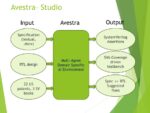
Modern ASIC, SoC, CPU, and GPU development depends on verification processes that detect subtle functional defects before tapeout. SystemVerilog Assertions (SVA) are particularly important because they encode temporal design intent: how signals, states, and transactions must behave across clock cycles. Unlike conventional… Read More
Electronic Design Automation, or EDA, is the software infrastructure that transforms a hardware specification into a manufacturable integrated circuit. At advanced process nodes, the problem is no longer simply drawing transistors or connecting gates. A modern system-on-chip contains billions of standard cells, hundreds… Read More
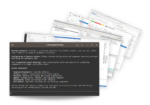
A few weeks ago, I had the chance to work with AMIQ EDA as they introduced a new product: DVT MCP Server. I was quite intrigued by the role it will play in AI-assisted chip design and verification, so I wanted to learn more. I spoke with Gabriel Busuioc, the AI Assistant team leader at AMIQ EDA, to understand more about the product and how… Read More
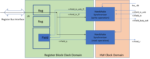
A growing trend in system design is the use of multiple ICs mounted in advanced packages, especially in high-performance computing and AI. These modern packages now integrate multiple ICs, often with high-bandwidth memory (HBM), resulting in hundreds of thousands of connections that need proper verification. Traditional… Read More
I stopped by the AMIQ EDA booth at DAC to get an update from Tom Anderson about their Integrated Development Environment (IDE), aimed at helping design and verification engineers save time. In my early IC design days we used either vi or emacs and were happy with having a somewhat smart text editor. With an IDE you get a whole new way … Read More
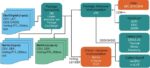
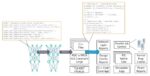
AI and ML techniques are popular topics, yet there are considerable challenges to those that want to design and build an AI accelerator for inferencing, as you need a team that understands how to model a neural network in a language like Python, turn that model into RTL, then verify that your RTL matches Python. Researchers from CERN,… Read More
SystemVerilog came to life in 2005 as a superset of Verilog-2005. The last IEEE technical committee revision of the SystemVerilog LRM was completed in 2016 and published as IEEE 1800-2017.
Have the last seven years revealed any changes or enhancements that maintain SystemVerilog’s relevance and efficaciousness in the face … Read More
Almost everything that we do in chip design and verification was invented to raise the abstraction above schematics and polygons. Register-transfer-level (RTL) design, functional simulation, logic synthesis, floorplanning, and more fall into this category. Even the notion of binary circuits is an abstraction. Underneath… Read More
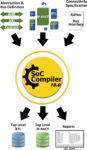
We have been working with Defacto since 2016 and it has been quite a journey. Putting an entire system on a chip is a driving force in the semiconductor industry. With the complexity of designing a modern SoC constantly increasing, new tools and methodologies are required and it all starts with RTL.
Defacto Technologies is an innovative… Read More