You are currently viewing SemiWiki as a guest which gives you limited access to the site. To view blog comments and experience other SemiWiki features you must be a registered member. Registration is fast, simple, and absolutely free so please,
join our community today!
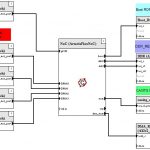
Success stories are great. Reading how someone uses a product contributes much more insight than reading about a product. Last month we had a teaser for a presentation by Wave Semiconductor; this month, we have the slides showing how they are using FPGA-based prototyping, AXI transactions, and DPI to speed up development.
First,… Read More
Most of the discussion around Xilinx UltraScale parts in FPGA-based prototyping modules has been on capacity, and that is certainly a key part of the story. Another use case is developing, one that may be even more important than simply packing a bigger design into a single part without partitioning. The real win with this technology… Read More
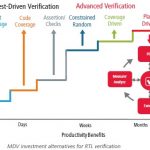
In the current semiconductor design landscape, the design size and complexity of SoCs has grown to large extent with stable tools and technologies that can take care of integrating several IPs together. With that mammoth growth in designs, verification flows are evolving continuously to tackle the verification challenges … Read More
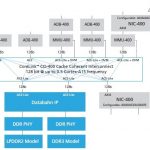
Interconnect plays a significant role in the semiconductor design of a SoC; if not architected and handled well, it can lead to an overdesigned SoC impacting on its power, performance and area. Since a SoC generally contains multiple IPs requiring different data paths to satisfy varying latency and performance cycles, it has … Read More
Now a day, a SoC can be highly complex, having 100s of IPs performing various functionalities along with multi-core CPUs on it. Managing power, performance and area of the overall semiconductor design in the SoC becomes an extremely challenging task. Even if the IPs and various design blocks are highly optimized within themselves,… Read More
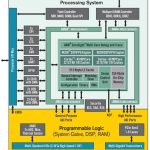
Just as important as block RAMs, IO and DSP48’s is what interconnect or fabric is going to be used when considering SoC FPGA designs. I think Xilinx has found the winning combination. What is paramount to the new SoC FPGA methodologies is not only the challenge of moving huge amounts of data around; we are now to consider data… Read More