





Tell us a little bit about yourself and your company.
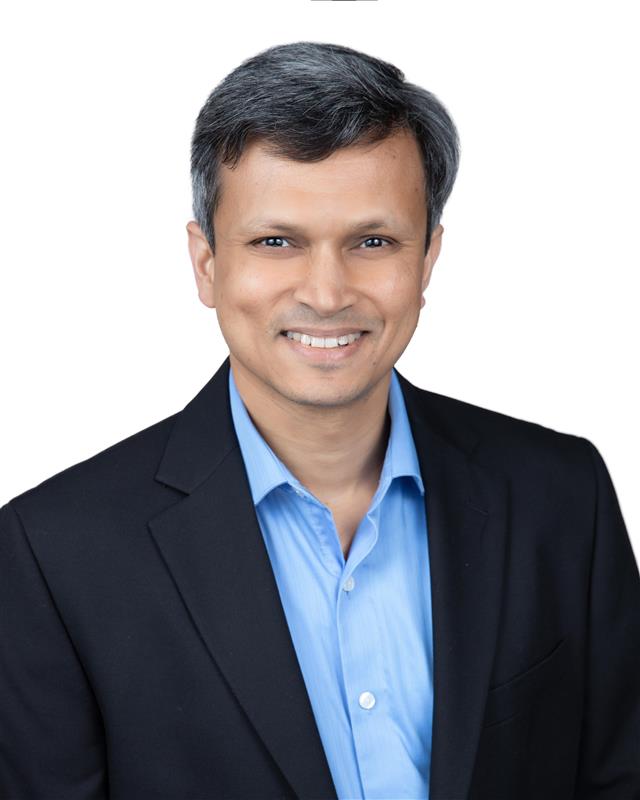
My name’s Abhijeet Chakraborty and I’m Vice President of Engineering at Synopsys. I led the development of Synopsys Design Compiler-NXT, the industry’s leading synthesis product, and now oversee the company’s multi-die and 3DIC product portfolio. Throughout my career, I’ve held a number of R&D roles in the semiconductor industry including at influential startups like Magma Design Automation and Monterey Design.
I’ve had a front‑row seat to how the semiconductor landscape is evolving—and how Synopsys is evolving with it. As products increasingly become intelligent, software‑defined systems – be it a robot, car, data center, or something in between – we are empowering our customers to “re-engineer their engineering” so they can meet unprecedented complexity in the AI era.
What was the most exciting high point of 2025 for your company?
Without question, the defining moment of 2025 for Synopsys was completing our acquisition of Ansys. This was not just a business milestone — it reshaped Synopsys into the leader in engineering solutions from silicon to systems by combining the leaders in electronic design automation (EDA), design IP, and simulation and analysis.
And our combination comes at a pivotal time for the industry. Engineering today’s intelligent systems is not only a silicon and software challenge, but a physics challenge too. As a combined company, we can bring together both digital and physical design, so engineering teams can innovate faster, better, and with the whole picture in mind – from silicon to systems.
What do you think the biggest growth area for 2026 will be, and why? How is your company’s work addressing this growth?
In 2026, I have my eye on the intersection of AI and multi‑die design — not only on multi‑die as an enabler for the AI era, but also on AI as an enabler for scalable multi‑die engineering.
Multi-die designs can deliver far greater performance and flexibility than monolithic chips, capable of supporting the soaring compute demands and AI-driven workloads. The challenge now is to manage the architectural and multiphysical complexities that heterogeneous integrations come with, and which are far beyond what traditional workloads can manage.
In summary, it is really using AI to develop AI – helping teams to explore architectures faster, optimize interconnects, and account for electrical, thermal, and mechanical effects early on and accurately with speed and scale.
Will you participate in conferences in 2026? Same or more as 2025?
Absolutely — 2026 will be a very active year. In a few weeks, I’ll be giving the opening keynote at the Chiplet Summit in Santa Clara on Wednesday, February 18, where I’ll share my perspective on how AI is transforming multi‑die design through advanced automation. This will be my third year at the summit and I am looking forward to speaking about this consequential topic. I especially enjoy the exhibits and panels as an opportunity to discuss challenges and solutions with others in the ecosystem.
Beyond Chiplet Summit, Synopsys will be present across industry events, especially as we bring the Synopsys and Ansys communities together. Our inaugural Synopsys Converge conference in March 2026 will be a major gathering point — bringing Synopsys User Group “SNUG” Silicon Valley, Simulation World, and Executive Forum under the same roof for one flagship event.
Learn more: Synopsys at Chiplet Summit 2026
Register: Synopsys Converge: Re-engineering the Future
Also Read:
Synopsys and AMD Honored for Generative and Agentic AI Vision, Leadership, and Impact
Synopsys’ Secure Storage Solution for OTP IP
Curbing Soaring Power Demand Through Foundation IP
Share this post via:



Comments
There are no comments yet.
You must register or log in to view/post comments.