




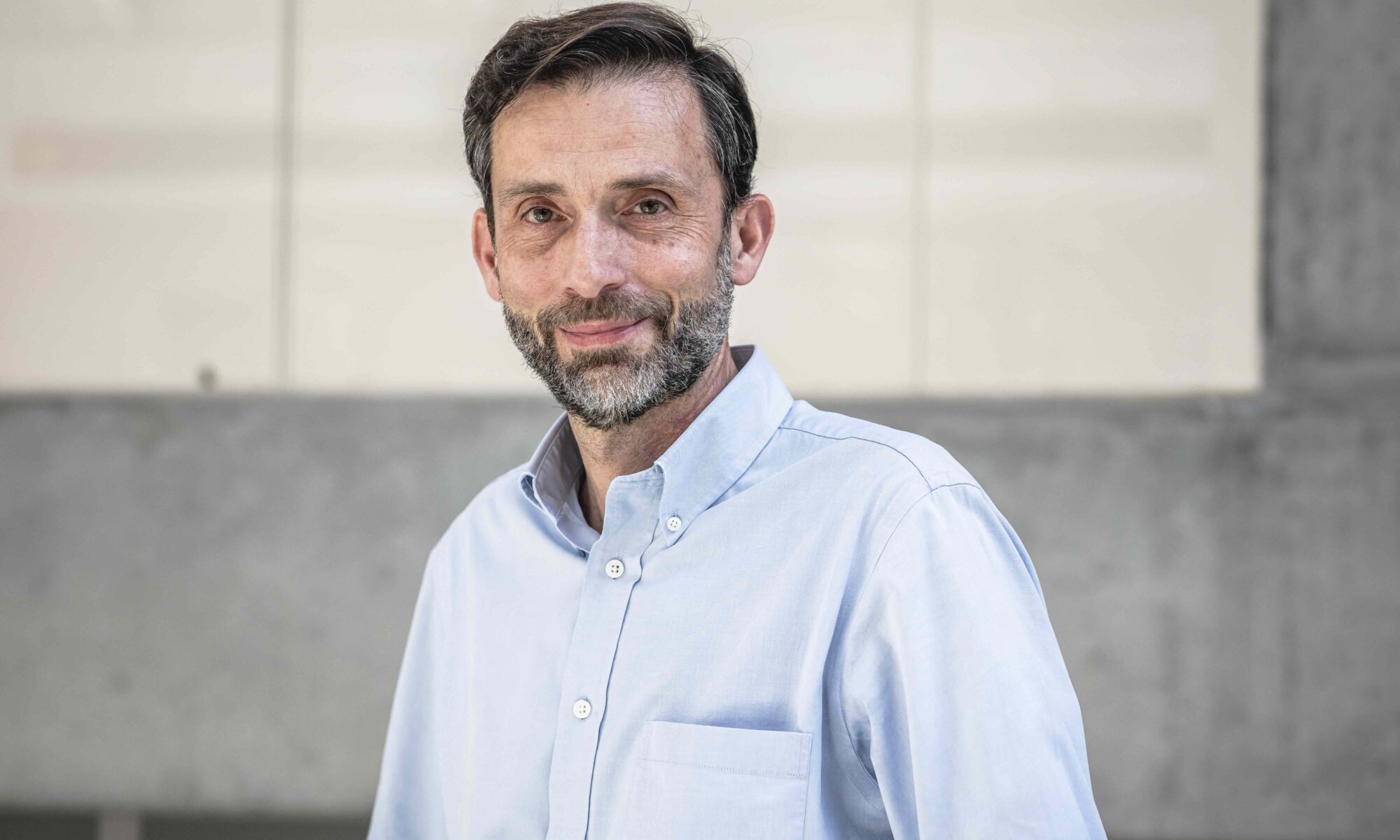

Jerome Paye has served as CEO of TAU Systems since late 2025, having joined the company shortly after its founding in 2022 as Chief Operating Officer. In that time, he has helped build TAU Systems into a high-performing team now focused on delivering the ultimate light source for semiconductor lithography.
Paye brings more than 20 years of industry leadership to the role. Most recently, as COO of Achates Power, he managed engine development programs with leading global manufacturers and oversaw all technical operations. Before that, he held senior roles at Renault SAS, leading early-stage electric vehicle development and directing value engineering for the company’s largest vehicle line, with responsibilities spanning global partnerships including Nissan. His career also includes multiple positions at Ford Motor Company, where he served as program management leader for the Mustang.
Earlier in his career, Paye conducted research in ultrashort pulse lasers and femtosecond laser systems, and contributed to the early design of France’s Laser Megajoule facility, work that directly informs TAU Systems’ mission today.
Tell us about your company?
TAU Systems is developing the next generation of light sources for semiconductor manufacturing through compact particle accelerators and X-ray free-electron lasers. Our laser wakefield acceleration technology creates electron beams with energies equivalent to conventional accelerators spanning hundreds of meters, but we achieve this in just centimeters. We then send these high-energy electrons through magnetic undulators to produce tuneable X-ray lasers with wavelengths significantly shorter than current EUV systems.
What makes TAU unique is our two-part strategy to cross the lab-to-fab chasm. We’re demonstrating economic viability today through radiation effects testing for the space industry, opening our Carlsbad, California, facility later this year. We will build manufacturing capacity through electron-based radiotherapy systems for cancer treatment. And we’re investing heavily in lithography R&D, using revenues from near-term activities to support long-term development. This approach refines our core technology with real customers while generating revenue.
What problems are you solving?
Current EUV lithography machines cost around $400 million each, weigh over 300,000 pounds, and are about as evolved as they can get with current tech. Only a few percent of the light reaches the wafer, dramatically limiting throughput. At the 13.5-nanometer EUV wavelength, chipmakers must use multi-patterning to create smaller features, which adds time, decreases throughput, and increases costs. ASML’s High-NA approach of increasing numerical aperture is reaching fundamental physical and economical limits.
We’re taking the alternative path: reducing the wavelength itself. Our X-ray lasers operate at tuneable wavelengths which will be optimized for maximum transmission. Combined with wavelength-matched reflective optics offering higher reflectivity than current EUV mirrors, our technology delivers hundreds of watts of X-ray emission per compact machine. Matching or exceeding ASML’s power but at shorter wavelengths. The result is faster production, reduced multi-patterning, and dramatically improved energy efficiency.
What application areas are your strongest?
Near-term, we are proving the technology by applying it to radiation effects testing for space. Currently, only a handful of global facilities provide testing – totaling just a few thousand hours annually against an estimated 30,000 hours of demand. Our TAU Labs facility will provide 2,000 to 4,000 hours annually per accelerator unit, dramatically expanding critical testing capacity. This operational beachhead generates revenue while validating our technology.
What keeps your customers up at night?
Space customers face testing bottlenecks. Limited capacity creates project delays and introduces risks as satellite constellations and commercial space ventures scale rapidly.
Semiconductor manufacturers confront more fundamental concerns. The extreme appetite for AI has created massive demand for advanced chips, but current EUV technology cannot meet future requirements. Each node becomes exponentially more expensive with just marginal improvements. The industry knows atomic-level control will eventually require X-rays, but questions when viable solutions will emerge. They’re concerned about capital efficiency, throughput, and economic sustainability.
What does the competitive landscape look like and how do you differentiate?
In radiation testing, we compete against national laboratories and established facilities of which there are but a handful. Our differentiation: dramatically expanded capacity through compact accelerator systems deployable at commercial scale.
For lithography, ASML dominates EUV with a virtual monopoly. They’re pursuing higher numerical aperture optics, but this faces fundamental physical limits. We’re taking the alternative approach physics demands: shorter wavelengths through X-ray lasers. ASML machines are expensive and require extraordinary infrastructure. We’re developing systems housed in existing fab spaces with dramatically improved efficiency.
What truly differentiates TAU is our partnership approach. We’re collaborating with global leaders, including The University of Texas at Austin, Lawrence Berkeley National Laboratory and the Extreme Light Infrastructure Nuclear Physics facility, combining their world-leading expertise with our commercial focus.
What new features/technology are you working on?
We recently demonstrated intense coherent light pulses from a free-electron laser driven by laser-plasma acceleration in collaboration with Berkeley Lab. Published in Physical Review Letters , this work confirms compact X-ray FELs are technically viable for advanced lithography. Our accelerator delivers acceleration gradients 2,000 times stronger than conventional systems.
We’re focused on increasing average power to hundreds of watts per machine, wavelength optimization and tunability for maximum optical transmission, and system integration through our radiation testing facility as a technology proving ground. We’re also developing Very-high Energy Electron therapy systems, which share fundamental technology with our lithography platform.
The overarching goal is to demonstrate that compact laser-driven accelerators can deliver the brightness, stability, and wavelength control required for next-generation semiconductor manufacturing while remaining economically viable.
How do customers normally engage with your company?
Our customers either come to us with a problem they’re looking to solve, or as academics pushing the boundaries of research, or partners who wish to leverage our technology and expertise.
Our development and application facility, TAU Labs, is located in Carlsbad, California and will officially open later in 2026 offering single-event effects radiation testing to ensure spacecrafts operate as intended in the future.
Also Read:
CEO Interview with Echo Yang of CSCERAMIC
CEO Interview with Juniyali Nauriyal of Photonect
CEO Interview with Aftkhar Aslam of yieldWerx
Share this post via:



Musk’s Orbital Compute Vision: TERAFAB and the End of the Terrestrial Data Center