You are currently viewing SemiWiki as a guest which gives you limited access to the site. To view blog comments and experience other SemiWiki features you must be a registered member. Registration is fast, simple, and absolutely free so please,
join our community today!
WP_Term Object
(
    [term_id] => 157
    [name] => EDA
    [slug] => eda
    [term_group] => 0
    [term_taxonomy_id] => 157
    [taxonomy] => category
    [description] => Electronic Design Automation
    [parent] => 0
    [count] => 4440
    [filter] => raw
    [cat_ID] => 157
    [category_count] => 4440
    [category_description] => Electronic Design Automation
    [cat_name] => EDA
    [category_nicename] => eda
    [category_parent] => 0
    [is_post] =>
)
Autonomous Driving and Functional Safetyby Tom Dillinger on 07-25-2018 at 12:00 pmCategories: EDA, Siemens EDA
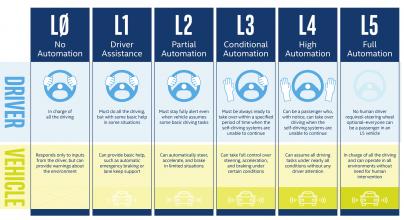
The timelines proposed by automobile manufacturers for enabling fully autonomous driving are extremely aggressive. At the recent DAC55 conference in San Francisco, I attended a panel discussion on Functional Safety issues for assisted and autonomous driving, sponsored by Mentor Graphics. I also had the opportunity to chat… Read More
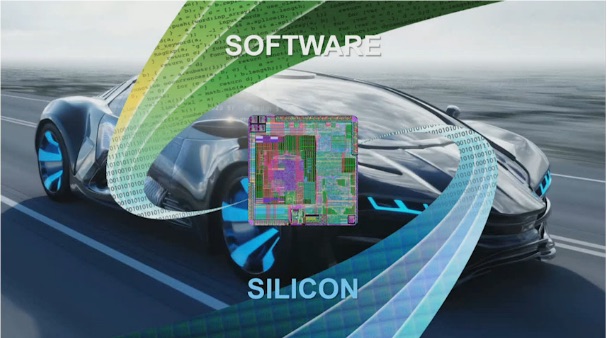
Automotive applications are having a tremendous influence on semiconductor design. This influence is coming from innovations in cloud computing, artificial intelligence, communications, sensors that all serve the requirements of the automotive market. It should come as no surprise that ADAS and autonomous driving are … Read More
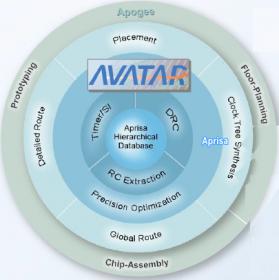
Earlier physical optimization impacts a design QoR gain and can disclose potential hurdles in dealing with unknown design variants such as new IP inclusion or new process node issues. Along the RTL-to-GDS2 implementation continuum, a left-shift move requires a robust modeling and proper context captures in order to produce… Read More
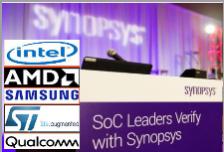
At DAC 2018, Synopsys held a lunch panel discussing verification challenges faced by the industry leaders, their adopted approaches and the overall verification technology trends. This panel of industry experts from Intel, AMD, Samsung, STM and Qualcomm also shared their viewpoints on what drives the SoC complexity and how… Read More
I attended on Monday, June 25, DAC’s Opening Day, a Cadence-sponsored Lunch panel. Ann Steffora Mutschler (Semiconductor Engineering) was the Moderator and the Panelists were Jim Hogan (Vista Ventures), David Lacey (HP Enterprise), Shigeo Oshima (Toshiba Memory Corp), Paul Cunningham (Cadence).… Read More
My IC design career started out with circuit design of DRAMS, so I got to quickly learn all about transistor-level design at the number one IDM in the world, Intel at the time. In the early days, circa 1978 we circuit designers actually had few EDA tools, mostly a SPICE circuit simulator followed by manual extraction, manual netlisting,… Read More
Getting your tape-out done on time is hard, but can it be made easier? That was the main topic of Mentor’s Calibre Panel held at DAC 2018, attended by a few key players in IC design ecosystem: Bob Stear, VP of Marketing at Samsung represented the foundry side; from the IP side, Prasad Subramaniam, VP of eSilicon for R&D and Technology;… Read More
This year I signed books in the Fractal booth (compliments of Fractal) and let me tell you it was quite an experience. IP quality is a very touchy subject and the source of many more tape-out delays than I had imagined. As it turns out, commercial IP is the biggest offender which makes no sense to me whatsoever. Even more shocking, one… Read More
A chain is as strong as its weakest link. This phrase resonates well in Static Timing Analysis (STA) domain, though it is about accuracy rather than durability. As timing signoff step provides the final performance readings of a design, an STA outcome is as good as its underlying components. Aside from the parasitic extraction … Read More
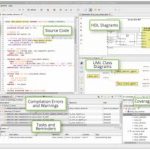
AMIQ EDA has caught my attention over the last few months. My first impression was that this was just another small IDE company trying to compete with established and bundled IDEs from the big 3, a seemingly insurmountable barrier. This view was challenged by an impressive list of testimonials, not just from the little guys but also… Read More








Musk’s Orbital Compute Vision: TERAFAB and the End of the Terrestrial Data Center