You are currently viewing SemiWiki as a guest which gives you limited access to the site. To view blog comments and experience other SemiWiki features you must be a registered member. Registration is fast, simple, and absolutely free so please,
join our community today!
WP_Term Object
(
[term_id] => 157
[name] => EDA
[slug] => eda
[term_group] => 0
[term_taxonomy_id] => 157
[taxonomy] => category
[description] => Electronic Design Automation
[parent] => 0
[count] => 4401
[filter] => raw
[cat_ID] => 157
[category_count] => 4401
[category_description] => Electronic Design Automation
[cat_name] => EDA
[category_nicename] => eda
[category_parent] => 0
[is_post] =>
)
Daniel is joined by Robert Kruger, product management director at Synopsys, where he oversees IP solutions for multi-die designs, including 2D, 3D, and 3.5D topologies. Throughout his career, Robert has held key roles in product marketing, business development, and roadmap planning at leading companies such as Intel, Broadcom,… Read More
By Kamal Khan
In today’s semiconductor industry, success hinges not only on innovation but also on discipline in managing complexity. Every system-on-chip (SoC) is built from hundreds of reusable IP blocks—standard cells, memories, interfaces, and analog components. These IPs are the foundation of the design. But if the foundation… Read More
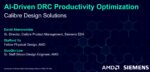
The semiconductor industry is undergoing a transformative shift with the integration of AI into DRC workflows, as showcased in the Siemens EDA presentation at the 2025 TSMC OIP. Titled “AI-Driven DRC Productivity Optimization,” this initiative, led by Siemens EDA’s David Abercrombie alongside AMD’s… Read More
GPUs have been proposed before to accelerate logic simulation but haven’t quite met the need yet. This is a new attempt based on emulating emulator flows. Paul Cunningham (GM, Verification at Cadence), Raúl Camposano (Silicon Catalyst, entrepreneur, former Synopsys CTO and lecturer at Stanford, EE292A) and I continue our series… Read More
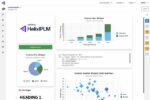
Today, Perforce IPLM stands at the intersection of data management, automation, and collaboration, shaping the way companies design the next generation of chips and systems. Looking ahead, its evolution will reflect the growing convergence of hardware, software, and AI-driven engineering.
WEBINAR – Future Forward:… Read More
AI’s rapid expansion is reshaping semiconductor design. The compute and I/O needs of modern AI workloads have outgrown what traditional SoC scaling can deliver. As monolithic dies approach reticle limits, yields drop and costs rise, while analog and I/O circuits gain little from moving to advanced process nodes. To sustain … Read More
One technical topic I always find intriguing is the availability of links between documentation and chip design. It used to be simple: there weren’t any. Architects wrote a specification (spec) in text, in Word if they had PCs, or using “troff” or a similar format if they were limited to Unix platforms. Then the hardware designers… Read More
As 2025 draws to a close, the semiconductor industry continues to push boundaries, particularly in automotive applications where reliability is non-negotiable. At the TSMC Open Innovation Platform forum this year, a collaborative presentation by NXP Semiconductors and Siemens EDA stood out: “Liberty IP Excellence:… Read More
The ASU-Silvaco Device Technology Computer-Aided Design Workshop is a pivotal educational and professional development event designed to bridge the gap between theoretical semiconductor physics and practical device engineering. Hosted by Arizona State University in collaboration with Silvaco, a leading provider of … Read More
SEMICON West was held in Phoenix, Arizona on October 7-9. This premier event brings the incredibly diverse global electronics supply chain together to address the semiconductor ecosystem’s greatest opportunities and challenges. The event’s tagline this year is:
Stronger Together — Shaping a Sustainable Future in Talent,… Read More
TSMC vs Intel Foundry vs Samsung Foundry 2026