You are currently viewing SemiWiki as a guest which gives you limited access to the site. To view blog comments and experience other SemiWiki features you must be a registered member. Registration is fast, simple, and absolutely free so please,
join our community today!
WP_Term Object
(
    [term_id] => 19172
    [name] => Chiplet
    [slug] => chiplet
    [term_group] => 0
    [term_taxonomy_id] => 19172
    [taxonomy] => category
    [description] =>
    [parent] => 0
    [count] => 239
    [filter] => raw
    [cat_ID] => 19172
    [category_count] => 239
    [category_description] =>
    [cat_name] => Chiplet
    [category_nicename] => chiplet
    [category_parent] => 0
    [is_post] =>
)
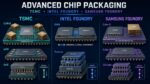
Advanced semiconductor packaging has become essential to improving computing performance as conventional transistor scaling grows more difficult and expensive. Instead of manufacturing an entire processor as one large monolithic die, chipmakers can divide it into smaller chiplets and combine logic, memory, input/output… Read More
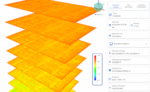
Signoff-quality design tools are mandatory for signoff, though not so good for early design exploration. Signoff demands high accuracy in design description and high precision in analysis. The first requirement can’t be met early in design where architecture decisions are still in flux, and the second depends on very detailed… Read More
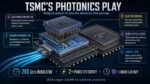
TSMC’s photonics strategy is centered on integrating optical input-output with advanced logic, rather than selling conventional optical transceivers as standalone products. The company is developing a silicon-photonics foundry platform and a packaging architecture called TSMC-COUPE, or Compact Universal Photonic … Read More
Intel is considering a return to memory technology decades after abandoning mainstream DRAM and, more recently, selling its NAND business. Chief executive Lip-Bu Tan has argued that memory should no longer be viewed simply as a low-margin commodity. Artificial intelligence is turning bandwidth, latency and data movement … Read More
Hot Chips 2026, formally the thirty-eighth Symposium on High Performance Chips, arrives at Stanford’s Memorial Auditorium from August 23 through 25 with a program that captures a decisive shift in computer architecture. Peak arithmetic throughput remains important, but the conference is increasingly about system balance:… Read More
Intel EMIB and Intel Foveros are advanced semiconductor-packaging technologies designed to combine multiple silicon dies, or chiplets, within one processor package. Both support heterogeneous integration: manufacturers can build different functions using the process technology best suited to each one, then connect … Read More
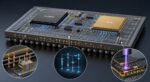
As wireless communication systems evolve toward 6G, satellite connectivity, advanced radar, and high-performance sensing applications, the integration of heterogeneous semiconductor technologies has become a critical challenge. Silicon CMOS remains the dominant platform for digital processing and system control,… Read More
I had a chance sit down with James Huang, Director of Engineering at Alchip Technologies, to discuss the company’s recent multi-die packaging achievements and learn about Alchip’s next steps in pushing the boundaries of innovation for next generation AI ASIC.
James is acknowledged as a leading light in advanced node ASICs, based… Read More
Purple was in fashion at the 2026 Design Automation Conference, where Synopsys reinforced its position at the forefront of AI-powered engineering. Under the conference’s “Chips to Systems” theme, the company showcased intelligent, end-to-end technologies designed to help the semiconductor industry manage unprecedented… Read More
Every generation of semiconductor innovation has relied on one fundamental principle: before a technology can be manufactured at scale, it must first be understood. That understanding comes through characterization.
For decades, characterization enabled process learning. It helped engineers understand transistor behavior,… Read More












Comparing Advanced Packaging from TSMC, Intel Foundry, and Samsung Foundry