You are currently viewing SemiWiki as a guest which gives you limited access to the site. To view blog comments and experience other SemiWiki features you must be a registered member. Registration is fast, simple, and absolutely free so please,
join our community today!
What systems can accomplish by combining semiconductors, AI, and software seems at times boundless. Chiplet-based semiconductors deliver this promise, allowing a myriad of complex digital, memory, analog and photonic functions to be condensed into a single semiconductor package for higher performance, lower power consumption… Read More
For advanced semiconductor designs, achieving both design rule check clean layouts and optimal electrical performance is crucial for minimizing design iterations, reducing time-to-market and ensuring product reliability. Balancing electrical performance and layout integrity is a difficult task. Achieving an optimal… Read More
At the 2024 TSMC OIP Ecosystem Forum, one of the technical talks by TSMC focused on maximizing 3DIC design productivity and rightfully so. With rapid advancements in semiconductor technology, 3DICs have become the next frontier in improving chip performance, energy efficiency, and density. TSMC’s focus on streamlining the… Read More
As integration levels increase, clock frequencies rise, and feature sizes shrink it is not surprising that all or most aspects of semiconductor design become more complex and demand more from design technologies. One example where the traditional approach is breaking down is in optimizing power distribution networks (PDNs)… Read More
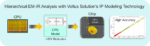
Power integrity analysis in large chip designs is especially challenging thanks to the huge dynamic range the analysis must span. At one end, EM estimation and IR drop through interconnect and advanced transistor structures require circuit-level insight—very fine-grained insight but across a huge design. At the other, activity… Read More
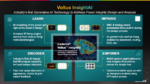
You probably remember Cadence introduced Voltus towards the end of last year at their signoff summit. This was aimed at digital designers. Prior to that they had announced Tempus, their static timing analysis tool. More recently they announced Quantus QRC extraction. All of these tools that end in -us have been re-architected… Read More