






By Frank Schirrmeister, Synopsys
Disclaimer: This article is written in my role as Engineering Track Chair for DAC 2026
If you’ve ever walked out of DAC with a handful of practical ideas you could put to work when you return to work, you already know the value of the Engineering Track. It’s where practitioners talk to practitioners – front‑end to back‑end, IP to systems & software – about what actually shipped, what almost derailed, and what really worked.
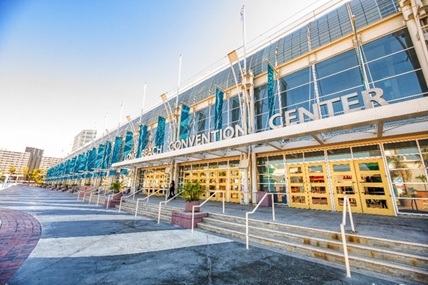
With DAC 2026 heading to Long Beach this year (July 26–29), the submission window gives you one more week to get your story into the program: the Engineering Track Call for Contributions closes on January 20, 2026.
DAC’s Engineering Track = The Workbench of the Conference
Think of the Engineering Track as the place where the industry checks claims against data. The four pillars are well‑known:
Front‑End Design, Back‑End Design, IP, and Systems & Software.
The bar for acceptance is pragmatic impact reviewed by your industry peers: integration experience, deployment lessons, measurable outcomes. This is curated by a large Technical Program Committee – we are about 150 reviewers strong this year – precisely to keep sessions practical, concise, and dense with takeaways.
For 2026, DAC is doubling down on that ethos. The official call emphasizes practical insights and real‑world experiences across the design ecosystem, and you have until January 20th to submit your experiences.
What’s Hot – and Why Your Experience Matters Now
First, Agentic AI is moving into mainstream workflows. At DAC62, the buzz wasn’t just “AI in EDA,” it was agentic AI – multi‑agent systems reasoning over flows, data, and constraints. The Microsoft Monday keynote spotlighted reasoning agents, and live demonstrations showed agents collaborating autonomously on parts of a chip design flow.
The consensus: agents can tame complexity, but humans remain firmly in the loop for sign‑off and safety. If you’ve piloted LLMs or agents in verification, synthesis exploration, debug, or collateral generation, the community wants the gritty details—wins, misses, cost curves, and guardrails.
Zooming in, last year’s Engineering Track special session “AI‑enabled EDA” assembled startup and industry voices (ChipStack→Cadence, Silimate, Rise, ChipAgents, VerifAI, Bronco AI, VerifAIX).
The through‑line? Move beyond script helpers to agent‑driven reasoning across the silicon lifecycle. If you’ve tried that jump (even partially), your evidence—coverage movement, regression stability, debug time, data hygiene—will land well for the DAC 2026 Engineering Track.
Second, Chiplets and multi‑die aren’t hypothetical anymore. From the Chiplet Pavilion to tool vendor panels, DAC62 made clear: heterogeneous packaging, 3D‑IC, and chiplets are scaling fast – and the bottlenecks are integration discipline and automation.
The industry’s discussions around “SoC Cockpit” automation, dedicated chiplet content, and panel takeaways all point to flows that must span system spec to signoff with tighter feedback loops.
What has your team learned about interposer modeling, package‑aware verification, DFT for multi‑die, or HBM timing closure under realistic workloads? Bring the receipts.
Third, Software‑defined systems reshape verification and bring‑up. Automotive and aerospace teams at DAC62 described accelerating pre‑silicon software bring‑up using emulation, virtual models, and scenario‑based validation – because lifetime validation and OTA‑driven features demand it.
If you’ve connected emulation/prototyping to CI/CD, instrumented performance/power at scale, or fused virtual platforms with lab rigs, those “how we wired it” details are gold for peers as part of the Engineering Track in 2026.
Finally, the AI imperative touches the whole stack. Arm’s SKYTalk at DAC62 framed AI as a systems problem: technology leadership, a complete systems approach, and a robust ecosystem. That systems lens maps perfectly to the Engineering Track: cross‑discipline integration stories beat single‑point heroics every time.
If you navigated cross‑org collaboration (IP vendors, foundry, cloud, toolchains) to make an AI workload viable, that’s exactly the content the Engineering Track is built to surface.
What a Strong Engineering Track Submission Looks Like
SemiWiki readers gravitate to specifics: numbers, tooling, and lessons learned. So do DAC’s reviewers. Across the four categories, consider framing your six-page abstract submission using this structure:
- Problem & context. One page: node, die count, workload class, volume/latency/latency‑jitter, safety/security constraints. If applicable, cite DAC alignment – AI agents, chiplets, SW‑
- Approach & toolchain. Call out the stack – simulation + emulation, prototyping, virtual platforms, physical signoff, package/thermal analysis, LLM/agent frameworks, data backplane. Reviewers will assess architectural clarity.
- Evidence & metrics. Be precise: % timing slack improvement post‑package‑aware optimization; coverage delta via agent‑generated tests; regression throughput speedups (x‑fold) after moving to hardware‑assisted verification; power/perf shifts under production workloads. The various DAC62 recaps made clear: people are quantifying their results.
- Pitfalls & playbook. What failed first? Data cleanliness, model fidelity, agent drift, spec/versioning? Turn your scar tissue into a 3–5 step “do this first” list.
Remember, DAC 2026 is Chips to Systems end‑to‑end.
The conference is explicitly inviting contributions that span disciplines, not just point optimizations.
Special Sessions: Curate the Cross‑Cutting Conversations
Beyond standard talks and posters, Engineering Track Special Sessions can stitch together themes like Agentic AI across the flow, From executable spec to multi‑die signoff, or Software‑defined validation at scale. The 2025 panel on AI‑enabled EDA startups drew strong interest because it packed diverse, hands‑on perspectives. If you can convene 3–5 voices (user + tool + ecosystem), you’ll help frame where practice is heading in 2026.
Final Nudge: Your Story Will Help Someone Ship
The best DAC Engineering Track talks I’ve seen aren’t victory laps; they’re honest accounts where a team wrestled with modern complexity – agents in the loop, multi‑die realities, software‑defined validation – and found a pattern worth sharing.
DAC62 proved the appetite is huge: agentic AI is advancing quickly, chiplets are mainstreaming, and the community is aligning on systems‑level thinking.
Now it’s your turn to add to that collective playbook.
Submit by January 20 and bring your hard‑won lessons to the people who will put them to work. Start here for the Engineering Track Submissions, and here for the Engineering Track Special Sessions.
See you in Long Beach!
Disclaimer: This article is written in my role as Engineering Track Chair for DAC 2026
Also Read:
CES 2026 and all things Cycling
Podcast EP326: How PhotonDelta is Advancing the Use of Photonic Chip Technology with Jorn Smeets
Webinar: Why AI-Assisted Security Verification For Chip Design is So Important
Share this post via:



Musk’s Orbital Compute Vision: TERAFAB and the End of the Terrestrial Data Center