You are currently viewing SemiWiki as a guest which gives you limited access to the site. To view blog comments and experience other SemiWiki features you must be a registered member. Registration is fast, simple, and absolutely free so please,
join our community today!
            WP_Term Object
(
    [term_id] => 51
    [name] => RISC-V
    [slug] => risc-v
    [term_group] => 0
    [term_taxonomy_id] => 51
    [taxonomy] => category
    [description] =>
    [parent] => 178
    [count] => 181
    [filter] => raw
    [cat_ID] => 51
    [category_count] => 181
    [category_description] =>
    [cat_name] => RISC-V
    [category_nicename] => risc-v
    [category_parent] => 178
    [is_post] =>
)

WP_Term Object
(
    [term_id] => 51
    [name] => RISC-V
    [slug] => risc-v
    [term_group] => 0
    [term_taxonomy_id] => 51
    [taxonomy] => category
    [description] =>
    [parent] => 178
    [count] => 181
    [filter] => raw
    [cat_ID] => 51
    [category_count] => 181
    [category_description] =>
    [cat_name] => RISC-V
    [category_nicename] => risc-v
    [category_parent] => 178
    [is_post] =>
)
COMPUTEX 2026 officially concluded under the theme “AI Together,” bringing the global semiconductor and computing ecosystem together to showcase the latest advances in artificial intelligence, HPC, and intelligent systems. While AI accelerators and advanced computing platforms dominated the exhibition floor, one collaboration… Read More
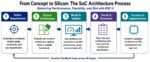
As semiconductor complexity accelerates across AI, automotive, and edge computing markets, SoC architecture has become a critical determinant of commercial success. Modern silicon programs must simultaneously achieve aggressive performance-per-watt targets, support evolving workloads, and maintain manageable development… Read More
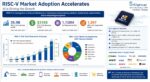
The semiconductor industry has experienced several defining transitions over the last three decades. We moved from single-core to multicore processors, from ASIC-centric designs to IP-based SoCs, and from monolithic integration to heterogeneous architectures. Today, another transition is underway, one that may ultimately… Read More
The momentum behind RISC-V continues to accelerate as Akeana announced a strategic collaboration with Samsung Electronics aimed at reducing time-to-market for next-generation server and agentic AI silicon. The partnership combines Akeana’s high-performance RISC-V compute platform with Samsung Foundry’s advanced process… Read More
In the EDA world, “Shift-Left” has traditionally been a mantra for early software development—booting the OS before the silicon even leaves the fab. But as the RISC-V revolution accelerates, the goalposts have moved. We are seeing the emergence of a “New Shift-Left”, one that focuses on critical architectural… Read More
In the functional verification space, Breker Verification Systems stands out for its vast and long-standing understanding and ability to solve many of the seemingly intractable complexity challenges, especially in the system space.
I recently talked with Dave Kelf, Breker’s CEO, who has plenty of good news to share about Breker’s… Read More
SiFive’s newly announced $400 million Series G financing represents a significant technical inflection point for high-performance RISC-V CPU development targeted at agentic AI data center workloads. The funding, which values the company at $3.65 billion, is specifically intended to accelerate next-generation CPU IP, … Read More
Marc Evans, Director of Business Development & Marketing, Andes Technology USA
I work at a RISC-V IP company, and I genuinely root for Arm — probably more than most people in my position would admit. Not because I’m confused about who competes with whom, but because Arm’s best move for their shareholders is also… Read More
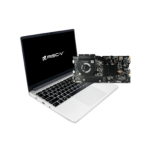
At a workshop in Boston on February 27, something subtle but important happened. Developers sat down in front of a RISC-V laptop, installed Fedora, and ran a local large language model. No simulation. No dev board tethered to a monitor. A laptop.
For more than a decade, RISC-V advocates have promised that the open instruction set… Read More
RVA23 marks a turning point in how mainstream CPUs are expected to scale performance. By making the RISC-V Vector Extension (RVV) mandatory, it elevates structured, explicit parallelism to the same architectural status as scalar execution. Vectors are no longer optional accelerators bolted onto speculation-heavy cores.… Read More