






Next-gen AI accelerators, high-performance processors, and complex computing architectures depend heavily on advanced packaging. Bringing multiple dies, chiplets, high-bandwidth memory, and advanced interconnects together into a single 2.5D or 3D package yields massive performance gains. However, this design evolution… Read More

Author: Kalar Rajendiran
Managing Power, Performance and Reliability in the Chiplet Era
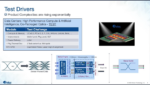
Synopsys Announces AgentEngineer Solutions and Autopilot Platform for Autonomous Engineering
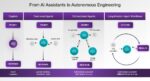
Synopsys today announced its AgentEngineerTM solutions portfolio and AutopilotTM Platform, advancing a fundamental paradigm shift in electronic design automation (EDA): moving beyond AI copilots toward autonomous engineering agents. Following a recent technical briefing with Thomas Andersen, Vice President of AI and… Read More
Tokens Per Watt Over Peak Performance: Retrofitting Heterogeneous Silicon for Production Inference

👉 This is Part 2 of an editorial series on the evolving economics of AI inference. If you missed Part 1, where I broke down the shift toward full-system integration, the lessons from the AI Infra Summit, and the “no forks” open-source philosophy, you can read it HERE: Beyond the Accelerator: Why Silicon Challengers … Read More
The Intelligence Revolution: TSMC’s OIP Ecosystem Forges the Path to Trillion-Transistor AI Systems

At the 2026 OIP Ecosystem Forum, the industry narrative shifted from incremental scaling to what TSMC defines as the “Intelligence Revolution.” Akin to the 18th-century Industrial Revolution which transitioned human physical labor to mechanical power, the current era is augmenting human ingenuity through … Read More
Beyond the Accelerator: Why Silicon Challengers Must Transition to Full-System Infrastructure

The recent AI Infra Summit was exceptionally jam-packed, filled to the brim with compelling talks, overlapping tracks, and emerging technologies. Amid the noise of the event, there were many excellent presentations detailing the physical realities of scaling hardware. But one presentation in particular caught my attention… Read More
The $9.5 Billion Design IP Market: Shifting Boundaries, Arm’s Monopoly, and the RISC-V Response
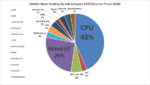
While semiconductor design intellectual property (IP) is a $9.45 billion market, it acts as the absolute architectural bottleneck for the entire global semiconductor value chain. The choices made at the IP layer today dictate the cost, power, and security of a downstream technology economy rapidly marching toward a trillion… Read More
PDF Solutions’ Exensio Was Built for Semiconductor Analytics. The New Exensio Aurora Architecture Is Built for Semiconductor Intelligence.

The semiconductor industry doesn’t have a shortage of data. It has a shortage of ways to turn that data into useful manufacturing insights quickly enough to matter.
That is the problem PDF Solutions’ Exensio solution has addressed for years. Built specifically for semiconductor manufacturing, Exensio brings … Read More
Industry’s First Certified Automotive Grade PUF for Software Defined Vehicles
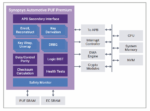
Software defined vehicles (SDVs) are transforming the automotive industry. Today’s vehicles are connected computing platforms that rely on advanced processors, artificial intelligence (AI), over the air (OTA) software updates, cloud services, and vehicle to everything (V2X) communications. Every electronic … Read More
From Process Learning to Production Control: Characterization for the Era of Heterogeneous Systems

Every generation of semiconductor innovation has relied on one fundamental principle: before a technology can be manufactured at scale, it must first be understood. That understanding comes through characterization.
For decades, characterization enabled process learning. It helped engineers understand transistor behavior,… Read More
The Architecture of Success: Why a Unified Semiconductor IP Strategy Is the Foundation of Modern SoC Design

As architects push toward advanced nodes and increasingly demanding workloads, modern silicon design has entered an era of unprecedented complexity. A single design respin can cost millions of dollars and delay market entry. Against this backdrop, designs must be balanced for performance, bandwidth, power efficiency, security… Read More







Intel Foundry: AI performance now depends on the whole system