You are currently viewing SemiWiki as a guest which gives you limited access to the site. To view blog comments and experience other SemiWiki features you must be a registered member. Registration is fast, simple, and absolutely free so please,
join our community today!
By Marko Suominen and Slava Zhuchenya of Siemens Digital Industries Software.
It’s often said that an orchestra without a conductor is just a collection of talented individuals making noise. The conductor’s role is to transform that potential cacophony into a unified, beautiful symphony. The same concept holds… Read More
The evolution of AI workloads has profoundly influenced hardware design, shifting from single-GPU systems to massive rack-based clusters optimized for parallelism and efficiency. As outlined in this Hot Chips 2025 tutorial, this transformation began with foundational models like AlexNet in 2012 and continues with today’s… Read More
In the rapidly evolving semiconductor landscape, imec’s recent breakthroughs in wafer-to-wafer hybrid bonding and backside technologies are reshaping the future of compute systems. As detailed in their article, these innovations transition CMOS 2.0 from a conceptual framework to practical reality, enabling denser,… Read More
In an era dominated by artificial intelligence (AI), machine learning (ML), and high-performance computing (HPC), the demand for semiconductors that deliver high data throughput, low latency, and energy efficiency has never been greater. Traditional chip designs often struggle to keep pace with these requirements, leading… Read More
Todd Burkholder and Andras Vass-Varnai, Siemens EDA
As semiconductor devices become smaller, more powerful and more densely integrated, thermal management has shifted from an afterthought to a central challenge in modern IC design. In contemporary 3D IC architectures—where multiple chiplets are stacked and closely arrayed—power… Read More
Designing semiconductor chips has traditionally been costly and controlled by a few major Electronic Design Automation (EDA) vendors—Cadence, Synopsys, and Siemens EDA who dominate with proprietary tools protected by NDAs and restrictive licenses. Fabrication also requires expensive, often export-controlled equipment.… Read More
As modern computing systems evolve toward greater parallelism, multithreaded and distributed architectures have become the norm. While this shift promises increased performance and scalability, it also introduces a fundamental challenge: debugging concurrent code. The elusive nature of race conditions, deadlocks, … Read More
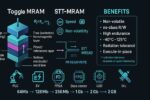
Everspin’s recent fireside chat, moderated by Robert Blum of Lithium Partners, offered a crisp look at how the company is carving out a durable niche in non-volatile memory. CEO Sanjeev Agrawal’s core message was simple: MRAM’s mix of speed, persistence, and robustness lets it masquerade as multiple memory classes, data-logging,… Read More
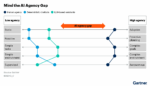
Agentic AI refers to goal-driven software entities—“digital coworkers”—that can plan, decide, and act on an organization’s behalf with minimal supervision. Unlike classic chatbots or coding assistants that respond only to prompts, agentic systems combine models (e.g., LLMs) with memory, planning, tools/APIs, sensing,… Read More
Problem & significance.
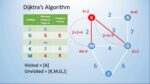
Single-source shortest paths (SSSP) on directed graphs with non-negative real weights is a pillar of graph algorithms. For decades, the textbook gold standard has been Dijkstra’s algorithm with good heaps, running in the comparison-addition model (only comparisons and additions on weights).… Read More















Musk’s Orbital Compute Vision: TERAFAB and the End of the Terrestrial Data Center