




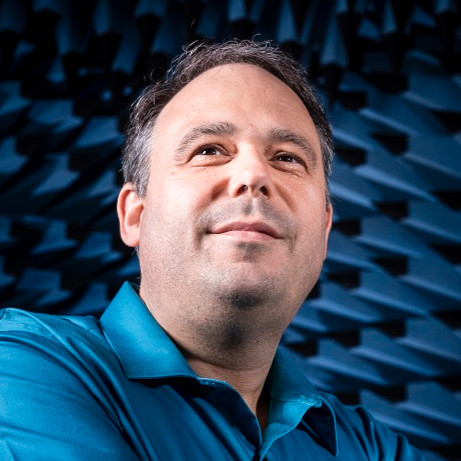



By Alain-Serge Porret, Vice President, Integrated & Wireless Systems, CSEM
Since ramping up several years ago, the global semiconductor and artificial intelligence (AI) race has been driven by scale, from building larger data centers, developing bigger and more powerful models, and with them, increasingly complex and power-hungry chips. The race for scale saw global investments in AI reach $252.3 billion in 2024 alone, according to Stanford University; that would represent a 50% increase from the previous year. Within this ecosystem, the prevailing assumption in many instances has been that competitiveness is a function of attracting the largest investments and creating the most computing power as fast as possible.
This logic has fueled significant innovations in recent years, but it has also created an environment in which only a handful of nations and organizations have the resources needed to join the race and participate at the highest levels.
With a population of less than nine million, Switzerland is a prime example of a country aiming to carve its own lane in this tight market. Not a member of the EU and not benefiting from the vast stretches of land and natural resources found in powerhouses like the United States and China that can fuel data centers and large fabrication plants, researchers have instead taken a unique approach to securing a seat at the table. Instead of trying to outmuscle the bigger names, the Swiss have focused on outperforming in areas of efficiency, specialization and precision, with a focus on ultra-low-power semiconductor design.
This route is beginning to shift from effective to essential as the world begins to grapple with supplying the resources, from rare earths to energy, that are required to support today’s dominant theories around semiconductor design.
Chips and AI Heading Towards the Energy Wall
Over the past few years large AI models have grown considerably, and with that growth has come the need for more complex chips, bigger data centers, and subsequently more resources. Recent reports have predicted that in the United States alone, data centers could consume upwards of 68 billion gallons of water a year by 2028, with an estimated three percent of all electricity consumption around the world being tied to AI demands by just 2030.
The scale-centric trajectory of the industry is colliding with physical and economic limits, with power grids already stretched to their limits. Even leading companies that once championed aggressive scale are now looking how to properly size chips for the energy realities of today by incorporating efficiency measures, model compression, hardware specialization, and on-device intelligence to reduce costs and carbon footprint.
But in situations where you cannot scale up, you can always scale inwards, refining each part of the process, reducing unnecessary computation and optimizing to be more energy efficient. There are few nations doing this better than Switzerland.
By optimizing inward, chips are able to perform more complex tasks, such as in cases of face anonymization, driver monitoring, medical inference, condition monitoring, and much more, while only using a fraction of the energy that typical cloud-based AI pipelines require. Power demands are rising, and costs are rising with them. As they do, this level of optimization becomes central to the future of AI deployment.
Specialization Beats Scale When the Job Demands It
Switzerland’s approach is built on a growing recognition that general-purpose AI models are not always the most effective. The world’s largest AI models are extraordinary tools that are changing the way we work and live seemingly by the day. However, their breadth of function can come with tradeoffs, even beyond their high energy requirements. Oftentimes when we focus on becoming a jack of all trades, we naturally wind up being a master of none.
By contrast, Swiss research organizations and innovation centers, such as CSEM, have concentrated on tailored systems designed to excel at highly specialized functions. For example, work on custom Application-Specific Integrated Circuits (ASICs) has shown instances where specialized circuits can match, or even exceed, the performance of general-purpose processors, while only using a fraction of the energy. In other cases, domain-specific AI models, trained to recognize patterns in constrained environments, often outperform larger models when applied to targeted use cases.
While this focus limits potential applications, it homes in on core critical functions to perform specific tasks locally, reliably, securely and quickly. By understanding the constraints of one problem, engineers can develop solutions that utilize only enough computing power and energy needed to accomplish that one problem. Take, for instance, privacy-preserving AI systems that forget personal biometric data immediately after input, or driver-monitoring systems that need to run continuously, without affecting a vehicle’s battery performance. These challenges require intelligence that is small, local, and efficient, rather than a model that is attempting to accomplish everything at once, often within the cloud on a distant data center.
These specialized technologies serve as a complement, rather than a competition. This carves out a separate clean lane for nations and research institutions that do not benefit from billions of investment dollars or massive resources. Switzerland’s contribution to the global ecosystem is not to replace large-scale AI, but to supply the high-efficiency components that empower those with specific functions that need to be met in a highly-sustainably and precise manner.
Precision Engineering as a National Advantage
Switzerland’s success in this niche is not accidental or coincidental. It flows from a national ecosystem shaped by decades, if not centuries of precision, and an educational system that aims to perpetuate those skills for the digital age. From deep roots in watchmaking, to more modern advanced manufacturing, biomedical instrumentation and micro-electronics research, Switzerland has garnered a strong reputation for building devices built to perform highly specialized tasks flawlessly. These areas have aligned naturally with the needs of ultra-low-power and energy-efficient semiconductor design.
The country has also worked carefully to create a collaborative environment that emphasizes speed and agility, empowering them to quickly prototype and test specialized chips. Researchers and engineers work closely with industry partners, allowing concepts to move from lab to deployment quickly while maintaining high standards for performance and reliability. The emphasis on interdisciplinary interactions, which combines education, manufacturing, technology and research, enables a focused approach throughout the process.
Switzerland’s political neutrality and stable research funding environment also allow long-term projects to thrive. Rather than chasing short-term market cycles, institutions can invest in technologies with value creation horizons measured in years, rather than months. Engineers working on chip development in the country embody the national ethos by identifying strategic niches where precision, reliability, and efficiency matter more than size, and then excelling within those boundaries.
Looking Ahead: Why This Model Matters for the Future of AI and Chips
As the global AI and semiconductor ecosystems evolve at a breakneck pace, Switzerland’s approach is creating a blueprint for countries and regions looking for viable ways to contribute to the global chips race without matching the massive scale. The future will not be defined solely by the largest models or the biggest data centers. Instead, it will be important to keep in mind that:
- Efficiency is a competitive advantage. As energy becomes a limiting factor, systems that deliver strong performance at low power will hold increasing value across sectors.
- Specialization can outperform scale. Domain-specific intelligence and custom hardware will continue to offer superior performance for real-time, safety-critical, and privacy-sensitive applications.
- Niche excellence strengthens the global ecosystem. Small, highly optimized models and chips can integrate with and enhance larger AI systems, enabling better performance at the system level than any single approach could achieve alone.
As the AI and semiconductor industries look to the next decade, those who can focus on more precise and sustainable approaches are ideally positioned to not only get a piece of the pie but also create a far stronger and adaptable AI and chips environment for the entire globe.
Also Read:
Agentic at the Edge in Automotive and Industry
Arteris Smart NoC Automation: Accelerating AI-Ready SoC Design in the Era of Chiplets
Share this post via:




Musk’s Orbital Compute Vision: TERAFAB and the End of the Terrestrial Data Center