





Chip-level vulnerability is becoming an existential threat for virtually all systems. The time to ensure your chip designs are resistant to these attacks is now. Caspia presented a webinar recently that provides important information on how to build attack-resistant chips. If you missed it, don’t worry. A replay link is coming. First, let’s examine how Caspia shows you how to fix security flaws before it’s too late.
The Presenters
This webinar was presented in collaboration with SemiWiki and Caspia Technologies. Presenting for Caspia were:

Beau Bakken, who provided an overview of the new AI-driven features of the latest release of CODAx, Caspia’s RTL static security enhancement tool. Beau is VP of Products at Caspia. He works on the definition of new products and the associated go-to-market strategies. Beau has been with Caspia for over five years. Before that, he spent time at the National Science Foundation.

Dr. Zahin Ibnat then presented actual results that CODAx found in a popular root-of-trust design. She explained the nature of the security flaws and ran a live hands-on demo of CODAx. Zahin is an R&D Application Engineer at Caspia. She works with customers to ensure effective deployment of Caspia’s solutions.
The Presentation
Beau began the webinar with a presentation that covered many key topics. He provided an overview of the growing threat landscape. The statistics he shared may shock you. What you don’t know can hurt you. AI agents such as Claude Mythos are autonomously discovering and exploiting vulnerabilities at machine speed. Are you ready for these assaults?
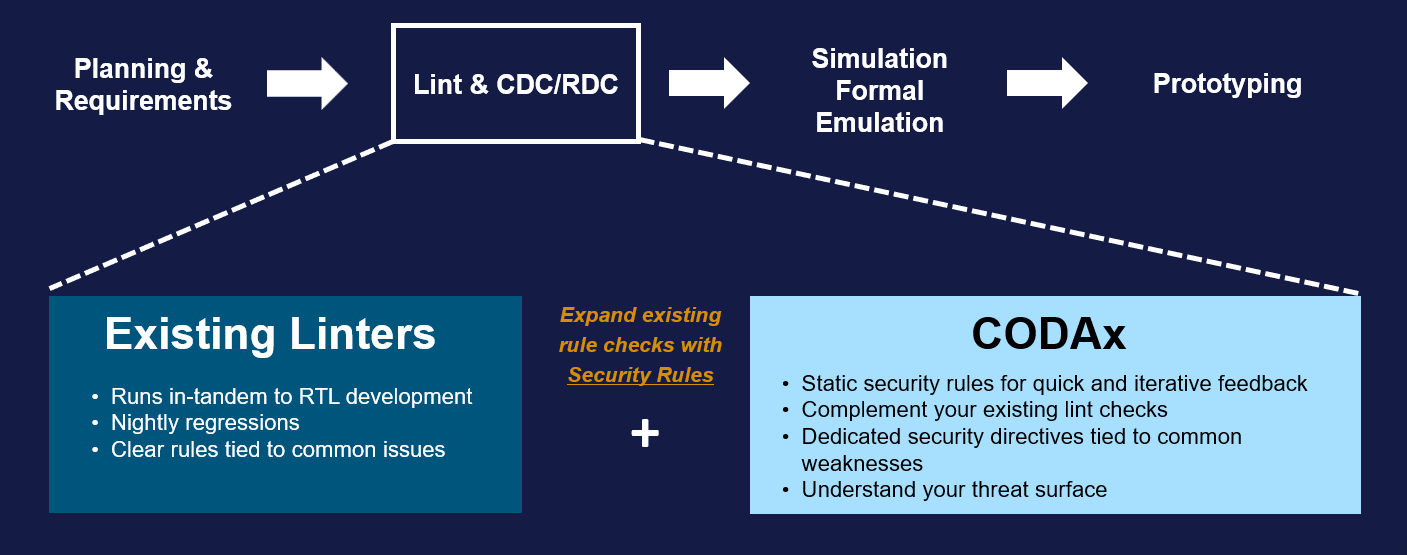
Beau then explored what’s needed to build the required security verification and repair into your design flow. Expertise and scalability are key requirements here. He described how Caspia’s static RTL checking tool, CODAx adds critical security checking and repair capabilities to any design flow. He showed how to expand your existing Lint processes to include extensive security checks with a tool that is built for non-security engineers. The figure below illustrates how CODAx fits into existing flows.
He then covered some of the very useful new features of the recent CODAx release. These include:
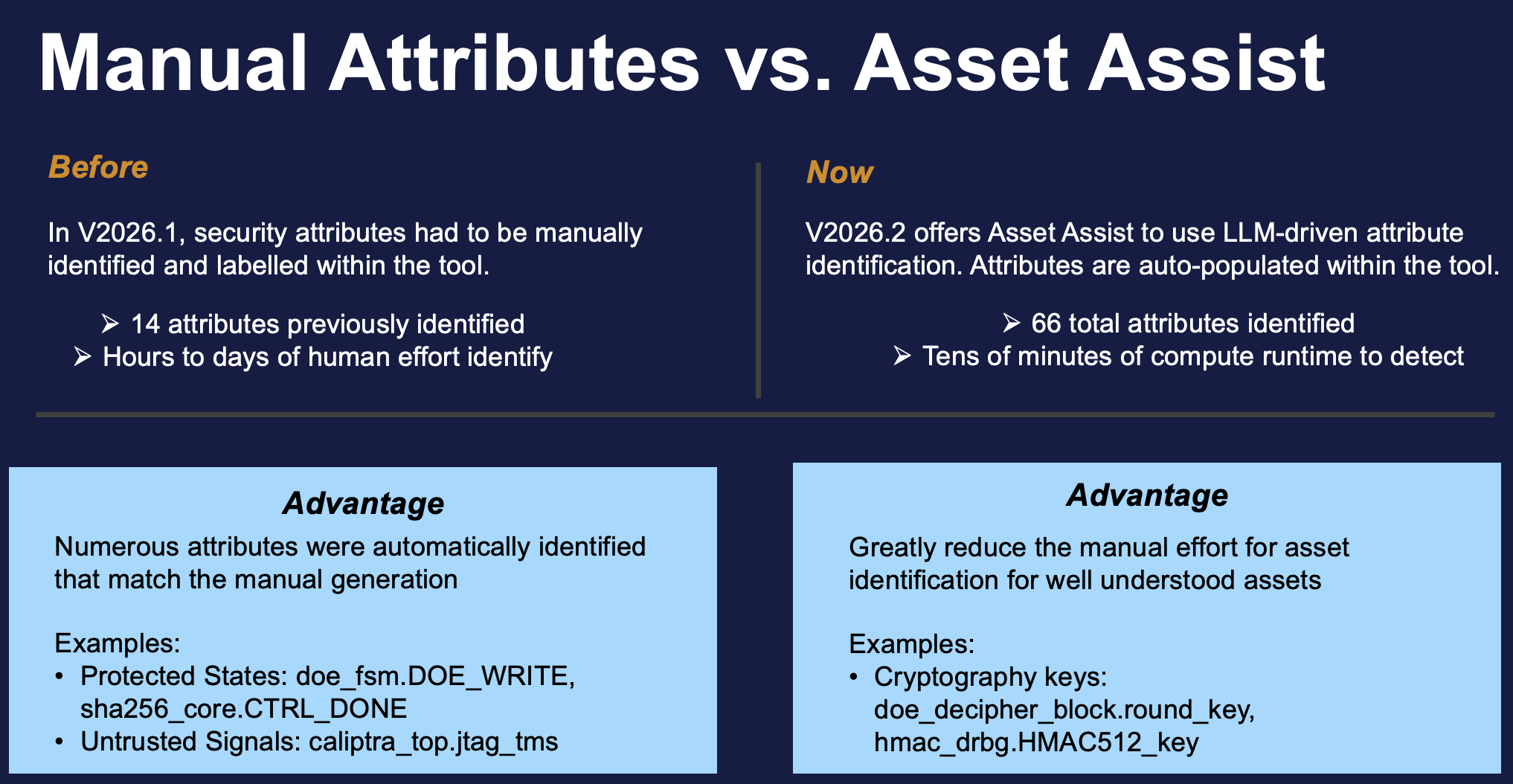
Asset Assist: that automatically identifies security-critical assets, eliminating manual security annotation for certain CODAx checks. This reduces reliance on security experts, enabling non-experts to run with minimal setup.
Report Assist: that summarizes complex violation reports, condensing detailed findings into clear, high-level insights. This facilitates prioritizing highest-risk issues by ranking violations based on impact and exploitability. The result is streamlined triage and remediation, providing a guided context to accelerate debugging and fixes.
The Demo
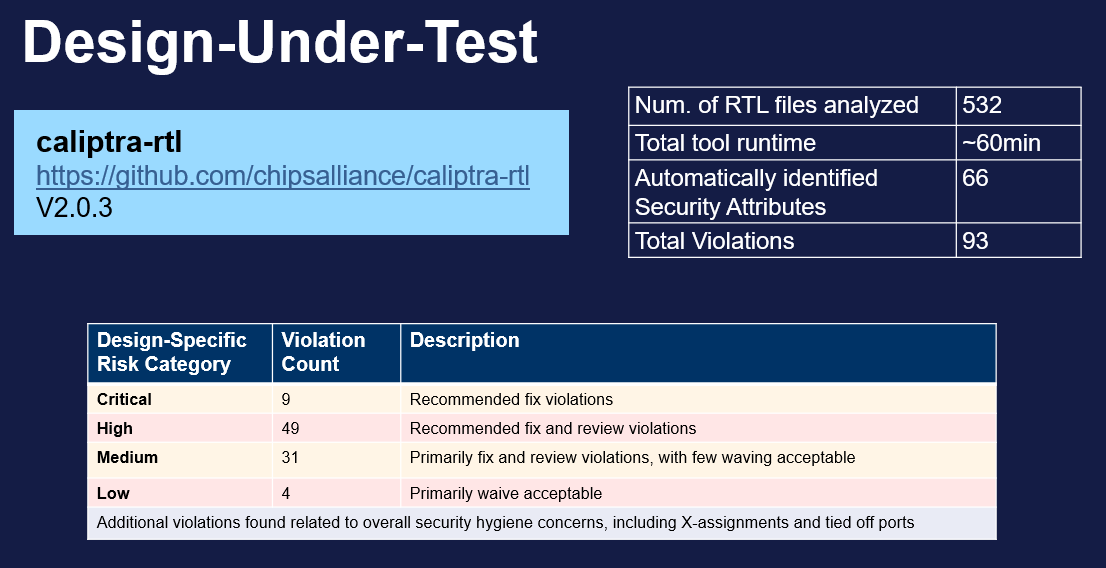
Dr. Zahin Ibnat provided a comprehensive hands-on security analysis demo. The popular Caliptra open-source root-of-trust design was the primary focus here. She began with a detailed overview of the design and how CODAx was applied to it. She described the security issues that were found. A summary of these security issues is shown in the figure below.
She then went through the details of how CODAx was applied to the design and how the various security risks were identified. The flow is quite easy to follow. The expertise that CODAx adds to all design flows is very clear. Any engineer can apply expert-level security analysis with this flow. There are many examples of how CODAx simplifies the process. The figure below shows an example of the impact that the new Asset Assist feature delivers.
Zahin showed many more security analysis scenarios to identify and fix weaknesses. She concluded with a deep dive on four example violations. By the end of this webinar, you will start to feel like a security expert.
To Learn More
Thanks to sophisticated AI, a growing security threat is coming. This webinar shows you how to be ready for it. If you’re involved in complex chip design, it is a must-see event. You can watch the webinar replay here. And that’s how Caspia shows you how to fix security flaws before it’s too late.
Also Read:
WEBINAR: Caspia’s AI Makes You a Security Verification Expert
Share this post via:



Comments
There are no comments yet.
You must register or log in to view/post comments.