You are currently viewing SemiWiki as a guest which gives you limited access to the site. To view blog comments and experience other SemiWiki features you must be a registered member. Registration is fast, simple, and absolutely free so please,
join our community today!
WP_Term Object
(
    [term_id] => 157
    [name] => EDA
    [slug] => eda
    [term_group] => 0
    [term_taxonomy_id] => 157
    [taxonomy] => category
    [description] => Electronic Design Automation
    [parent] => 0
    [count] => 4439
    [filter] => raw
    [cat_ID] => 157
    [category_count] => 4439
    [category_description] => Electronic Design Automation
    [cat_name] => EDA
    [category_nicename] => eda
    [category_parent] => 0
    [is_post] =>
)
Shelly Henry is the CEO and Co-Founder of MooresLabAI, bringing over 25 years of semiconductor industry experience. Prior to founding MooresLabAI, Shelly led silicon teams at Microsoft and ARM, successfully delivering chips powering billions of devices worldwide. Passionate about driving efficiency and innovation, Shelly… Read More
Power densities on chips increased from 50-100 W/cm2 in 2010 to 200 W/cm2 in 2020, creating a significant challenge in removing and spreading heat to ensure reliable chip operation. The DAC 2025 panel discussion on new cooling strategies for future computing featured experts from NVIDIA Research, Cadence, ESL/EPFL, the University… Read More
Digital audio processing is evolving into an art form, particularly in high-end applications such as automotive, cinema, and home theater. Innovation is moving beyond spatial audio technologies to concepts such as environmental correction and spatial confinement. These sophisticated soundscapes are driving a sudden increase… Read More
By Mark Tawfik
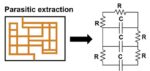
Parasitic extraction is essential in integrated circuit (IC) design, as it identifies unintended resistances, capacitances, and inductances that can impact circuit performance. These parasitic elements arise from the layout and interconnects of the circuit and can affect signal integrity, power consumption,… Read More
As the new name reflects, chip and system design were a major focus at DAC. So was the role of AI to enable those activities. But getting an AI-enabled design flow to work effectively across chip, subsystem and system-level design presents many significant challenges. One important one is effectively managing the vast amount of… Read More
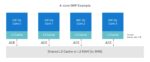
As AI, HPC, and networking applications demand ever-higher compute and bandwidth, SoC complexity continues to grow. Traditional 50M ASIC equivalent gate FPGA prototyping systems have become less effective for full-chip verification at scale. Addressing this challenge, S2C introduced the Prodigy S8-100 Logic system, powered… Read More
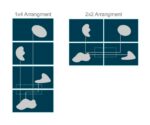
The semiconductor industry is rapidly moving beyond traditional 2D packaging, embracing technologies such as 3D integrated circuits (3D ICs) and 2.5D advanced packaging. These approaches combine heterogeneous chiplets, silicon interposers, and complex multi-layer routing to achieve higher performance and integration.… Read More
AI technology was prevalent at DAC 2025, but can we really trust what Generative AI (GenAI) is producing? Vishal Moondhra, VP of Solutions Engineering from Perforce talked about this topic in the Exhibitor Forum on Monday, so I got a front row seat to learn more.
Vishal started out by introducing the four challenges and risks of using… Read More
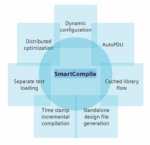
In the race to deliver ever-larger SoCs under shrinking schedules, simulation is becoming a bottleneck. With debug cycles constrained by long iteration times—even for minor code changes—teams are finding traditional flows too rigid and slow. The problem is further magnified in continuous integration and continuous deployment… Read More
Innovation is never ending in verification, for performance, coverage, connection to verification plans and other aspects of DV. But debug, accounting for 40% of the verification cycle, has remained stubbornly resistant to significant automation. Debug IDEs help to visualize but don’t address the core problem: given a failure,… Read More












Chemical Origins of Environmental Modifications to MOR Lithographic Chemistry