You are currently viewing SemiWiki as a guest which gives you limited access to the site. To view blog comments and experience other SemiWiki features you must be a registered member. Registration is fast, simple, and absolutely free so please,
join our community today!
By Bhanu Pandey
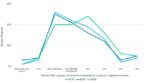
The semiconductor industry is currently facing a significant challenge in functional verification. According to the most recent Wilson Research Group / Siemens EDA Functional Verification Study, first-silicon success rates have hit a historic low, with nearly 68% of designs requiring two or more spins. While… Read More
The 2026 Siemens EDA and Wilson Research Group study just came out. Verification now eats close to half the schedule on every IC and FPGA program. I don’t doubt that number. What I don’t know is how much of it is actually verification, and how much of it is something else showing up disguised as verification.
Sometimes… Read More
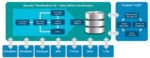
SoC projects are running behind schedule as design and verification complexity has increased dramatically, so just adding more engineers, more tests and more compute aren’t the answer. The time is ripe to consider smarter ways to improve verification efficiency. The added complexity of multiple embedded processors, multiple… Read More
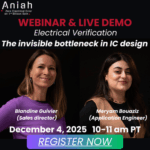
In the complex world of IC design, electrical verification has emerged as a critical yet often overlooked bottleneck. Aniah’s upcoming webinar on December 4, 2025, titled “Electrical Verification: The Invisible Bottleneck in IC Design,” sheds light on this issue, introducing their groundbreaking OneCheck® solution. … Read More
On big chip design projects the logic verification effort can be larger than the design effort, taking up to 70% of the project time based on data from the 2022 Wilson Research Group findings. Sadly, the first silicon success rate has gone downwards from 31 percent to just 24 percent in the past 8 years, causing another spin to correct… Read More
Harry Foster and I started in semiconductors at the same time so it was great to reminisce while talking about the latest Wilson Research Group Functional Verification Trend reports. Before I get into the reports lets talk about Harry who is a verification superstar:
Harry is Chief Scientist Verification for the Design Verification… Read More
ASIC or FPGA? Each design style has earned designers’ votes depending on the level of urgency, application complexity and funding of their assigned projects. While it is feasible to transition from ASIC to FPGA design or vice versa, such a move is usually done across project refresh instead of midcourse.
Both Xilinx and … Read More