Array
(
    [content] => 
    [params] => Array
        (
            [0] => /forum/threads/google%E2%80%99s-400-000-chip-monster-tensor-processing-unit-just-destroyed-nvidias-future.24139/
        )

    [addOns] => Array
        (
            [DL6/MLTP] => 13
            [Hampel/TimeZoneDebug] => 1000070
            [SV/ChangePostDate] => 2010200
            [SemiWiki/Newsletter] => 1000010
            [SemiWiki/WPMenu] => 1000010
            [SemiWiki/XPressExtend] => 1000010
            [ThemeHouse/XLink] => 1000970
            [ThemeHouse/XPress] => 1010570
            [XF] => 2030770
            [XFI] => 1060170
        )

    [wordpress] => /var/www/html
)

Google’s 400,000-Chip Monster Tensor Processing Unit Just Destroyed NVIDIA's Future!

Daniel Nenni

Admin
Staff member
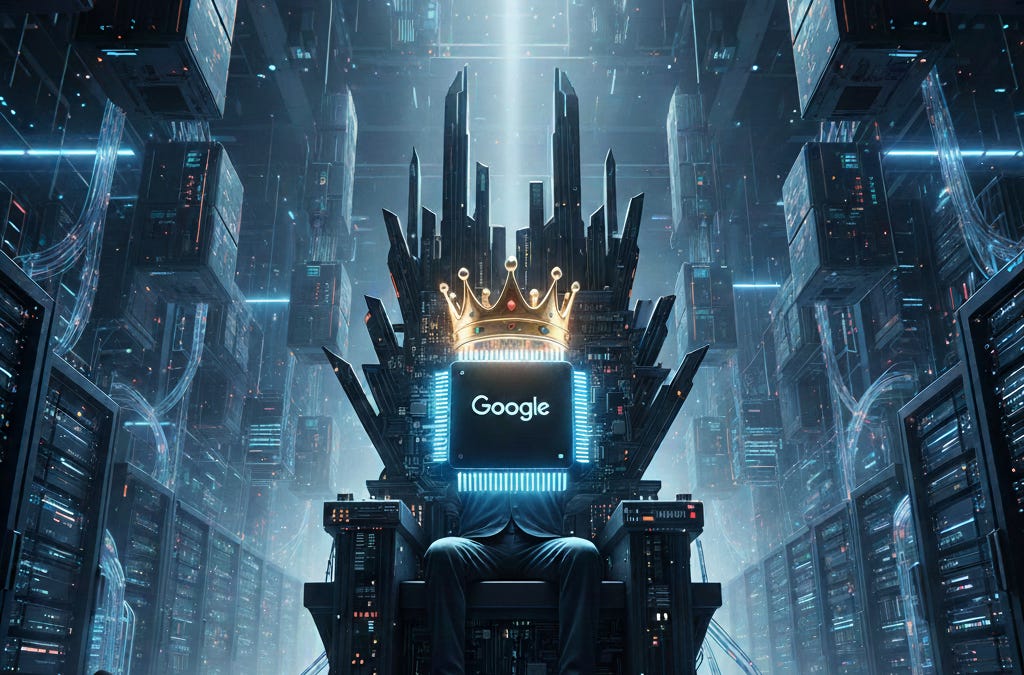
Google and Samsung just attacked Nvidia from both sides of the map. On one end, Google’s new Ironwood TPU is a seventh-gen accelerator that links over 9,000 chips into a single pod and can chain 43 of those pods into a nearly 400,000-chip cluster—using a custom 3D torus fabric and optical circuit switching instead of traditional GPU racks. Anthropic has already committed to as many as one million TPUs for Claude, a signal that performance, reliability, and economics are strong enough to bet their entire frontier stack on non-NVIDIA silicon.

On the other end, Samsung quietly did something just as wild on your phone. Their new pipeline compresses a 30-billion-parameter model—normally needing more than 16GB of memory—down to under 3GB and runs it directly on consumer devices. Instead of loading the whole model, Samsung streams only the pieces needed in real time, uses smart 8-bit and 4-bit quantization, and treats CPU, GPU, and NPU as one coordinated system so latency stays low and responses feel “cloud-level” without leaving the device. If this approach scales, the next AI wave won’t just live in massive data centers—it will sit inside the smartphone already in your pocket.

In this video, we break down how Ironwood’s fabric actually beats classic GPU clusters, why hyperscalers moving to their own chips is a real threat to Nvidia’s dominance, how Samsung’s compression and scheduling tricks make giant models truly on-device, and what a multi-architecture future means for AI creators, startups, and regular users.

 
The BS about Google and selling their TPUs in the press has reached a new pinnacle of stupidity. All of the external TPU deals are really Google Cloud deals, not chip sales. Meta remains a bit of a mystery, since it's possible they might buy racks and systems, but I doubt it. I think the Meta deal will also be a Google Cloud deal. This is really better for Google, and an even greater threat to Nvidia than the dumb mainstream press people think chip sales are. Google Cloud is an ecosystem just like Nvidia CUDA and its associated networking, and Google Cloud's hold on customers will be even greater, because there are no competitors at all at the system level. It's just like the AWS tight hold on customers, once you get hooked on their storage, databases, and serverless run-time stacks, but Google's is about AI, not IT applications.

At least Anthropic is honest about it. The Anthropic announcement is just a Google Cloud deal.

I'm a lot more optimistic about what Google is doing by selling Cloud contracts than the silliness of them selling TPU chips.
 
Last edited:
Do you know if Google owns the TSMC contract for TPUs, or does Broadcom?
The BS about Google and selling their TPUs in the press has reached a new pinnacle of stupidity. All of the external TPU deals are really Google Cloud deals, not chip sales. Meta remains a bit of a mystery, since it's possible they might buy racks and systems, but I doubt it. I think the Meta deal will also be a Google Cloud deal. This is really better for Google, and an even greater threat to Nvidia that the dumb mainstream press people think chip sales are. Google Cloud is an ecosystem just like Nvidia CUDA and its associated networking, and Google Cloud's hold on customers will be even greater, because there are no competitors at all at the system level. It's just like the AWS tight hold on customers, once you hooked on their storage, databases, and serverless run-time stacks, but Google's is about AI, not IT applications.

At least Anthropic is honest about it. The Anthropic announcement is just a Google Cloud deal.

I'm a lot more optimistic about what Google is doing by selling Cloud contracts than the silliness of them selling TPU chips.

True. Google will make so much more money selling cloud space than chips. I wonder how many people are asking Google about chip sales? :ROFLMAO:

SemiWiki is in the Google Cloud and while it is expensive it is easy to use and has everything SemiWiki will ever need. I chose Google Cloud because they were behind Amazon and Microsoft with a single digit market share. This was 5 years ago. SemiWiki turns 15 on January 1st, amazing journey.
 
Do you know if Google owns the TSMC contract for TPUs, or does Broadcom?
My understanding is Broadcom & Marvel act as the middleman between the likes of Google, Amazon and foundries like TSMC. They usually do the back-end design work and reserve foundry capacity etc. That is why I think Intel's Custom ASIC business LBT launched is a brilliant move. That group can iron out a lot of issues that Custom chip design houses (Broadcom, Marvel, Mediatek etc) face when working with IFS & Intel IP & PDKs.
 
Back
Top