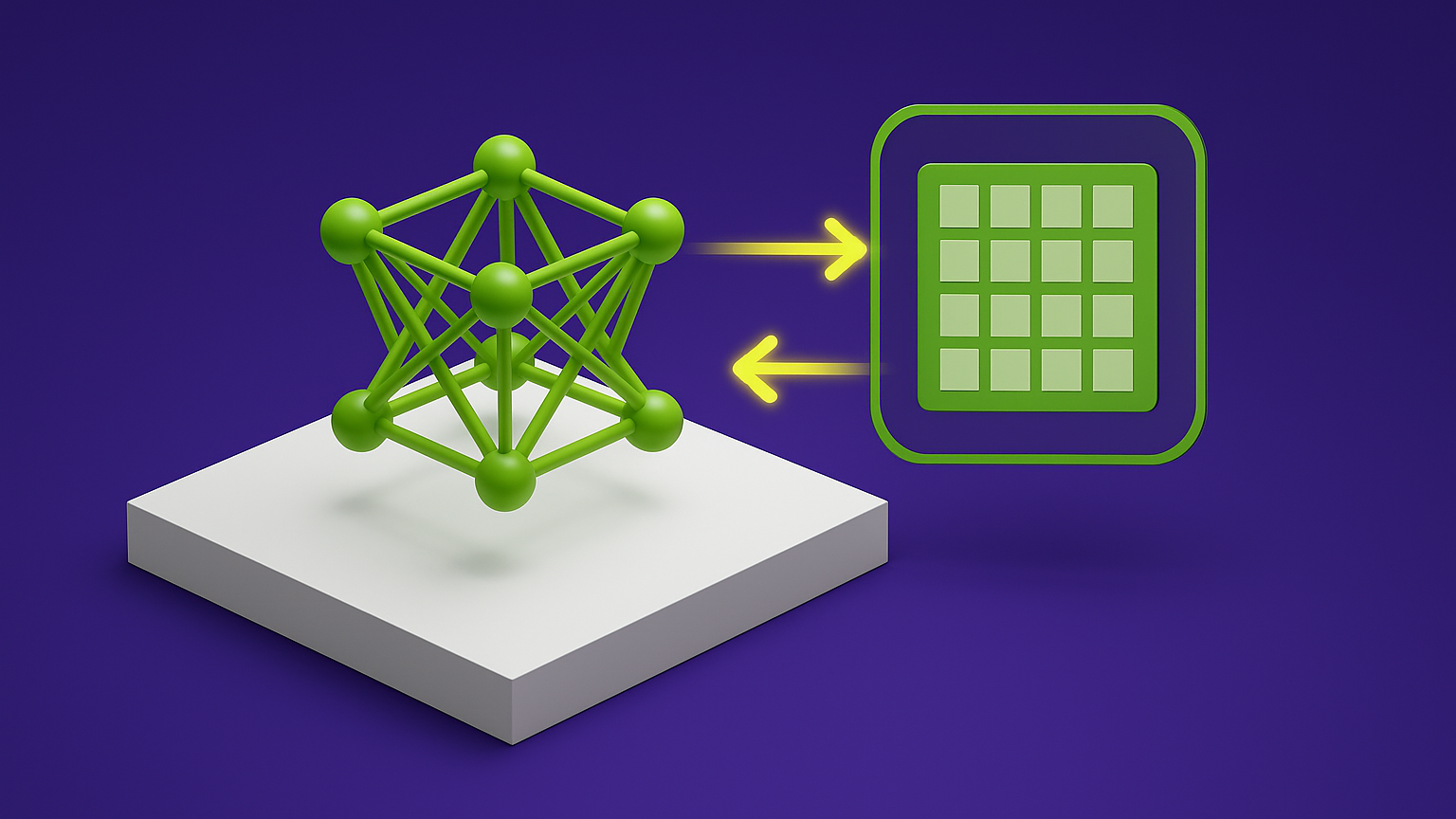
Google and Samsung just attacked Nvidia from both sides of the map. On one end, Google’s new Ironwood TPU is a seventh-gen accelerator that links over 9,000 chips into a single pod and can chain 43 of those pods into a nearly 400,000-chip cluster—using a custom 3D torus fabric and optical circuit switching instead of traditional GPU racks. Anthropic has already committed to as many as one million TPUs for Claude, a signal that performance, reliability, and economics are strong enough to bet their entire frontier stack on non-NVIDIA silicon.
On the other end, Samsung quietly did something just as wild on your phone. Their new pipeline compresses a 30-billion-parameter model—normally needing more than 16GB of memory—down to under 3GB and runs it directly on consumer devices. Instead of loading the whole model, Samsung streams only the pieces needed in real time, uses smart 8-bit and 4-bit quantization, and treats CPU, GPU, and NPU as one coordinated system so latency stays low and responses feel “cloud-level” without leaving the device. If this approach scales, the next AI wave won’t just live in massive data centers—it will sit inside the smartphone already in your pocket.
In this video, we break down how Ironwood’s fabric actually beats classic GPU clusters, why hyperscalers moving to their own chips is a real threat to Nvidia’s dominance, how Samsung’s compression and scheduling tricks make giant models truly on-device, and what a multi-architecture future means for AI creators, startups, and regular users.
On the other end, Samsung quietly did something just as wild on your phone. Their new pipeline compresses a 30-billion-parameter model—normally needing more than 16GB of memory—down to under 3GB and runs it directly on consumer devices. Instead of loading the whole model, Samsung streams only the pieces needed in real time, uses smart 8-bit and 4-bit quantization, and treats CPU, GPU, and NPU as one coordinated system so latency stays low and responses feel “cloud-level” without leaving the device. If this approach scales, the next AI wave won’t just live in massive data centers—it will sit inside the smartphone already in your pocket.
In this video, we break down how Ironwood’s fabric actually beats classic GPU clusters, why hyperscalers moving to their own chips is a real threat to Nvidia’s dominance, how Samsung’s compression and scheduling tricks make giant models truly on-device, and what a multi-architecture future means for AI creators, startups, and regular users.