
And pack-level Li ion prices have now dropped to almost half what the cell-level prices were in 2018 on your graph.





Array
(
    [content] =>
    [params] => Array
        (
            [0] => /forum/threads/ai-data-centers-are-forcing-dirty-%E2%80%98peaker%E2%80%99-power-plants-back-into-service.24256/page-4
        )

    [addOns] => Array
        (
            [DL6/MLTP] => 13
            [Hampel/TimeZoneDebug] => 1000070
            [SV/ChangePostDate] => 2010200
            [SemiWiki/EmailDomainReplace] => 1000010
            [SemiWiki/Newsletter] => 1000010
            [SemiWiki/WPMenu] => 1000010
            [SemiWiki/XPressExtend] => 1000010
            [ThemeHouse/XLink] => 1000970
            [ThemeHouse/XPress] => 1010570
            [XF] => 2031070
            [XFI] => 1060170
        )

    [wordpress] => /var/www/html
)
Guests have limited access.
Join our community today!
Join our community today!
You are currently viewing SemiWiki as a guest which gives you limited access to the site. To view blog comments and experience other SemiWiki features you must be a registered member. Registration is fast, simple, and absolutely free so please, join our community today!
You are using an out of date browser. It may not display this or other websites correctly.
You should upgrade or use an alternative browser.
You should upgrade or use an alternative browser.
AI data centers are forcing dirty ‘peaker’ power plants back into service
- Thread starter Daniel Nenni
- Start date
Sorry, I forgot to mention the huge caveat to my numbers was going DIY, outsourcing the work to a solar contractor totally obliterates the numbers in the US; we have the worst overhead numbers for residential solar deployment in the world by far. Typical 10kw system quote in the US from a solar contractor is $28k-35k, same system in a developed country like, say, South Korea goes for $4k, labor cost inclusive. What's obscene is the customer acquisition cost in the United States is nearly a dollar a watt...$10k of that $28k-$35k figure simply goes into marketing costs to acquire the customer. 10kw system produces more energy than the average American home uses for just about anywhere in the lower 48 states for context. We went all electric in our household, payback was just 2 years, and been saving us around $10k a year, though since we're off-grid, a grid connection wasn't even remotely an option for us to begin with. But building out the system made us completely worry free about energy, I can leave everything on without worrying about a power bill, it definitely changes our living habits, for better or worse!Not for me. My electric bill is about $2K/year, estimating high. I likely won't live long enough to get to breakeven. (My home is just under 4K sqft.) I also spend about another $1.5K on natural gas for heat and hot water, but going to all electric would cost about $30K. No way that pays off.
If we had two electric vehicles, that would move the pure energy breakeven point earlier, but I'm not a fan of current EV technology, and two EVs for us would be at least $100K. That isn't happening either.
Yeah, but there's a lot more to solar generation than just panels and batteries. You need about 5000 acres of land per gigawatt, correct? In a lot of highly populated areas of the US (like the northeast) you don't see a lot of sun in the winter either.
I am anxious to see the SMR numbers, if I live long enough.
Great analysis, but not entirely convincing.
I agree with you on the EV part for my specific needs, but then again, it's still the very early stages of EV development and adoption if we compare with ICE vehicles, I'm fairly confident that most of the shortcomings will be addressed within the next 15 years (i.e. recharge speeds, cold weather operation, endurance, energy density, cost). I can't get a reasonably priced EV truck with enough range to haul livestock feed up to my place, but 5...10 years from now? Decent chance we'll get there, all the more if I consider used options. But even for the vast majority of Americans today who just drive from home to work every day, a modestly priced EV isn't out of reach, can provide more than enough range for a daily commute, and the beauty of electricity is, it is something you can produce at home unlike liquid fuels. Heck, I was looking to DIY a small scale Fischer-Tropsch reactor to produce liquid fuels at my home just to take advantage of all the excess solar power I have in the summer to use to heat my home in the winter but unfortunately it costs more than just...getting a bigger battery
 .
.There certainly is more than just panels and batteries, and as you rightfully point out, land use is the primary downside though at least on that end, the US has a lot relatively to many other small industrial nations. I certainly wouldn't suggest going RE100 for countries like Taiwan or Korea, that's just insanity, but unfortunately the governments of both aforementioned countries seem to be making a huge push towards that because of all the international pressure. 5000 acres for a gigawatt sounds substantial, but say, less than 20% of federal BLM land in Nevada would be sufficient to produce all of the energy needs of the entire US. Not that I'm suggesting that due to transmission losses, but just providing context...and by the way, that 10kw setup for an average home would only require a little over 400sqft of roof space. I've consulted thousands of households for DIY solar and the New England states were great for solar in terms of ROI; electricity is so expensive out there, it's cost effective to just double the size of the solar array to factor in lower generation in the winter. The only place where ROI was challenging was western Washington, low solar irradiation combined with cheap electricity from the Columbia River Basin was the only place where DIY solar + batteries ROI extended past 10 years, but pretty much everywhere else, it's a bit shorter than that. Solar panels are so cheap, I'm building a carport right now with solar panels for the roof and siding, buying used panels are cheaper than plywood, sheet metal, vinyl or any other siding material while being more durable, rain/snow proof, freeze proof not to mention it can produce electricity. 10 cents per watt for panels that still have plenty of life left so when EV trucks do get cheap enough, I won't have to pay for fuel!
As for SMRs, all the projections show SMR's overnight construction costs being more costly than conventional nuclear power plants in the near future. The three major contenders for SMRs in the US, NuScale, TerraPower and X-energy, they've all partnered with Doosan Enerbility for reactor vessels, pressure vessels and components, I trust South Korean companies can execute and produce everything in a timely, cost effective manner, but putting it all together in the US is going to be...entertaining. NuScale's plant in Idaho was cancelled when projected costs soared from $3.6b to $9.3b for a 462MW 6 reactor facility, or over $20/w. TerraPower's Natrium plant is expected to be at least $4b for a 345MW plant, or a little over $11.50/w, but I'll believe it after it's all said and done (there's a quote out there estimating cost for the reactor in Kemmerer to be $10b, or $29/w). Xe-100 from X-energy, no numbers published, actual or projected other than claims of under $60/MWh-e LCoE. Meanwhile, in 2024, South Korea budgeted under $9b for two APR-1400 reactors at Shin-Hanul, or $3.2/w. GE-Hitachi's BWRX-300, $18/w according to TVA's filings. Having followed every nuclear power plant opened in the past decade and planned for the next around the world, I have absolutely no confidence in nuclear power plants, SMR or conventional, being built for under $10/w in the west. I am hopeful the drive for AI will at least inject some much needed capital for R&D in this sector and allow some reactors to be built, but as with many other technologies originally developed in the west, we'll fail to commercialize it and countries like China and Korea will take what was learned from west and run with it. Hate to be a pessimist when I am so pro-nuclear, hopefully I'll be proven wrong?
Yep, I only used that graph because it showed prices for the past few decades, but actual pack figures are even lower than your chart for utility scale ESS applications since it includes vehicles. And keep in mind a lot of projects in the US still use NCM chemistry, utility scale LFP ESS in China right now average $60/kwh, all costs inclusive for whole system. Kind of like solar, the battery cells themselves have become cheaper than the rest of the ESS, solar modules are $0.07/w for a container, FOB China for any tier 1 supplier, good quality inverters cost more than that per watt, even mounting rails, wiring/conduit cost more than that per watt, they're no longer the priciest component in the system. With batteries, I'm getting tier 1 suppliers quoting around $30/kwh for even modest quantities, the rest of the BOM (i.e. housing assembly, busbars/wires, BMS, etc.) cost more than the raw cells.And pack-level Li ion prices have now dropped to almost half what the cell-level prices were in 2018 on your graph.
View attachment 4005
CATL announced $19/kwh for their sodium ion cells, they're worse than LFP in almost every metric now with the exception of cold weather performance, but if they're quoting that now and I'm hearing projections of $10/kwh by the end of the decade...that means $30/kwh all inclusive utility scale ESS not too far away at which point, even $10/w nuclear power plants can't compete in all but the smallest geographies. And frankly, I'm not much of a proponent of hydrogen, but once you have solar get so cheap, you can brute force your way through conversion inefficiency for hydrogen or other liquid fuels (ethanol, methanol, ammonia, synthetic gas/diesel) a la Fischer-Tropsch, Sabatier or Haber processes. Batteries storage full and tons of solar idling? Just use that excess capacity to produce fuel. We're not going to have intercontinental airliners or container ships powered by batteries in our lifetime, but that could be a viable path to decarbonizing those sectors. There's 1.5TW of solar module production capacity as of this year in China alone. US uses about 500GW of electricity 24/7. US capacity factor for solar ranges from 13.5% in December to 31% in July. 4TW of solar would provide all the electricity used in this country to cover the shortest months. That's under $300b in module costs and just over 2.5 years of China's module production capacity. It's no longer a rounding error and that's saying a lot from a guy who at one point worked in oil & gas!
We're spending $123m on a 122 unit homeless housing project in Santa Monica, over $5 billion on a 2.25 mile people mover at LAX (almost half a million dollars per foot!), and as much as I like high speed rail, as of last year, $106.2b projected cost for the first phase of California's HSR...which based on current progress and cost increases, I don't see it being completed by 2035 for a buck less than $250b. My concern with these datacenters, they'll build them where electricity is cheapest. Expect rates to go up across the board for all Americans soon, with those who pay the least per kwh to be impacted the most. Fortunately for Californians who live on the grid operated by an IOU, probably won't impact them much because they're already getting screwed over so much!This kind of silliness is everywhere!!

Got it. Now I see your reasoning. DIY would be a non-starter for solar for me. Many of my neighbors did extensive solar arrays. We have flat roofs in my neighborhood, and we live in the desert southwest at a high altitude, which makes solar especially tempting. The AC current draw in the summer for their massive houses (many 6K+ sqft) and often two electric vehicles might make the calculations more favorable than mine, but I doubt by much.Sorry, I forgot to mention the huge caveat to my numbers was going DIY, outsourcing the work to a solar contractor totally obliterates the numbers in the US; we have the worst overhead numbers for residential solar deployment in the world by far. Typical 10kw system quote in the US from a solar contractor is $28k-35k, same system in a developed country like, say, South Korea goes for $4k, labor cost inclusive. What's obscene is the customer acquisition cost in the United States is nearly a dollar a watt...$10k of that $28k-$35k figure simply goes into marketing costs to acquire the customer. 10kw system produces more energy than the average American home uses for just about anywhere in the lower 48 states for context. We went all electric in our household, payback was just 2 years, and been saving us around $10k a year, though since we're off-grid, a grid connection wasn't even remotely an option for us to begin with. But building out the system made us completely worry free about energy, I can leave everything on without worrying about a power bill, it definitely changes our living habits, for better or worse!
There is much to like about EVs, but I have an aversion to buying any technology early in its development on a steep improvement curve. I'm watching the next five years of EV development very closely.I agree with you on the EV part for my specific needs, but then again, it's still the very early stages of EV development and adoption if we compare with ICE vehicles, I'm fairly confident that most of the shortcomings will be addressed within the next 15 years (i.e. recharge speeds, cold weather operation, endurance, energy density, cost). I can't get a reasonably priced EV truck with enough range to haul livestock feed up to my place, but 5...10 years from now? Decent chance we'll get there, all the more if I consider used options. But even for the vast majority of Americans today who just drive from home to work every day, a modestly priced EV isn't out of reach, can provide more than enough range for a daily commute, and the beauty of electricity is, it is something you can produce at home unlike liquid fuels. Heck, I was looking to DIY a small scale Fischer-Tropsch reactor to produce liquid fuels at my home just to take advantage of all the excess solar power I have in the summer to use to heat my home in the winter but unfortunately it costs more than just...getting a bigger battery
I remember Musk doing that calculation. The transmission line approval and construction problems would be the real challenges though.There certainly is more than just panels and batteries, and as you rightfully point out, land use is the primary downside though at least on that end, the US has a lot relatively to many other small industrial nations. I certainly wouldn't suggest going RE100 for countries like Taiwan or Korea, that's just insanity, but unfortunately the governments of both aforementioned countries seem to be making a huge push towards that because of all the international pressure. 5000 acres for a gigawatt sounds substantial, but say, less than 20% of federal BLM land in Nevada would be sufficient to produce all of the energy needs of the entire US.
Good points. Another solar... complication... here in the southwest is dust. Solar panels have to be cleaned annually here, and if you put them on the roof of a two or more story house you could be looking at $1K-1.5K per year for cleaning. From the bitching and complaining I read on one of our neighborhood forums, the installers don't mention the annual cleaning thing until after the installation is done.Not that I'm suggesting that due to transmission losses, but just providing context...and by the way, that 10kw setup for an average home would only require a little over 400sqft of roof space. I've consulted thousands of households for DIY solar and the New England states were great for solar in terms of ROI; electricity is so expensive out there, it's cost effective to just double the size of the solar array to factor in lower generation in the winter. The only place where ROI was challenging was western Washington, low solar irradiation combined with cheap electricity from the Columbia River Basin was the only place where DIY solar + batteries ROI extended past 10 years, but pretty much everywhere else, it's a bit shorter than that. Solar panels are so cheap, I'm building a carport right now with solar panels for the roof and siding, buying used panels are cheaper than plywood, sheet metal, vinyl or any other siding material while being more durable, rain/snow proof, freeze proof not to mention it can produce electricity. 10 cents per watt for panels that still have plenty of life left so when EV trucks do get cheap enough, I won't have to pay for fuel!
Wow. You clearly follow SMR technology more closely than I do, and I thought they were a lot cheaper than that.As for SMRs, all the projections show SMR's overnight construction costs being more costly than conventional nuclear power plants in the near future. The three major contenders for SMRs in the US, NuScale, TerraPower and X-energy, they've all partnered with Doosan Enerbility for reactor vessels, pressure vessels and components, I trust South Korean companies can execute and produce everything in a timely, cost effective manner, but putting it all together in the US is going to be...entertaining. NuScale's plant in Idaho was cancelled when projected costs soared from $3.6b to $9.3b for a 462MW 6 reactor facility, or over $20/w. TerraPower's Natrium plant is expected to be at least $4b for a 345MW plant, or a little over $11.50/w, but I'll believe it after it's all said and done (there's a quote out there estimating cost for the reactor in Kemmerer to be $10b, or $29/w). Xe-100 from X-energy, no numbers published, actual or projected other than claims of under $60/MWh-e LCoE. Meanwhile, in 2024, South Korea budgeted under $9b for two APR-1400 reactors at Shin-Hanul, or $3.2/w. GE-Hitachi's BWRX-300, $18/w according to TVA's filings. Having followed every nuclear power plant opened in the past decade and planned for the next around the world, I have absolutely no confidence in nuclear power plants, SMR or conventional, being built for under $10/w in the west. I am hopeful the drive for AI will at least inject some much needed capital for R&D in this sector and allow some reactors to be built, but as with many other technologies originally developed in the west, we'll fail to commercialize it and countries like China and Korea will take what was learned from west and run with it. Hate to be a pessimist when I am so pro-nuclear, hopefully I'll be proven wrong?
Sadly, it's all about getting to commercial scale, as you suggest. Outside of Elon Musk and his companies, which clearly have their own faults, there aren't many US manufacturing companies that have evolved innovations to global scale, where the products are cost competitive globally. Maybe some areas in Pharma as well, where us patent protections and a premium market help fund. Not sure we're focused enough in the US right now to pick the must-wins for our future.As for SMRs, all the projections show SMR's overnight construction costs being more costly than conventional nuclear power plants in the near future. The three major contenders for SMRs in the US, NuScale, TerraPower and X-energy, they've all partnered with Doosan Enerbility for reactor vessels, pressure vessels and components, I trust South Korean companies can execute and produce everything in a timely, cost effective manner, but putting it all together in the US is going to be...entertaining. NuScale's plant in Idaho was cancelled when projected costs soared from $3.6b to $9.3b for a 462MW 6 reactor facility, or over $20/w. TerraPower's Natrium plant is expected to be at least $4b for a 345MW plant, or a little over $11.50/w, but I'll believe it after it's all said and done (there's a quote out there estimating cost for the reactor in Kemmerer to be $10b, or $29/w). Xe-100 from X-energy, no numbers published, actual or projected other than claims of under $60/MWh-e LCoE. Meanwhile, in 2024, South Korea budgeted under $9b for two APR-1400 reactors at Shin-Hanul, or $3.2/w. GE-Hitachi's BWRX-300, $18/w according to TVA's filings. Having followed every nuclear power plant opened in the past decade and planned for the next around the world, I have absolutely no confidence in nuclear power plants, SMR or conventional, being built for under $10/w in the west. I am hopeful the drive for AI will at least inject some much needed capital for R&D in this sector and allow some reactors to be built, but as with many other technologies originally developed in the west, we'll fail to commercialize it and countries like China and Korea will take what was learned from west and run with it. Hate to be a pessimist when I am so pro-nuclear, hopefully I'll be proven wrong?
That's news to me, there's one within a 60 mile radius from my place, it's burned nearly half a million tons of bituminous coal this year per EIA records. California's still the 4th largest consumer of coal for industrial use as well, there are two cement plants within a 30 mile radius that emit more than 1.5 million tons of CO² per year.- VRE: Wind and solar
(There are no coal plants left in California; the last one was decommissioned in 2014.)
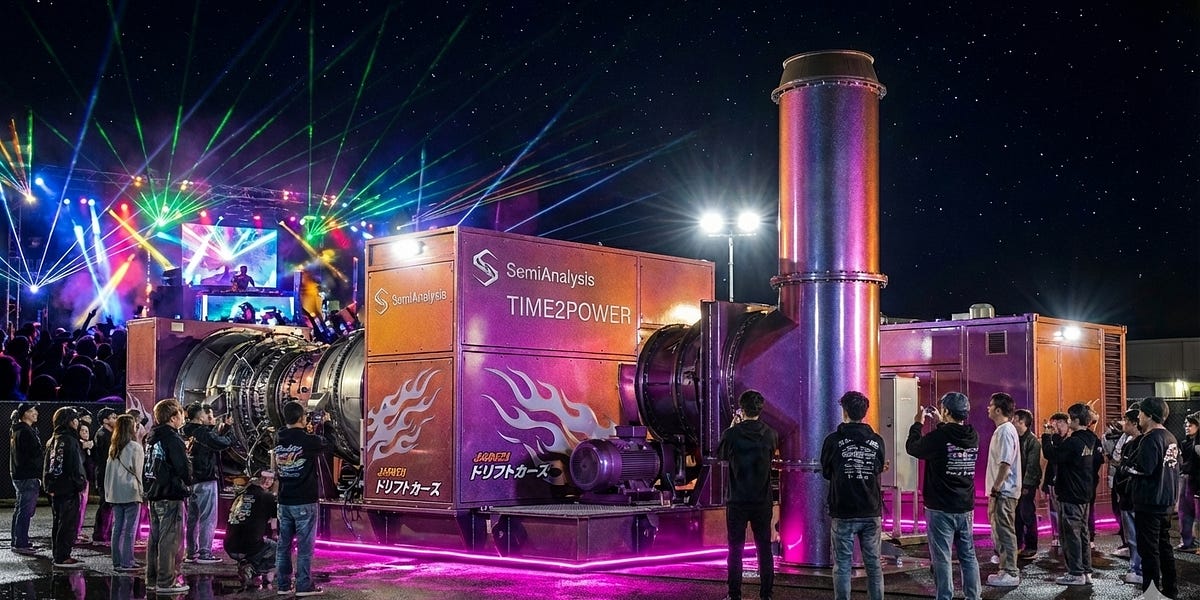
Another highly topical article on the data center energy challenge.
 newsletter.semianalysis.com
How AI Labs Are Solving the Power Crisis: The Onsite Gas Deep Dive
Bring Your Own Generation, Sayonara Electric Grid, Turbines vs. Recips. vs. Fuel Cells, Why Not Build More CCGTs?, Onsite Power TCO
newsletter.semianalysis.com
jms_embedded
Well-known member
Which location? I tried looking around rather thoroughly online and the Ace Cogen plant in Trona was allegedly the last coal-driven generation plant.That's news to me, there's one within a 60 mile radius from my place, it's burned nearly half a million tons of bituminous coal this year per EIA records. California's still the 4th largest consumer of coal for industrial use as well, there are two cement plants within a 30 mile radius that emit more than 1.5 million tons of CO² per year.

Xebec
Well-known member
Blueone - re: oil subsidies by the US military, see the news today about Venezeula..

 www.nbcnews.com
U.S. will look to tap Venezuelan oil reserves, Trump says
President Donald Trump said U.S. oil companies will invest billions to upgrade the country's aging oil infrastructure.
www.nbcnews.com
Looks like there is still one captive (non-utility) coal-fired steam and electricity plant in CA, that is used to produce soda ash.Which location? I tried looking around rather thoroughly online and the Ace Cogen plant in Trona was allegedly the last coal-driven generation plant.

Argus Cogeneration Plant
Argus Cogeneration Plant is a 62.5-megawatt (MW) coal-fired power station owned and operated by Nirma - an Indian multinational chemicals and minerals corporation - near Trona, California. The plant provides power to Nirma's Searles Valley Minerals soda ash processing facility.
 www.gem.wiki
But when it comes to utility electricity generation, coal is long gone in CA. And even out-of-state imported electricity from coal is gone as well.
In-state coal generation
• California’s last in-state coal units were retired years ago, with the last in 2014, under state greenhouse gas and performance standards, leaving zero operating coal plants within state borders.
• Recent overviews of the state’s generation mix note that there are no coal-fired plants in operation in California’s current fleet.
Coal power imports
• Historically, California utilities contracted for coal power from out-of-state plants such as the Intermountain Power Project in Utah, Navajo Generating Station in Arizona, and San Juan Generating Station in New Mexico.
• By late 2025, California had ended those coal import arrangements; Intermountain’s coal units that served Southern California shut down and the plant is being converted to gas/hydrogen, and current summaries state that coal power is no longer imported into California’s portfolio.
As noted, there are still some private (non-utility) industrial plants using coal, but only a handful that have to be phased out by 2045.
Power/industrial cogeneration
• Argus Cogeneration Plant (Trona, San Bernardino County) – An industrial cogeneration facility at the Searles Valley minerals operation; EIA notes this as the only site where coal still fuels a small amount of in‑state net generation, with coal delivered by rail from out of state.
Cement plants using coal/petcoke for heat
• CalPortland Redding cement plant (near Redding, Shasta County) – Reported as using a mix of coal, petroleum coke, tires, and natural gas for kiln fuel.
• Other California cement plants – Sector-wide analyses (not always naming each plant) indicate that major producers such as CalPortland, Lehigh Hanson, and CEMEX operate California kilns that historically rely primarily on coal and petroleum coke for process heat.
The Venezuela action is not an oil subsidy. IMO, it is a weird and egotistical pissing contest between Putin, Jinping, and Trump. Given the age of all three I doubt they could win such a contest unless the only contestants are the other two.Blueone - re: oil subsidies by the US military, see the news today about Venezeula..
U.S. will look to tap Venezuelan oil reserves, Trump says
President Donald Trump said U.S. oil companies will invest billions to upgrade the country's aging oil infrastructure.

Xebec
Well-known member
It can be both..The Venezuela action is not an oil subsidy. IMO, it is a weird and egotistical pissing contest between Putin, Jinping, and Trump. Given the age of all three I doubt they could win such a contest unless the only contestants are the other two.
jms_embedded
Well-known member
?Another solar... complication... here in the southwest is dust. Solar panels have to be cleaned annually here, and if you put them on the roof of a two or more story house you could be looking at $1K-1.5K per year for cleaning.
I live in the Phoenix AZ area; we get plenty of dust and dust storms. I've owned a PV system on my house for almost 12 years, never cleaned it. When I had them installed, I talked to the installer (who I trust, not one of these fly-by-night solar salesmen) and he mentioned it's really not that big of a deal. We get enough wind and rain to wash most of the dust away that it doesn't affect the electric output significantly, and I've got almost 12 years of electric bill data to back that up.
In software this conversation is known as an infinite loop. CTRL-ALT-DEL.It can be both..
I'll take your word for that. I've never owned solar panels, and probably never will. Got the information from my neighbors who installed solar. I will say this, drive in the rain once around here and cars get disgusting. Dust and water make a grimy combination that doesn't just rinse off, so their stories made sense.?
I live in the Phoenix AZ area; we get plenty of dust and dust storms. I've owned a PV system on my house for almost 12 years, never cleaned it. When I had them installed, I talked to the installer (who I trust, not one of these fly-by-night solar salesmen) and he mentioned it's really not that big of a deal. We get enough wind and rain to wash most of the dust away that it doesn't affect the electric output significantly, and I've got almost 12 years of electric bill data to back that up.
Xebec
Well-known member
Got it. Now I see your reasoning. DIY would be a non-starter for solar for me. Many of my neighbors did extensive solar arrays. We have flat roofs in my neighborhood, and we live in the desert southwest at a high altitude, which makes solar especially tempting. The AC current draw in the summer for their massive houses (many 6K+ sqft) and often two electric vehicles might make the calculations more favorable than mine, but I doubt by much.
There is much to like about EVs, but I have an aversion to buying any technology early in its development on a steep improvement curve. I'm watching the next five years of EV development very closely.
FWIW on the calculation part -- EVs typically drive about 3.5-4 miles on average per kWh of energy. Assume 1,000 miles a month of EV driving and you're looking at ~ 250+ kWh of energy.
re: EVs are "early technology", just for you

You're in a mood today.FWIW on the calculation part -- EVs typically drive about 3.5-4 miles on average per kWh of energy. Assume 1,000 miles a month of EV driving and you're looking at ~ 250+ kWh of energy.
re: EVs are "early technology", just for you
View attachment 4019
 OK, EV motors have probably plateaued, they're already 90% or greater efficient, but EV batteries and charging systems are still improving significantly. And most EVs available in the US are still not native EV designs, they're modified ICE designs, with Tesla being a notable exception. BMWs really annoy me, with their fake kidney grilles in the front. Seriously? So, yeah, I still predict a lot of evolutionary improvement in the pipeline.
Xebec
Well-known member
Sorry, I'll back off on the banter.You're in a mood today.
The BMWs are pretty ugly these days, imo - I miss the looks of 20 years ago. I'll meet you half way on the evolution. If you're buying from a modern EV company -- think the Chinese, Rivian, Tesla, Lucid -- they're already mature, and improvements (other than self driving) are going to be very incremental. (I personally think solid state batteries rate up there with Fusion Power being 5 years away.. )
If you're buying from a legacy automaker (especially companies like Toyota and BMW) - they're about 5-10 years behind those modern makers in tech and design.... Compare a 2025+ BMW i4 to a 2017-2018 Tesla Model 3 for example, and you'll find the specs are fairly close, except the Tesla weighs 800-1,000 lbs less and has significantly more interior space despite smaller exterior dimensions. Oh, and the Tesla is safer too per NHTSA and Euro tests. VW and Hyandai/Kia are probably more on the 5 year end.
Of course infotainment is a whole different story due to the supplier networks of legacy auto vs vertical integration.
jms_embedded
Well-known member
Solar panel cleaning services are largely a racket. And yes, in the Phoenix area we get dust and water making a grimy yucky film on cars, too. I wash my car to see through the windows and for aesthetic value.I'll take your word for that. I've never owned solar panels, and probably never will. Got the information from my neighbors who installed solar. I will say this, drive in the rain once around here and cars get disgusting. Dust and water make a grimy combination that doesn't just rinse off, so their stories made sense.
I like this quote from Reddit:
Unless they are getting absolutely caked on by tree sap and bird shit, common things like dust won't really decrease your production. I just let the rain wash and rinse my panels.
I have no trees overhead, and anything the mourning doves leave behind seems to wash away on its own. And even if the dust did affect my energy production a little, you need to be realistic. I save about $2100 a year on electricity from my system. Let's say someone charges $200 to wash them. If the dust decreases my energy production by 5% ($100/yr), it's not worth it. If the dust decreases my energy production by 20%, it would be worth it. But it doesn't.
My PV generation, as recorded on my electric bill, was:
- year ending Apr 2015: 21781 kWh (1st year of ownership)
- year ending Apr 2016: 21542 kWh
- year ending Apr 2017: 21685 kWh
- year ending Apr 2018: 21857 kWh
- year ending Apr 2019: 21341 kWh
- year ending Apr 2020: 21653 kWh
- year ending Apr 2021: 21911 kWh
- year ending Apr 2022: 21403 kWh
- year ending Apr 2023: 21429 kWh
- year ending Apr 2024: 19746 kWh (roof repaired, panels were removed for ~ 3 weeks, I looked at them at the time and there was no noticeable grime/film/etc.)
- year ending Apr 2025: 20903 kWh
Not sure what happened in the past 20 months or so; maybe the uninstall/reinstall job caused some premature aging. Or we had more cloudy days last year, or hotter weather in the peak months.
It was totally worth it though. I installed them in the spring of 2014 when I had some spare cash (those were the days) and everything on the stock market looked expensive, whereas I could get a risk-free return of about 9-10% by installing solar panels. Generating renewable power with no maintenance was a secondary bonus.