You are currently viewing SemiWiki as a guest which gives you limited access to the site. To view blog comments and experience other SemiWiki features you must be a registered member. Registration is fast, simple, and absolutely free so please, join our community today!
In this webinar, Marvell will present how its team accelerates passive interposer routing for advanced 2.5D/3.5D multi die designs by bringing early, physics based signal integrity feedback into each routing iteration. Rather than relying on repeated, compute intensive 3D FEM cycles during development, Marvell uses a Method of Moments (MoM) early SI check available within …
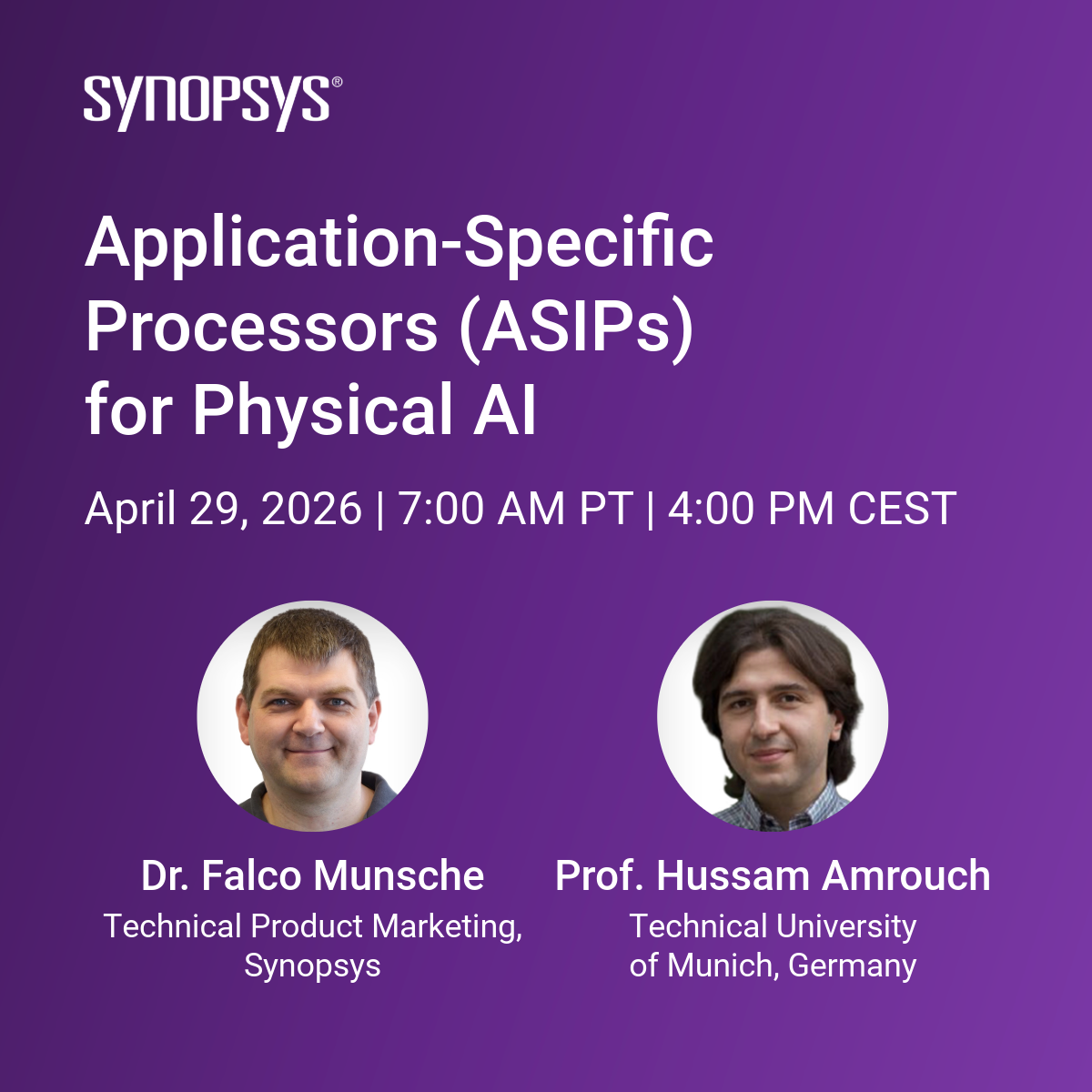
Physical AI is increasingly popular in applications requiring real-time decision making and autonomous operation. Different from NPUs for cloud platforms, Physical AI processors can be made application-specific. By jointly tuning their ISA and memory architecture to the network models required by the application, power consumption and silicon area are drastically reduced. Synopsys ASIP Designer is …
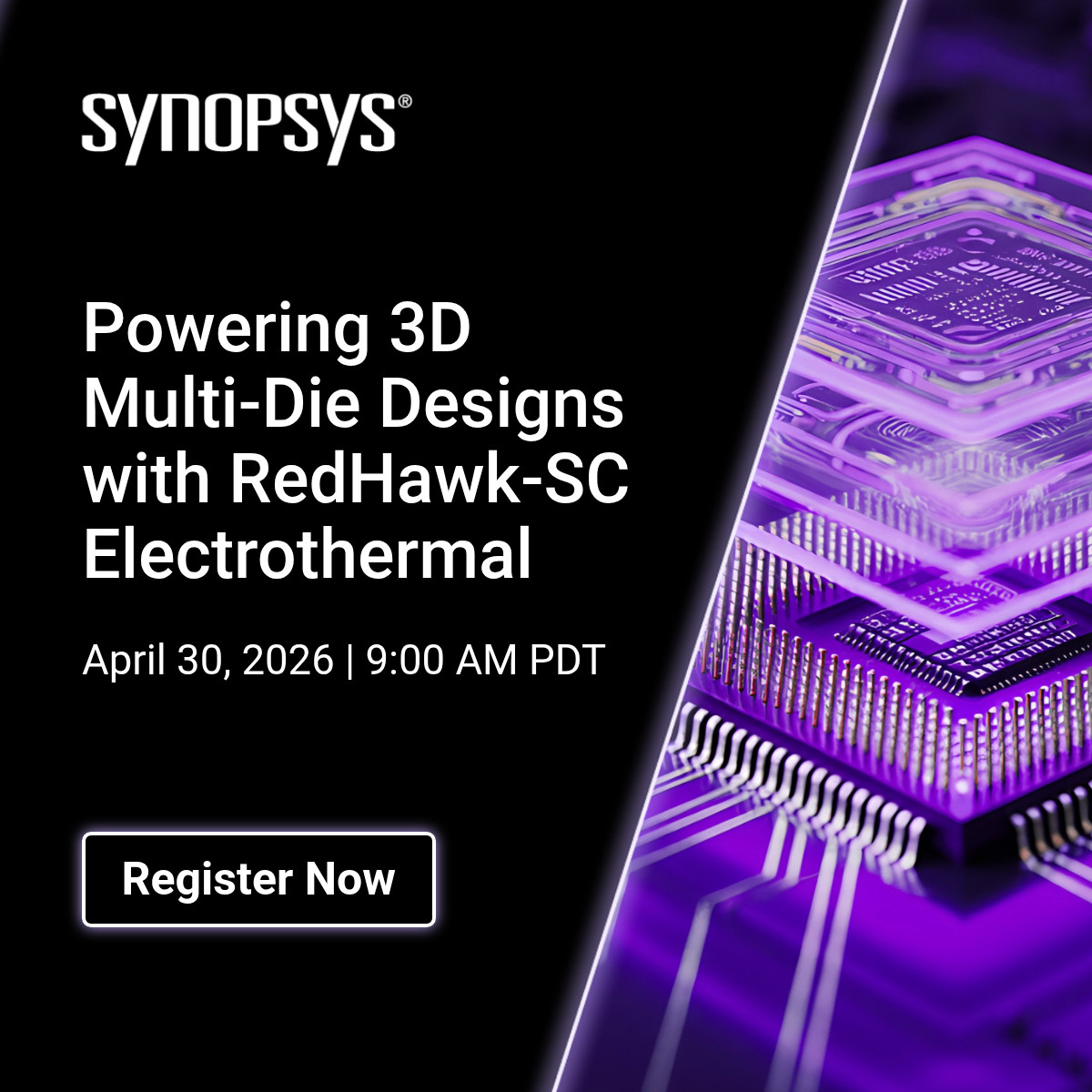
As semiconductors continue to scale, designers are turning to 3DIC architectures to meet increasing demands for performance, energy efficiency, and functional density in data centers and edge AI applications. However, stacking multiple dies introduces new multiphysics challenges including electrical, structural, and thermal issues. Join this webinar to learn how RedHawk-SC Electrothermal enables designers to analyze …
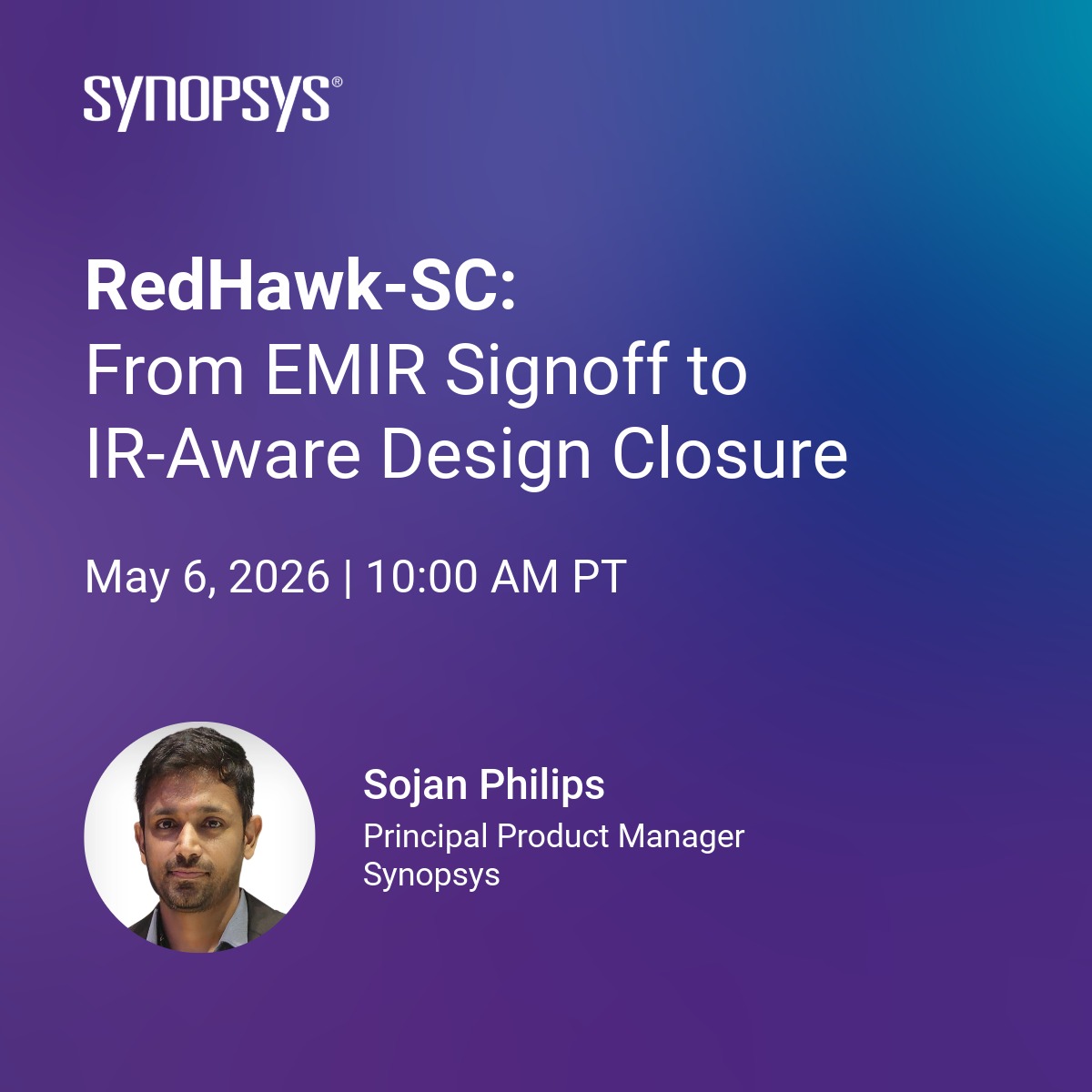
As power integrity challenges increase with advanced nodes and multi-die architectures, EMIR analysis must evolve beyond traditional signoff. In this Synopsys webinar, we will show how RedHawk-SC is expanding its capabilities not only to enhance EMIR analysis, but also to enable IR-aware Static Timing Analysis (IR-STA) and IR-driven ECO (IR-ECO) flows. Join us to learn how tighter integration …
Featured Speaker: Victoria Kolesov, Principal Engineer, Intel In this Synopsys webinar, Intel will present how its disaggregated designs across client and server platforms have driven the evolution of robust 3D multi-die design construction and signoff methodologies. Intel will share practical experience using Synopsys’ complete design implementation and signoff flows for static timing analysis signoff and …