You are currently viewing SemiWiki as a guest which gives you limited access to the site. To view blog comments and experience other SemiWiki features you must be a registered member. Registration is fast, simple, and absolutely free so please,
join our community today!
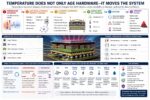
Temperature is often treated as a reliability clock.
Increase the temperature, accelerate the failure mechanism, and estimate the equivalent field life.
That approach can be useful—but only when the dominant failure mechanism is known, its thermal activation behavior is understood, and the same mechanism remains active … Read More
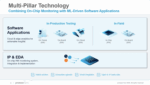
For decades, semiconductor teams have relied on traditional methods such as corner-based analysis, surrogate monitors, and population-level statistical screening for post-silicon validation. These methods served well when variability was modest, and timing paths behaved predictably. However, today’s advanced nodes… Read More