You are currently viewing SemiWiki as a guest which gives you limited access to the site. To view blog comments and experience other SemiWiki features you must be a registered member. Registration is fast, simple, and absolutely free so please,
join our community today!
For the past decade, the semiconductor industry has been moving in one direction: shift-left, specifically, shifting more validation into the pre-silicon phase. The idea was straightforward: if software ultimately determines how a system behaves, then software should become a primary vehicle for verification.
The industry… Read More
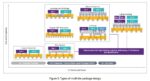
Modern automotive electronics are undergoing a rapid transformation driven by increasing compute demands, functional safety requirements, and the shift toward scalable semiconductor architectures. One of the most significant technological developments enabling this transformation is the adoption of multi-die system… Read More
Verification has become the dominant bottleneck in modern chip design. As much as 70% of the overall design cycle is now spent on verification, a figure driven upward by increasing design complexity, compressed schedules, and a chronic shortage of design verification (DV) engineering bandwidth. Modern chips generate thousands… Read More
By Thang Tran
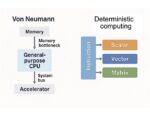
For more than half a century, the foundations of computing have stood on a single architecture: the Von Neumann or Harvard model. Nearly all modern chips—CPUs, GPUs, and even many specialized accelerators—rely on some variant of this design. Over time, the industry has layered on complexity and specialization to… Read More