






hist78
Well-known member
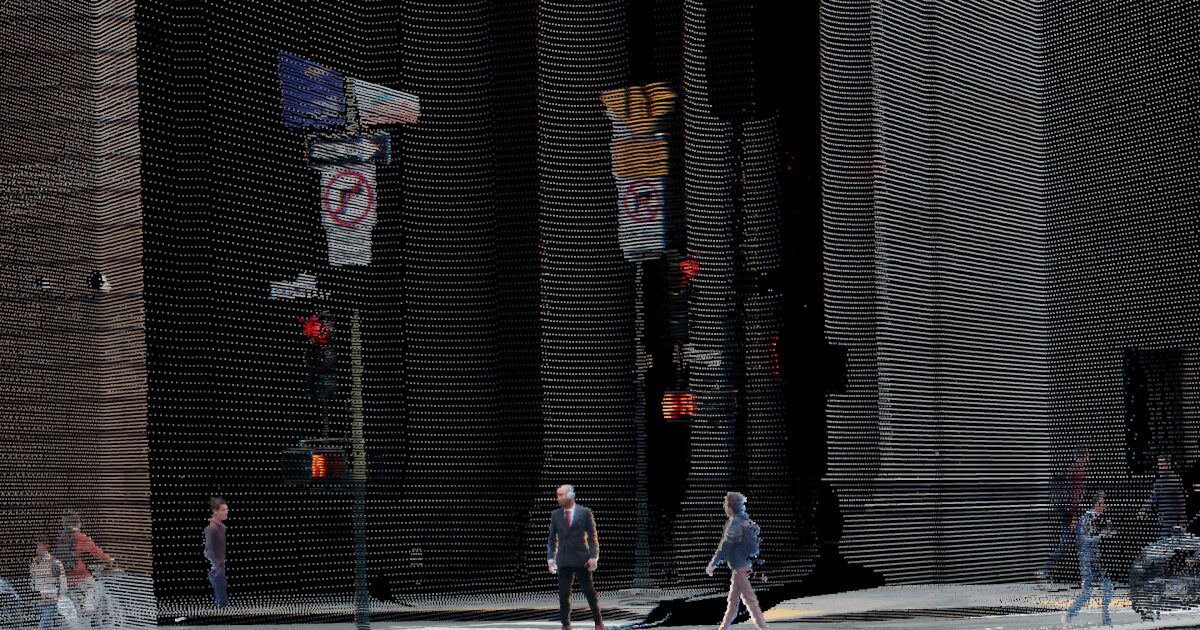
"For years, machines have navigated the world color-blind. LiDAR sensors – the laser-based eyes of self-driving cars, industrial robots, and inspection drones – build precise 3D maps of their surroundings, but everything is built of monochrome geometric shapes. Ouster's new Rev8 sensor family aims to change that, not by bolting a camera onto a LiDAR unit, but by fusing color directly into every point of data the sensor captures."
"The flagship model of the Rev8 family is the OS1 Max, a 256-channel sensor with a detection range of up to 200 m (656 ft) at 10% reflectivity – meaning it can spot surfaces that absorb most of the light hitting them – and up to 500 m (1,640 ft) under optimal conditions. Its field of view spans 45 degrees vertically and 360 degrees horizontally, and Ouster claims it doubles both the range and resolution of its previous generation, the Rev7."
 newatlas.com
"The flagship model of the Rev8 family is the OS1 Max, a 256-channel sensor with a detection range of up to 200 m (656 ft) at 10% reflectivity – meaning it can spot surfaces that absorb most of the light hitting them – and up to 500 m (1,640 ft) under optimal conditions. Its field of view spans 45 degrees vertically and 360 degrees horizontally, and Ouster claims it doubles both the range and resolution of its previous generation, the Rev7."
World’s first native color LiDAR gives machines human-like vision
For years, machines have navigated the world color-blind. LiDAR sensors – the laser-based eyes of self-driving cars, industrial robots, and inspection drones – build precise 3D maps of their surroundings, but everything is built of monochrome geometric shapes. Ouster's new Rev8 sensor family aims…
newatlas.com

 )
)