I just talked to a couple people about terafab. A model/scenario to explain it that makes sense (just a hypothesis)
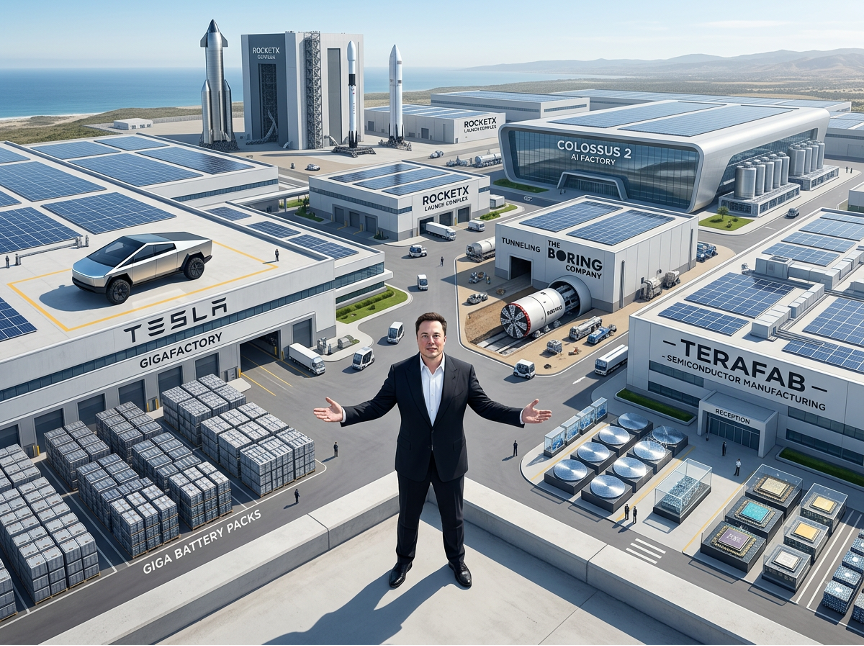
1) Terafab is not a massive general purpose Fab. It is a custom fab for tesla/spacex unique parts. foundry doesnt work for custom or unique low volume products. IDM works for this.
2) The reason to outsource is to be cost effective. low volume is never cost effective. Musk does not care about cost effective
3) Musk requested commitments for volume and specific process options going forward. Musk companies are not high volume compared to Nvidia, AMD, Intel, broadcom, qualcomm. He was told "we will see". No commit. Its not that he wants a lot of volume.... he wants smaller amount. Samsung and TSMC are still doing the non-custom products. kindof like the old Fab lite model.
4) Co-location of manufacturing (what we called it when I was working on it) is a great idea for speed.... if you do not care about cost. everything in one site.
5) It will be less than 2% of the fab wafer market. It will have no impact on foundry business, TSMC or Samsung..... because it is a custom fab for specific products.
I am having some people double check my numbers before i publish quantitative summary.
This scenario makes sense of what is proposed by Musk. Terafab also provides leverage for Musk to get the support he wants (TSMC could say "FINE you can have a custom fab with committed output here")...
@Daniel Nenni mentioned this I think
just a possible scenario