
TAIPEI, Feb 9 — Taiwan has pushed back forcefully against U.S. calls to relocate a large share of its semiconductor production, saying it would be “impossible” to move 40% of the island’s chipmaking capacity to the United States.
Taiwan Vice Premier Cheng Li-chiun, who also serves as the island’s top trade negotiator, said she had made Taipei’s position clear to U.S. officials during recent discussions.
“I have made it very clear to the United States that this is impossible,” Cheng said in an interview with Taiwanese broadcaster CTS, referring to proposals floated by American policymakers to shift a significant portion of Taiwan’s semiconductor ecosystem overseas.
Deep-Rooted Chip Ecosystem
Cheng stressed that Taiwan’s semiconductor industry is supported by a densely integrated network of suppliers, research institutions and skilled labor built over decades — an ecosystem that cannot simply be transplanted.“Our overall capacity in Taiwan will only continue to grow,” she said, adding that the industry remains committed to expanding domestic investment even as it increases its global footprint.
She emphasized that overseas expansion, including in the United States, would be pursued only on the condition that Taiwan remains the core base of operations.
“Our international expansion is based on the premise that we remain firmly rooted in Taiwan and continue to expand investment at home,” Cheng said.
U.S. Push for Reshoring
The remarks come amid renewed calls from Washington to reduce reliance on semiconductor production concentrated near China.U.S. Commerce Secretary Howard Lutnick said last week that the United States needed to bring more chip manufacturing onshore.
“You can’t have all semiconductor manufacturing 80 miles from China,” Lutnick said. “That’s just illogical. We need to bring it back.”
Lutnick has previously outlined a goal for the current U.S. administration to secure 40% of leading-edge semiconductor manufacturing capacity domestically. In earlier comments, he also suggested that failure to achieve large-scale relocation from Taiwan could result in sharply higher tariffs.
Taiwan has rejected similar proposals in the past, including suggestions of an even split in chip production between the two sides.
Investment and Trade Backdrop
Last month, Taiwan and the United States reached an agreement that reduced tariffs on Taiwanese exports to 15% from 20%, alongside commitments by Taiwan to step up investment in the U.S.Cheng said Taiwan would not relocate its science parks — the industrial hubs that anchor its semiconductor industry — but was willing to share its expertise in building industry clusters to help the U.S. develop its own chip ecosystem.
She added that Taiwan’s total semiconductor capacity — including advanced manufacturing, packaging and related supply-chain projects already operating, under construction or planned — would far exceed its investments in any single foreign market.
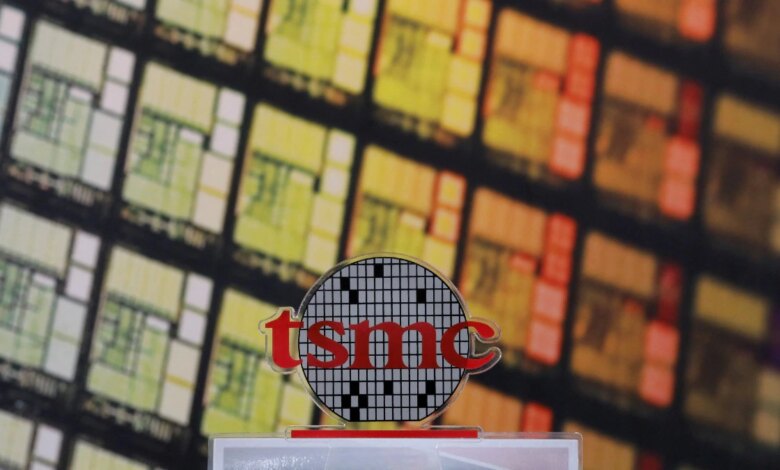
Taiwan Semiconductor Manufacturing Co. (TSMC), the world’s largest contract chipmaker, is already investing $165 billion in new fabrication plants in Arizona, one of the largest overseas expansions ever undertaken by a Taiwanese technology company.
Why This Matters
The standoff highlights the limits of geopolitical pressure in reshaping global supply chains. While the U.S. can incentivize domestic manufacturing through subsidies and tariffs, Taiwan’s semiconductor dominance rests on an ecosystem that took decades to build — and cannot be rapidly replicated.For Washington, the comments underscore the challenge of reducing reliance on East Asia without disrupting global chip supply. For Taiwan, they reinforce a strategic red line: international expansion is acceptable, but hollowing out the domestic semiconductor base is not.
As competition over advanced chips intensifies, the debate illustrates how economic security, national strategy and industrial reality are increasingly colliding.