





Array
(
    [content] => 
    [params] => Array
        (
            [0] => /forum/threads/industry-faces-%E2%80%9Cacute%E2%80%9D-cpu-shortage-with-hope-that-intel-18a-yields-improve.25017/page-4
        )

    [addOns] => Array
        (
            [DL6/MLTP] => 13
            [Hampel/TimeZoneDebug] => 1000070
            [SV/ChangePostDate] => 2010200
            [SemiWiki/Newsletter] => 1000010
            [SemiWiki/WPMenu] => 1000010
            [SemiWiki/XPressExtend] => 1000010
            [ThemeHouse/XLink] => 1000970
            [ThemeHouse/XPress] => 1010570
            [XF] => 2031070
            [XFI] => 1060170
        )

    [wordpress] => /var/www/html
)

Industry faces “acute” CPU shortage with hope that Intel 18A yields improve

I think we're in an "Intel is stretching the truth" scenario - they're not completely wrong, but their claim is at least very misleading/verifiably false:

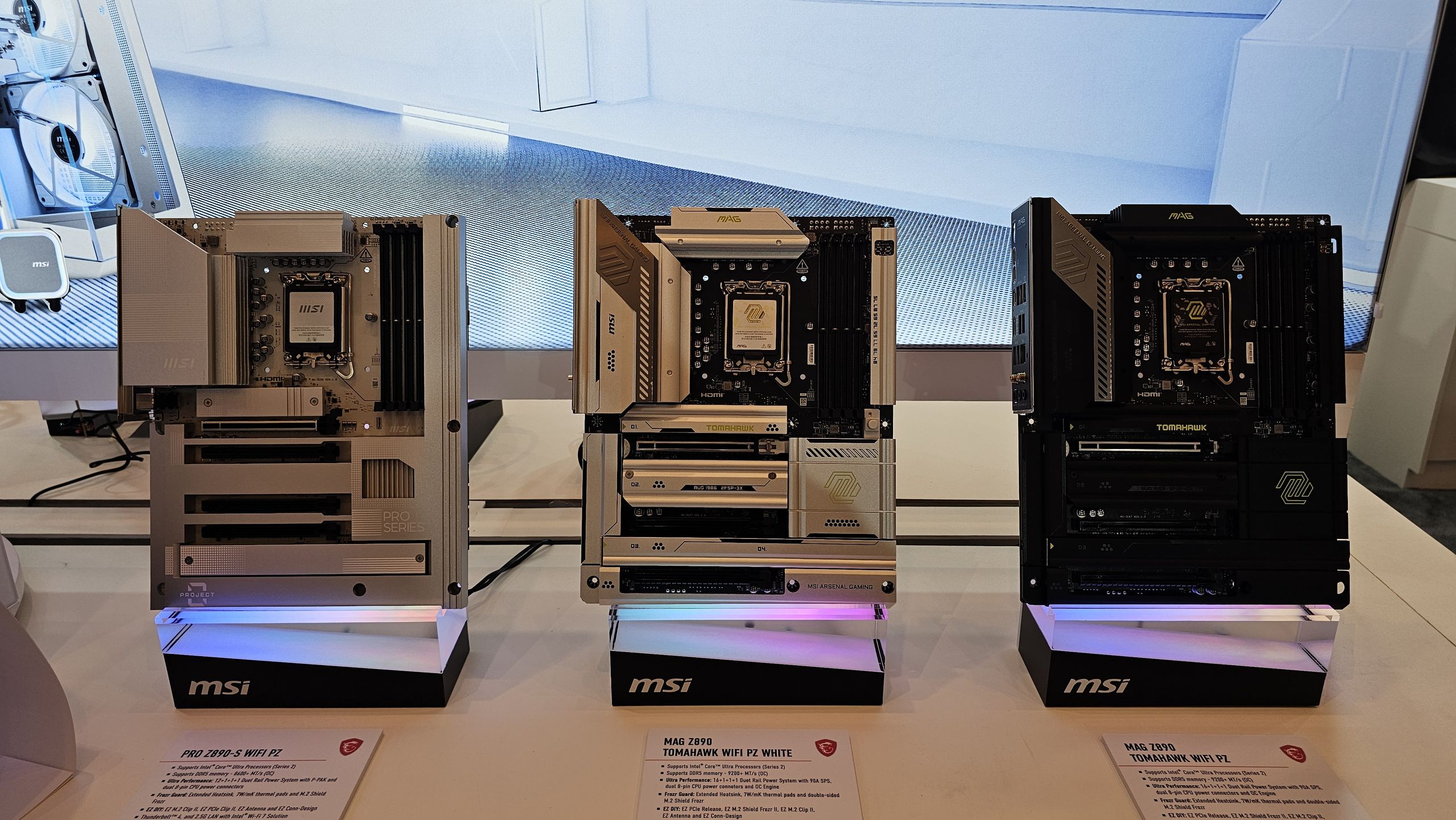
- Desktop Motherboard makers are reporting a drop in sales of boards in Q1, and are projecting drops between 22-37% YoY (overall 28%).

- Intel has produced more Arrow Lake-S chips than the market wants -- 270K Plus is down to $259 at Microcenter - and this is the full yield (24 core) ARL-S compute die.

- Arrow Lake-H also appears to be unavailable for corporate mobile mostly due to lack of RAM availability. (The OEMs are pushing Lunar Lake hard since each Lunar Lake chip already has RAM included, presumably bought at a lower price than current market).

- However, they *are* capacity constrained for Panther Lake on 18A, and Arrow Lake-U on Intel 3. This is based on what I've heard from a friend at a major corporation trying to buy PCs from major OEMs. Panther Lake appears to be 18A yield/ramp related with only limited availability in Q2, Arrow Lake-U's shortage appears to be Intel biasing wafers to Server.

..

(Source on mobile is "self" - via a friend who has been shopping around for Mobile Corporate PCs for a large corporation recently and working/quoting with 3 major OEMs)

Nikkei : Intel urges PC makers to use cutting-edge CPUs amid shortage

The supply constraints are creating a take-it-or-leave-it situation for PC makers, many of whom were reluctant to adopt the more powerful -- and more expensive -- CPUs, industry sources say.
"We recently placed an additional order for 100 Intel 7 CPUs. We only got 30, and 10 of them were built with 18A technology," one of the PC executives said. "We were told if we don't take the 18A CPUs, they would be given to other PC makers."
The executive added that his company is changing its designs due to supply constraints but said it will take at least three months to complete and verify new designs.
"Frankly speaking, PC makers designed a few models based on 18A last year mainly as a favor to Intel, as the chip is expensive and the market demand is relatively small because it is too premium," the executive said. "But now the situation is completely different. We have to do more 18A models, otherwise it will give CPUs to others."
Another manager at a PC maker told Nikkei Asia that the CPU shortage is now already worse than for memory chips. "We can lower the density and specification for memory capacity, but we can't ship a notebook or computer without a CPU chipset. That's a big problem," the manager said.
 
> "We recently placed an additional order for 100 Intel 7 CPUs. We only got 30, and 10 of them were built with 18A technology," one of the PC executives said. "We were told if we don't take the 18A CPUs, they would be given to other PC makers."The executive added that his company is changing its designs due to supply constraints but said it will take at least three months to complete and verify new designs.
So How did modern journalism become this bad? A company can file a lawsuit for these things
 
> "We recently placed an additional order for 100 Intel 7 CPUs. We only got 30, and 10 of them were built with 18A technology," one of the PC executives said. "We were told if we don't take the 18A CPUs, they would be given to other PC makers."The executive added that his company is changing its designs due to supply constraints but said it will take at least three months to complete and verify new designs.
So How did modern journalism become this bad? A company can file a lawsuit for these things
Which PC executive of which company would place an order for 100 CPUs? Which PC OEM worries about 100 of anything? Even Xeon W workstations, no less PC or laptop CPUs. This story sounds like BS.
 
Which PC executive of which company would place an order for 100 CPUs? Which PC OEM worries about 100 of anything? Even Xeon W workstations, no less PC or laptop CPUs. This story sounds like BS.
Especially given Intel's prices are per thousand units
 
IMO, Mr. Li‑Bu Tan must find a way to change Intel’s IDM business model. If he wants Intel to remain an IDM, then Intel’s future looks bleak.

Looking back, when IBM began licensing its semiconductor manufacturing technology to other industry peers, that was the prelude to the demise of IBM’s semiconductor manufacturing business. The licensing itself wasn’t the problem, rather, it signaled that IBM’s semiconductor technology could no longer be meaningfully used by IBM to expand its own product offerings, compete effectively in the market, or generate growing revenue and profits.

And now Intel is actively pursuing licensing deals for its mature and even leading‑edge manufacturing technologies. Does that sound familiar?

The situation of IBM’s semiconductor manufacturing division deteriorated year after year. Eventually, IBM was forced to hand over its semiconductor manufacturing division (along with $1.5 billion in cash) to GlobalFoundries.

Smart CEOs make changes while they still have options, not when they are forced to act under miserable circumstances.
I think you are very correct in your assessment of what intel is looking at. Going from Semi Leadership to foundry to licensing has been tried before. Unfortunately the math ends up the same.

The difference today is that we live in a very strange nationalistic world ..... "profitability doesnt matter" is a very common phrase these days.
 
IMO, Mr. Li‑Bu Tan must find a way to change Intel’s IDM business model. If he wants Intel to remain an IDM, then Intel’s future looks bleak.

Looking back, when IBM began licensing its semiconductor manufacturing technology to other industry peers, that was the prelude to the demise of IBM’s semiconductor manufacturing business. The licensing itself wasn’t the problem, rather, it signaled that IBM’s semiconductor technology could no longer be meaningfully used by IBM to expand its own product offerings, compete effectively in the market, or generate growing revenue and profits.

And now Intel is actively pursuing licensing deals for its mature and even leading‑edge manufacturing technologies. Does that sound familiar?

The situation of IBM’s semiconductor manufacturing division deteriorated year after year. Eventually, IBM was forced to hand over its semiconductor manufacturing division (along with $1.5 billion in cash) to GlobalFoundries.

Smart CEOs make changes while they still have options, not when they are forced to act under miserable circumstances.
Last i checked LBT Doesn't want to Separate foundry he has said that piblicly as well he would just cease new leading edge fabrication manufacturing and run the foundry with current tech.
 
But Intel’s Q1 2026 Client Computing Group (CCG) revenue is essentially flat compared to Q1 2025, and it has been declining since Q2 2025.

If the PC market is as hot as Intel describes, that strength is not reflected in CCG revenue. Intel attributed the weak results to capacity constraints at Intel Foundry. But there is another possibility: the PC market demand may not be as strong as Intel claims.


View attachment 4567
The client market is contracting AFAIK due to silly high DRAM pricing (and other components and tariffs also). While it's good that Intel has managed to keep volumes somewhat stable, being king of a declining market isn't an enviable place for a company to be.

I think we're in an "Intel is stretching the truth" scenario - they're not completely wrong, but their claim is at least very misleading/verifiably false:

- Desktop Motherboard makers are reporting a drop in sales of boards in Q1, and are projecting drops between 22-37% YoY (overall 28%).

- Intel has produced more Arrow Lake-S chips than the market wants -- 270K Plus is down to $259 at Microcenter - and this is the full yield (24 core) ARL-S compute die.

- Arrow Lake-H also appears to be unavailable for corporate mobile mostly due to lack of RAM availability. (The OEMs are pushing Lunar Lake hard since each Lunar Lake chip already has RAM included, presumably bought at a lower price than current market).

- However, they *are* capacity constrained for Panther Lake on 18A, and Arrow Lake-U on Intel 3. This is based on what I've heard from a friend at a major corporation trying to buy PCs from major OEMs. Panther Lake appears to be 18A yield/ramp related with only limited availability in Q2, Arrow Lake-U's shortage appears to be Intel biasing wafers to Server.

..


(Source on mobile is "self" - via a friend who has been shopping around for Mobile Corporate PCs for a large corporation recently and working/quoting with 3 major OEMs)
I have always been concerned about Intel's move to 18A. So many changes so quickly ..... and IFS hasn't really had a great track record of timely, event free releases.

I do wonder if this isn't an industry wide trend though (ie, last gen makes the bulk of shipments and current gen is only for premium markets)? AMD is coasting along on Zen 5 on N4P desktop/laptop and N3 for server. I suspect that these will constitute the bulk of shipments from AMD for some time to come.

Intel's biggest issue is that they are behind in DC and even next gen isn't looking like they will reclaim that market ..... at the current pace of change this could put Intel behind in DC clear into 2030. I'm not certain they can make a business case for their IFS without the gravy from DC.
IMO, Mr. Li‑Bu Tan must find a way to change Intel’s IDM business model. If he wants Intel to remain an IDM, then Intel’s future looks bleak.

Looking back, when IBM began licensing its semiconductor manufacturing technology to other industry peers, that was the prelude to the demise of IBM’s semiconductor manufacturing business. The licensing itself wasn’t the problem, rather, it signaled that IBM’s semiconductor technology could no longer be meaningfully used by IBM to expand its own product offerings, compete effectively in the market, or generate growing revenue and profits.

And now Intel is actively pursuing licensing deals for its mature and even leading‑edge manufacturing technologies. Does that sound familiar?

The situation of IBM’s semiconductor manufacturing division deteriorated year after year. Eventually, IBM was forced to hand over its semiconductor manufacturing division (along with $1.5 billion in cash) to GlobalFoundries.

Smart CEOs make changes while they still have options, not when they are forced to act under miserable circumstances.
I agree 100%. This is a big strategic issue. As I have said before, changing technology is relatively easy compared to changing company philosophy.
 
I think you are very correct in your assessment of what intel is looking at. Going from Semi Leadership to foundry to licensing has been tried before. Unfortunately the math ends up the same.

The difference today is that we live in a very strange nationalistic world ..... "profitability doesnt matter" is a very common phrase these days.
If Intel is to survive, this will be how it manages it IMO.... and I even somewhat agree with this. From a geopolitical standpoint, the US can't be completely and totally dependent on Taiwan. I am always stunned how little attention China's aggressive intentions for Taiwan gets. It's because the average person (and news outlet) haven't gamed out how badly this could go for the US. It's my opinion that an invasion of Taiwan could be an order of magnitude more impactful on the US economy that the current gas prices are. Perhaps I am reading this incorrectly.
 
I have always been concerned about Intel's move to 18A. So many changes so quickly ..... and IFS hasn't really had a great track record of timely, event free releases.

I do wonder if this isn't an industry wide trend though (ie, last gen makes the bulk of shipments and current gen is only for premium markets)? AMD is coasting along on Zen 5 on N4P desktop/laptop and N3 for server. I suspect that these will constitute the bulk of shipments from AMD for some time to come.

Intel's biggest issue is that they are behind in DC and even next gen isn't looking like they will reclaim that market ..... at the current pace of change this could put Intel behind in DC clear into 2030. I'm not certain they can make a business case for their IFS without the gravy from DC.

I share the same concern re: Intel and server competitiveness. FWIW - Zen 6 should be N2P based, and AMD may fairly quickly migrate from to mostly N2P next year:

Venice: N2P Server
Venice-Dense: N2P Cloud Server
Olympic Ridge: N2P Desktop
Gator Range: N2P High-End Laptop
Medusa Point 1: N2P+N3P for top SKUs, N3P for low end SKUs Mainstream Laptop

Source: VideoCardz.com
 
The client market is contracting AFAIK due to silly high DRAM pricing (and other components and tariffs also). While it's good that Intel has managed to keep volumes somewhat stable, being king of a declining market isn't an enviable place for a company to be.

Intel’s Client Computing Group revenue for Q1 2026 is $7.7 billion, compared with $7.6 billion in Q1 2025. It's essentially flat with very little YoY growth. This is very bad because, in the same quarter, AMD’s Client & Gaming Group reported $3.6 billion in revenue, up 23% YoY.

Why, under the same worldwide DRAM shortage, can AMD grow its client business by 23% YoY? AMD doesn’t even own a fab like Intel does. In Intel’s IDM worldview, AMD should have less ability to handle severe supply‑chain disruptions. Yet AMD increased its client business by 23%, compared with Intel’s 1%. How can that happen?

Intel is really stretching the truth, as @Xebec had mentioned.
 
If Intel is to survive, this will be how it manages it IMO.... and I even somewhat agree with this. From a geopolitical standpoint, the US can't be completely and totally dependent on Taiwan. I am always stunned how little attention China's aggressive intentions for Taiwan gets. It's because the average person (and news outlet) haven't gamed out how badly this could go for the US. It's my opinion that an invasion of Taiwan could be an order of magnitude more impactful on the US economy that the current gas prices are. Perhaps I am reading this incorrectly.
If taiwan is invaded and Taiwan does not reach an agreement with PRC, It will make ALL of the "conflicts" of the last 40 years look trivial. Having Intel manufacture semis will not change this. 80% of all tech goes through China or Taiwan at least once.

I think trade is good and should be complimentary. Not all countries are good at the same thing. But lets see how doing semis in every country does. it will be a fun econ 101 experiment
 
Intel’s Client Computing Group revenue for Q1 2026 is $7.7 billion, compared with $7.6 billion in Q1 2025. It's essentially flat with very little YoY growth. This is very bad because, in the same quarter, AMD’s Client & Gaming Group reported $3.6 billion in revenue, up 23% YoY.

Why, under the same worldwide DRAM shortage, can AMD grow its client business by 23% YoY? AMD doesn’t even own a fab like Intel does. In Intel’s IDM worldview, AMD should have less ability to handle severe supply chain disruptions. Intel is really stretching the truth, as @Xebec had mentioned.
foundry and outsourcing has less supply issues than internal manufacturing. and IDM is not able to respond faster than a highly capable foundry in actual practice. I can give tons of example and why this is true
 
Back
Top