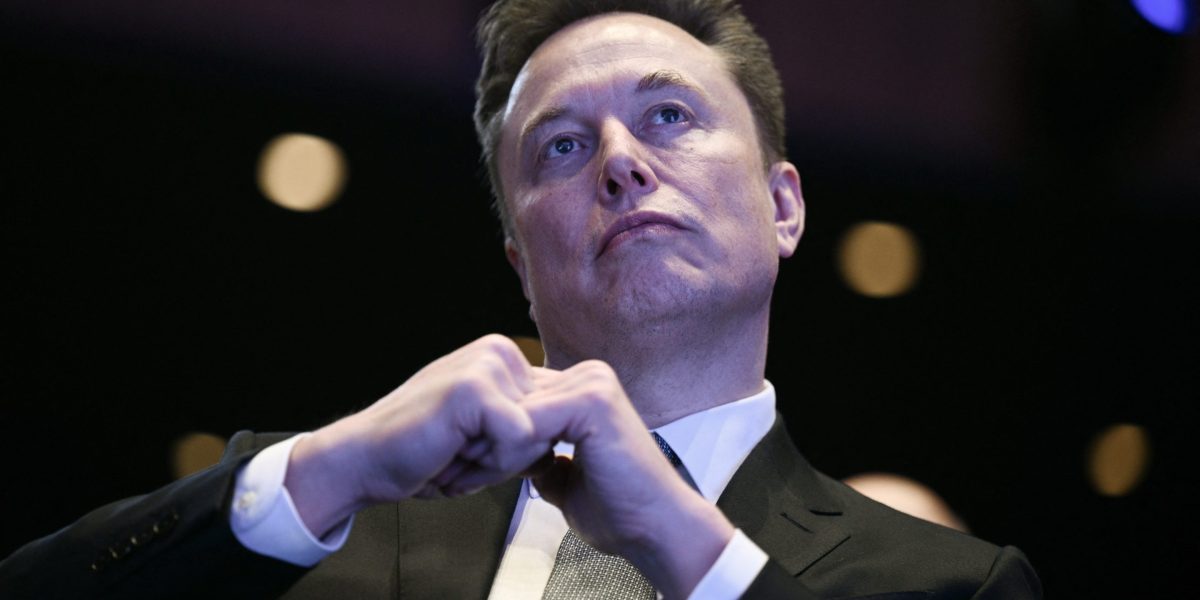

Elon Musk has scrapped traditional resumes and cover letters for engineers applying to work on Tesla’s next-generation AI chip, replacing them with a single demand: three bullet points describing the hardest technical problems a candidate has ever solved. The directive, aimed at staffing the Dojo3 supercomputer project, reflects Musk’s growing impatience with conventional hiring filters and his preference for proof of work over polished credentials. It also fits a pattern of blunt, bullet-point management that Musk has applied across both his private companies and his involvement with federal workforce oversight.
Three Bullets Replace the Resume Stack
The new hiring process for Tesla’s AI chip team strips away nearly every element of a standard job application. Instead of submitting a resume or cover letter, candidates are told to send three short descriptions of the toughest technical problems they have solved. That is the entire ask. No formatting guidelines, no education section, no list of previous employers. The instruction, posted publicly and directed at chip engineers, signals that Musk wants to see evidence of hands-on problem solving rather than career narratives shaped by recruiters or AI-powered resume builders.
The format is deliberately minimal, and that is the point. By compressing an application into three statements of technical achievement, Musk is filtering for a specific kind of candidate: someone who can identify, articulate, and rank the most difficult engineering challenges they have personally tackled. The approach assumes that the quality of those problems, and the clarity with which a person describes them, reveals more about ability than years of experience or a degree from a prestigious university. For chip design roles where the work is intensely specialized, this logic has a certain internal consistency, even if it breaks with how most of the semiconductor industry recruits talent.
Dojo3 and the Talent Race Behind It
The three-bullet hiring method is not a stunt disconnected from Tesla’s broader strategy. It is part of an aggressive campaign to build an in-house chip team for the Dojo3 supercomputer, which is intended to power Tesla’s ambitions in autonomous driving and AI training. Musk has said he is “deeply involved” in chip design meetings, a level of personal engagement that suggests the Dojo3 project ranks among his top priorities at Tesla. His direct participation in technical reviews means the people hired through this process may end up presenting their work to Musk himself, raising the stakes for both the company and the applicants.
Dojo3 represents Tesla’s bet that it can design custom silicon competitive with chips from Nvidia and other established players in AI training hardware. Recruiting experienced chip architects is one of the hardest talent challenges in the technology sector right now, with a small global pool of engineers who have taped out advanced processors and optimized them for data center-scale workloads. Musk’s unconventional application format may be partly a marketing play to stand out in that crowded recruiting environment. A viral hiring post that asks for three bullet points instead of a 10-page CV generates attention in engineering circles, and attention is the first step in a talent pipeline.
A Pattern of Bullet-Point Management
Musk’s preference for terse, high-pressure directives extends well beyond Tesla’s hiring page. In his role influencing federal workforce policy, Musk supported an approach in which government employees were told to respond to a single email explaining their recent work or risk being treated as if they had quit. According to reporting on that email, federal workers were instructed to outline what they did during the previous week, with nonresponse framed as a potential basis for job separation. That incident triggered reactions across multiple agencies and raised legal and labor concerns about whether failing to respond to a single message could be treated as a resignation.
The federal email episode drew sharp criticism from labor advocates and government employee unions, who argued that a solitary message with a tight deadline was an unreasonable basis for employment decisions in a system that traditionally relies on formal performance reviews and due process. Legal questions about whether nonresponse could constitute voluntary resignation remain unresolved in that context. Yet the underlying philosophy is consistent with how Musk operates at Tesla, SpaceX, and his other ventures. He treats bureaucratic process as friction that slows decision-making, and he repeatedly replaces it with blunt, binary tests. Whether the test is “list what you did last week” or “name the three hardest problems you solved,” the governing idea is the same: strip away everything except a direct demonstration of value.
What This Means for Chip Engineers
For the small community of engineers qualified to design AI training processors, Musk’s hiring experiment creates an unusual decision point. Applying takes almost no effort, which lowers the barrier to entry and may tempt candidates who would normally ignore a corporate job posting. But the lack of structure also means applicants have to make high-stakes choices about what to highlight: three problems that are too basic may get them filtered out, while three that are too esoteric may fail to communicate impact to a non-specialist reviewer. The process shifts the burden of translation (turning complex engineering work into a compelling narrative) squarely onto the candidate.
At the same time, the three-bullet filter could subtly reshape how engineers think about their own careers. To generate strong answers, candidates must inventory their past work, identify the moments that were genuinely difficult, and frame those moments in terms of measurable outcomes. That exercise favors people who have already been encouraged to document their achievements and quantify their contributions, which often correlates with having mentors, supportive managers, or prior exposure to performance-driven environments. Engineers from smaller firms, academic labs, or countries where self-promotion is less common may find it harder to convert their experience into the kind of sharp, Musk-ready bullets that this process seems to reward.
Will the Model Spread Beyond Tesla?
Whether Musk’s three-bullet experiment becomes a template for other companies will depend on how well it works in practice, and on how much of Tesla’s success can realistically be attributed to hiring filters rather than brand power. In theory, any employer could ask candidates for a short list of their toughest problems instead of a resume. In practice, few organizations have the name recognition or applicant volume that allows them to discard conventional screening entirely. Most still rely on structured applications to satisfy compliance requirements, reduce bias, and give hiring managers comparable data across candidates.
Still, the idea of shrinking applications down to a small number of high-signal prompts is likely to resonate with leaders who are frustrated by bloated hiring pipelines and generic resumes. Musk’s latest directive offers a distilled version of a broader trend toward skills-first hiring, portfolio reviews, and work samples in technical roles. For chip engineers considering Dojo3, the message is clear: the path into Tesla’s AI hardware group runs not through a polished CV, but through three carefully chosen stories about the hardest problems they have ever solved, and how they solved them.

Elon Musk kills résumés for chip hires and wants these 3 bullet points - The Daily Overview
Elon Musk has scrapped traditional resumes and cover letters for engineers applying to work on Tesla’s next-generation AI chip, replacing them with a single demand: three bullet points describing the hardest technical problems a candidate has ever solved. The directive, aimed at staffing the...
 thedailyoverview.com