






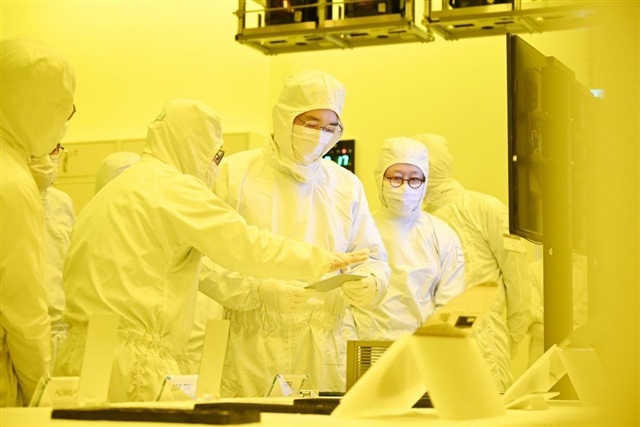
Credit: Samsung
Samsung Electronics' labor union has voted overwhelmingly to initiate dispute proceedings following a breakdown in wage negotiations, raising concerns over potential disruptions to the supply of HBM4 memory for Nvidia's next-generation AI accelerator...
Samsung Electronics' union has voted overwhelmingly, with 93.1% in favor, to authorize a general strike, planning an 18-day walkout in late May and escalating protests to near the residence of Chairman Lee Jae-yong. The core labor dispute centers on perceived unfair profit distribution during the AI chip boom. The potential strike comes at a critical time as Samsung deepens cooperation with NVIDIA and AMD on key AI chips like HBM4 and targets its core production base, the Pyeongtaek Campus, threatening severe disruption to the global semiconductor supply chain. Analysts estimate Samsung could face losses up to 9 trillion won (~$6 billion) if the strike proceeds, exacerbating the already severe global memory chip shortage and price hikes, further driving up consumer electronics costs. Despite widespread market concern, most observers believe there is still room for a negotiated settlement.
At a critical juncture of surging global artificial intelligence (AI) chip demand and the memory market entering a "super cycle," semiconductor giant Samsung Electronics is facing an unprecedented internal crisis. Its union has voted by an overwhelming majority to authorize a general strike, directing its protest squarely at the company's top management—a move that could severely impact the global semiconductor supply chain, especially the supply of highly sought-after AI chips.
According to reports from Yonhap News Agency and others, the "Joint Struggle Headquarters," composed of multiple Samsung Electronics unions, announced on March 18 that the strike vote, conducted since the 9th of this month, received a 93.1% approval rate. The total membership of the three participating unions is approximately 90,000, with over 66,000 participating in the vote—a turnout of 73.5%—resulting in 61,456 votes in favor. The union plans to commence an 18-day general strike in late May. Following the news, Samsung Electronics' stock price fell by as much as 4% on March 19.
More notably, the National Samsung Electronics Union announced plans to hold a press conference next Monday near the Seoul residence of Samsung Electronics Chairman Lee Jae-yong. Moving the protest venue from factory sites to an executive's private residence is seen by the industry as the union's "maximum pressure" tactic against Samsung's top management before launching a full-scale strike.
Core of the Labor Dispute: Unfair Profit Distribution
The heart of this labor conflict lies in wages and benefits, particularly the distribution method of performance bonuses. The union's core demands include: transparency in the performance bonus calculation method, abolishing the cap on the Operational Profit Incentive (OPI), and a 7% increase in base salary.
The intensification of the conflict is set against the backdrop of a booming memory market. Samsung Electronics posted record results for Q4 2025, with consolidated sales of approximately 93 trillion won, consolidated operating profit of about 20 trillion won, and net profit of around 19 trillion won. The union argues that while the semiconductor industry is experiencing a boom, these profits are not being fairly distributed to employees. Samsung's competitor, SK Hynix, previously removed the 50% cap on annual bonuses and pledged to allocate 10% of operating profit for employee dividends, further fueling a sense of relative deprivation among Samsung workers.
Prior to the vote results, Samsung management proposed measures including a 6.2% wage increase and a grant of 20 company shares, but these were rejected by the union. The union stated that against the backdrop of surging AI chip demand, these proposals failed to address the core issue of distribution fairness.
Strike Timeline and Potential Impact Points
According to the union's announced follow-up action plan, April 23 will be the first critical pre-strike milestone. On that day, the union plans to hold a large-scale rally at Samsung's core semiconductor production base—the Pyeongtaek Campus. The union chairman previously warned that up to half of the production at the Pyeongtaek plant could be affected.
If negotiations remain stalled in April, the union's preset window for the general strike is from May 21 to June 7—a span of 18 days. If initiated, this would be only the second strike in Samsung Electronics' history since its founding in 1969, and the first since July 2024.
Analysts hold differing views on the potential impact of a strike. One industry analyst told Yicai that past strikes did not affect the release of Samsung's memory capacity because semiconductor memory production is highly automated, with more personnel involved in back-end packaging/testing and logistics. This analyst expects the current event to have little impact on Samsung's memory production.
However, more analysis suggests this strike is different. It precisely coincides with the explosive growth of the AI industry and targets Samsung's lifeline—the Pyeongtaek semiconductor complex. Union members include a large number of precision engineering personnel responsible for production line maintenance, equipment inspection, and yield management. Semiconductor factories are precision systems that rely heavily on continuous operation. If a production line shuts down due to a manpower shortage, even for just a few hours, the subsequent recalibration and yield recovery after restarting typically takes months. Such long-term production disruption poses a huge challenge for advanced processes currently in the ramp-up phase.
Endangering Key Collaborations and Global Supply
This year is crucial for Samsung's collaboration with NVIDIA. Last month, Samsung announced its HBM4 memory had officially entered mass production and delivery, and had begun supplying customers. A strike causing delivery delays would directly impact the construction progress of global AI data centers.
On the same day the strike news was announced, Samsung Electronics and U.S.-based Advanced Micro Devices (AMD) signed a Memorandum of Understanding (MOU) at the Pyeongtaek factory aimed at expanding cooperation in next-generation AI memory chips and computing technology. Under the agreement, Samsung was designated as the preferred supplier for the sixth-generation High Bandwidth Memory (HBM4) used in AMD's AI accelerators. AMD Chair and CEO Lisa Su attended the signing ceremony and had dinner with Lee Jae-yong to discuss "AI chip" cooperation. The strike risk undoubtedly casts a shadow over these critical collaborations.
Furthermore, as Samsung holds about 40% of the global DRAM market share, an 18-day strike could cause short-term fluctuations in global DRAM prices. The industry estimates that if a general strike is launched, Samsung Electronics could face comprehensive losses as high as 5 trillion to 9 trillion won (~$3.3 billion to ~$6 billion), including wafer scrap from production line shutdowns, penalties for delayed deliveries, and maintenance costs for key equipment due to downtime.
Exacerbating Global "Memory Shortage" and Cost Pressure
This Samsung union strike incident threatens to add fuel to the fire of an already tight global memory market.
Market research firm TrendForce anticipates that in Q1 2026, AI and data center demand will continue to exacerbate the global imbalance between memory supply and demand. It forecasts overall conventional DRAM contract prices to rise by 90%–95% quarter-over-quarter, and NAND Flash contract prices to increase by 55%–60% quarter-over-quarter, with the possibility of further upward revisions.
Research from another firm, Sigmaintell, also shows that in Q1 2026, strong AI server demand, coupled with heightened uncertainty in consumer demand, is leading memory manufacturers to prioritize capacity allocation towards high-margin products like HBM and DDR5. This results in a contraction in the supply scale of DRAM and NAND for consumer electronics. Memory price increases in Q1 2026 exceeded expectations, with consumer electronics memory prices rising over 60% quarter-over-quarter and NAND prices surging over 70% quarter-over-quarter.
A representative from a television company, speaking about the impact of the Samsung union strike on March 19, said: "(Looking at spot prices), DDR has increased 10-fold from January 2025 to now. NAND prices in January this year directly doubled compared to December 2025. We expect NAND prices to continue rising significantly in Q2, having surged 3-5 times in the short term." They anticipate the situation of memory shortages and price hikes will become more severe, leading to continued price increases for consumer electronics end-products.
Internal Transmission and External Competitive Pressure
The strike risk not only affects Samsung's semiconductor business but also impacts its other internal divisions. As Samsung's internal settlements are conducted at market prices, while the semiconductor business enjoys hefty profits due to soaring memory prices, other sibling divisions are finding times increasingly tough. Following the Visual Display (VD) and Digital Appliances (DA) divisions, the Mobile eXperience (MX) division has also entered an "emergency state," with its operating profit margin estimated to potentially drop from last year's 10%–11% to just 2%–3% this year.
From an external competition perspective, if Samsung "falls behind" due to a strike, major downstream customers are likely to reassess supply chain security and potentially shift orders to competitors for risk mitigation. This could simultaneously further drive up costs for consumer electronics end-products like smartphones and servers. A TrendForce report shows that the global foundry industry's output value is expected to grow 24.8% year-over-year in 2026, with TSMC's output value projected to see the largest increase of 32%. If Samsung is affected by this strike event, it could potentially further boost the performance growth of its competitors this year.
Outlook: Negotiation Remains the Main Theme
Despite the high strike risk, most analysts believe there is still room for compromise. An analyst from a research institution predicts that, for now, the Samsung Electronics union's planned strike primarily aims to increase the wage hike, and with Samsung Electronics' Q1 profits looking good, there is likely further room for coordination between the two sides.
"We basically believe Samsung Electronics will ultimately resolve the union dispute without affecting production," the aforementioned industry analyst stated. However, in the current climate of white-hot AI chip competition and a highly sensitive global supply chain, how Samsung Electronics' management balances internal labor relations with external market competition pressure will be a key test of its leadership. The ripple effects of this labor dispute, which began at South Korea's Pyeongtaek Campus, are spreading to every corner of the globe that relies on high-end chips.
