
World-Renowned AI Chip Design Pioneers Anna Goldie and Azalia Mirhoseini Secure $35M Seed Round Led by Sequoia Capital at $750M Final Valuation
PALO ALTO, Calif., Dec. 2, 2025 /PRNewswire/ -- Ricursive Intelligence, a frontier AI lab with the mission to transform semiconductor design, launched today and announced its $35 million seed round led by Sequoia Capital at a $750 million final valuation. Founded by Dr. Anna Goldie and Dr. Azalia Mirhoseini, who pioneered AI for chip design with their seminal AlphaChip work, Ricursive Intelligence aims to close the recursive self-improvement loop between AI and the chips that fuel it.

Ricursive Intelligence is building a next-generation platform that uses AI to accelerate and optimize every stage of the semiconductor design process, creating a recursive feedback loop: AI models design the next generation of chips and those chips, in turn, train more advanced AI models. This tight, continuous feedback accelerates both hardware and AI capabilities, creating the compute foundation that future frontier systems and artificial superintelligence will require.
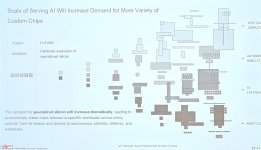
"Chips are the fuel for progress in AI, and the multi-year chip design process is holding back the field," said Dr. Anna Goldie, Founder and CEO. "At Ricursive Intelligence, we're using AI to revolutionize chip design, developing superior hardware in a fraction of the time. By closing the loop between AI and hardware, we can accelerate progress toward artificial superintelligence and enable a Cambrian explosion of custom silicon."
"AI's biggest breakthroughs have emerged through scale, made possible by advances in chip design," said Dr. Azalia Mirhoseini, Founder and CTO. "We're using AI to accelerate AI, creating a feedback loop where our models design the next generation of AI chips, which in turn enables more capable AI models. This recursive improvement cycle will create the hardware needed to support increasingly capable AI systems, ultimately paving the way for the silicon substrate that superintelligence will require."
Sequoia's investment represents strong conviction in Ricursive Intelligence's founders, technical differentiation, and market potential to accelerate the semiconductor landscape. "Ricursive Intelligence is positioned to be the leading frontier lab applying AI to transform the chip design process," said Stephanie Zhan, Partner at Sequoia Capital. "As the industry pushes toward AI transforming the chip design process, we will not only accelerate timelines to design new chips, but even more importantly, we will also unlock new creative chip designs that will massively accelerate the field of AI in its entirety."
Ricursive Intelligence will leverage the funding to scale its AI research, expand its compute infrastructure, and bring its platform to early enterprise. It will hyperscale partners to deliver AI-optimized chip design at unprecedented speed and efficiency. Ricursive Intelligence is uniquely positioned to break the hardware bottleneck that constrains AI progress and to forge the path toward artificial superintelligence.
About Ricursive Intelligence
Ricursive Intelligence is a frontier AI lab building the compute foundation for the next generation of AI. Founded by Dr. Anna Goldie and Dr. Azalia Mirhoseini, the scientists who pioneered AI for chip design and co-created AlphaChip, Ricursive Intelligences applies AI and distributed computing to drastically compress semiconductor development timelines. The company's platform creates a recursive self-improvement cycle where AI designs silicon that powers the next generation of AI. By removing the hardware bottleneck that has held back AI progress, Ricursive Intelligence is forging a path toward artificial superintelligence and unlocking a Cambrian explosion of custom chips. Visit ricursive.com to learn more.
About Sequoia
Sequoia helps daring founders build legendary companies from idea to IPO and beyond. We aim to be the first true believers in tomorrow's most valuable and enduring businesses. We partner with a few outliers each year and go all-in, providing them with the hands-on help required at every stage of the company building journey. Our expertise comes from 50 years of working with legendary founders like Steve Jobs, Larry Page, Jan Koum, Jensen Huang, Brian Chesky, Jack Dorsey, Eric Yuan, Lynn Jurich, Patrick Collison, Sebastian Siemiatkowski, and Christina Cacioppo. In aggregate, Sequoia-backed companies account for more than 30% of NASDAQ's total value. Since our inception, the vast majority of the money we invest has been on behalf of nonprofits and schools like the Ford Foundation, Mayo Clinic and MIT, which means most of the returns we generate benefit these great causes.
PALO ALTO, Calif., Dec. 2, 2025 /PRNewswire/ -- Ricursive Intelligence, a frontier AI lab with the mission to transform semiconductor design, launched today and announced its $35 million seed round led by Sequoia Capital at a $750 million final valuation. Founded by Dr. Anna Goldie and Dr. Azalia Mirhoseini, who pioneered AI for chip design with their seminal AlphaChip work, Ricursive Intelligence aims to close the recursive self-improvement loop between AI and the chips that fuel it.
Ricursive Intelligence is building a next-generation platform that uses AI to accelerate and optimize every stage of the semiconductor design process, creating a recursive feedback loop: AI models design the next generation of chips and those chips, in turn, train more advanced AI models. This tight, continuous feedback accelerates both hardware and AI capabilities, creating the compute foundation that future frontier systems and artificial superintelligence will require.
"Chips are the fuel for progress in AI, and the multi-year chip design process is holding back the field," said Dr. Anna Goldie, Founder and CEO. "At Ricursive Intelligence, we're using AI to revolutionize chip design, developing superior hardware in a fraction of the time. By closing the loop between AI and hardware, we can accelerate progress toward artificial superintelligence and enable a Cambrian explosion of custom silicon."
"AI's biggest breakthroughs have emerged through scale, made possible by advances in chip design," said Dr. Azalia Mirhoseini, Founder and CTO. "We're using AI to accelerate AI, creating a feedback loop where our models design the next generation of AI chips, which in turn enables more capable AI models. This recursive improvement cycle will create the hardware needed to support increasingly capable AI systems, ultimately paving the way for the silicon substrate that superintelligence will require."
Sequoia's investment represents strong conviction in Ricursive Intelligence's founders, technical differentiation, and market potential to accelerate the semiconductor landscape. "Ricursive Intelligence is positioned to be the leading frontier lab applying AI to transform the chip design process," said Stephanie Zhan, Partner at Sequoia Capital. "As the industry pushes toward AI transforming the chip design process, we will not only accelerate timelines to design new chips, but even more importantly, we will also unlock new creative chip designs that will massively accelerate the field of AI in its entirety."
Ricursive Intelligence will leverage the funding to scale its AI research, expand its compute infrastructure, and bring its platform to early enterprise. It will hyperscale partners to deliver AI-optimized chip design at unprecedented speed and efficiency. Ricursive Intelligence is uniquely positioned to break the hardware bottleneck that constrains AI progress and to forge the path toward artificial superintelligence.
About Ricursive Intelligence
Ricursive Intelligence is a frontier AI lab building the compute foundation for the next generation of AI. Founded by Dr. Anna Goldie and Dr. Azalia Mirhoseini, the scientists who pioneered AI for chip design and co-created AlphaChip, Ricursive Intelligences applies AI and distributed computing to drastically compress semiconductor development timelines. The company's platform creates a recursive self-improvement cycle where AI designs silicon that powers the next generation of AI. By removing the hardware bottleneck that has held back AI progress, Ricursive Intelligence is forging a path toward artificial superintelligence and unlocking a Cambrian explosion of custom chips. Visit ricursive.com to learn more.
About Sequoia
Sequoia helps daring founders build legendary companies from idea to IPO and beyond. We aim to be the first true believers in tomorrow's most valuable and enduring businesses. We partner with a few outliers each year and go all-in, providing them with the hands-on help required at every stage of the company building journey. Our expertise comes from 50 years of working with legendary founders like Steve Jobs, Larry Page, Jan Koum, Jensen Huang, Brian Chesky, Jack Dorsey, Eric Yuan, Lynn Jurich, Patrick Collison, Sebastian Siemiatkowski, and Christina Cacioppo. In aggregate, Sequoia-backed companies account for more than 30% of NASDAQ's total value. Since our inception, the vast majority of the money we invest has been on behalf of nonprofits and schools like the Ford Foundation, Mayo Clinic and MIT, which means most of the returns we generate benefit these great causes.
 ) tells about the merits of this approach: