






Semiconductors are the most consequential product of the modern world. If Intel can start making chips as advanced as the Taiwanese do, it could help secure America’s 21st-century economy.
A year ago Intel was left for dead, its stock at a 16-year low. Today, it’s the hottest stock on Wall Street, gaining almost 500 percent over the last year, leading to an all-time peak valuation in its 58-year history—surpassing $600 billion as it secures partnerships with a Who’s Who of tech titans led by Nvidia, Tesla, and Apple.
But nice as it is for shareholders, the stock’s rise isn’t the real story. Intel’s comeback, if it sticks, could be hugely important for geopolitics and for securing America’s economy in the 21st century. Intel is the only American company remotely capable of competing with Taiwan Semiconductor Manufacturing Company (TSMC), its much larger rival in Taiwan. And among the reasons the stock is climbing is that the AI boom has reached a new stage, one where central processing units (CPUs)—the semiconductors that comprise the computer’s “brain”—are suddenly critically important again. Intel has long been a dominant CPU manufacturer.
The AI boom had primarily been built on a different kind of semiconductor known as graphics processing units (GPUs), the graphics chips pioneered by Nvidia. GPUs split AI workloads into thousands of small tasks and work on them all at once. CPUs, built to do tasks consecutively, were considered increasingly irrelevant. “Somewhere along the way, people thought CPUs were dead,” Rene Haas, CEO of UK chip designer Arm, said back in March.
But as AI has become more sophisticated, CPUs have started to matter again, especially in data centers, where they essentially orchestrate the workflow. According to Haas, the CPU market share is likely to jump fourfold.
Right now, seven of America’s eight most valuable companies—Nvidia, Microsoft, Apple, Alphabet, Amazon, Meta, and Broadcom—rely exclusively on TSMC for their most cutting-edge chips. Tesla, the eighth, splits production between TSMC and Samsung, which is a distant number two to the Taiwan behemoth.
Semiconductors are the most consequential product for the modern world. If China were to make good on its threat to blockade or invade Taiwan, and the U.S. lost access to TSMC’s chips, the American companies would suffer catastrophic consequences. As Treasury Secretary Scott Bessent has warned: “If that island were blockaded, that capacity were destroyed, it would be an economic apocalypse.”
To try to prevent such a disaster, the U.S. government has convinced TSMC and Samsung to build manufacturing facilities in America. But the benefits of those investments are limited. Taipei is all too aware that its prowess in semiconductors is a key reason why America would come to its aid in the event of a Chinese invasion, so it has prohibited TSMC from manufacturing its most cutting-edge chips anywhere but Taiwan. The two factories TSMC has built in Arizona—and the four additional ones it plans to build—manufacture chips for older Apple products, but the newest Apple products that require the most advanced chip must still get them from Taiwan.

Intel is among the most storied companies in Silicon Valley. Its founders played a critical role inventing integrated circuits, and then set a cadence for technological upgrades that birthed the personal computer and made it a household item.
But over the past two decades, Intel missed three enormous opportunities: It was late to the shift to smartphones (even declining to make chips for the first iPhone); it missed the turn to extreme ultraviolet lithography (the technique required for carving the tiniest circuits onto silicon); and it failed to prioritize GPUs and compete with Nvidia. Indeed, back in 2005 it could have bought Nvidia for $20 billion; today, Nvidia is the most valuable company in the world, worth $5.5 trillion.
On top of this, Intel stuck to its longtime strategy of both designing and manufacturing the chips it sold. But Nvidia, Apple, Tesla, and Google went a different route, designing their own chips but outsourcing the manufacturing to TSMC. By 2021, after years of struggling to roll out next-generation chip technology, the company called on Pat Gelsinger, a former Intel veteran of 30 years, to lead the recovery.
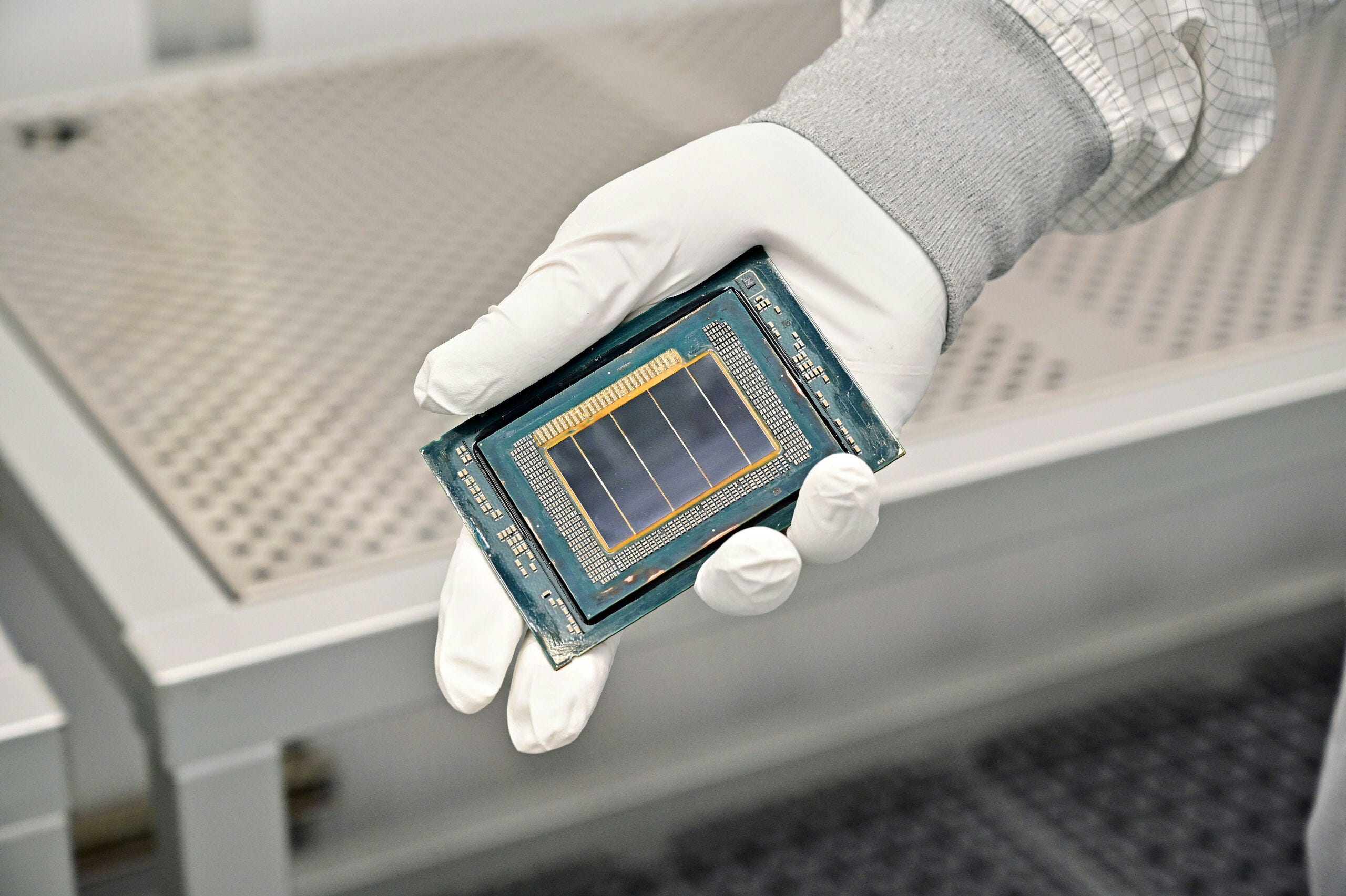
A Clearwater Forest chip, a data center processor, inside the clean room of Intel’s new Fab 52 in Chandler, Arizona, in September 2025. (Intel Corporation)
Gelsinger decided that Intel needed to adopt the TSMC model—manufacturing chips designed by others. But doing so required an enormous outlay and a very long lead time. As the stock declined in the absence of quick gains, the board grew impatient. By late 2024, the very survival of the once-great company was in question. When Intel forced Gelsinger out that December, SemiAnalysis, a respected team of analysts, concluded: “Intel’s board is incompetent and its horrible decisions over the decades are going to push it toward death.”
In March 2025, however, Lip-Bu Tan, an industry veteran, was named CEO. He’d been a board member during Gelsinger’s tenure, but left after growing frustrated by a slow pace of change and the company’s rigid culture. Tan announced sweeping plans to cut 25,000 jobs—nearly a quarter of Intel’s employees—and began reshaping the executive team in a push toward AI. “After 40 years you get lazy,” said Jay Goldberg, senior chip analyst at Seaport Research. “Lip-Bu has done a lot to focus everyone’s minds on working hard again.
Five months into Tan’s term, a potential disaster hit when President Trump publicly called for his resignation, citing allegations of ties to China and calling him “highly conflicted” on social media.
Tan’s response proved to be a masterstroke. He visited the White House, where he didn’t merely placate the president—he secured an unprecedented investment, with Washington taking a 9.9 percent stake in the company. Trump didn’t actually infuse the company with much fresh cash—most of the money had already been awarded back in 2022 with the passage of the CHIPS Act—but the move signaled that the government understood Intel’s importance. “That meeting was a turning point,” says Abhijit Mahindroo, co-lead of McKinsey’s chips practice in the Americas. “It changed the sentiment and the narrative.”
The big U.S. tech companies also got the message. Within four weeks, Nvidia made a $5 billion investment in Intel. Last month, Elon Musk said Tesla and SpaceX would rely on Intel for its enormous project to design, fabricate, and package next-generation chips, Terafab. And this month, The Wall Street Journal reported that Apple had reached an agreement to rely on Intel as a contract manufacturer of Apple-designed semiconductors—a first for the iPhone maker.
With both the government and American companies gravitating toward Intel, its momentum has been further boosted by the new demand for CPUs. A year ago CPUs were the dumb pipes of the AI buildout; GPUs did the real work. But in the move to agentic AI, CPUs are back in the game to orchestrate tasks performed autonomously.
Despite these tailwinds, Intel’s ultimate success is hardly guaranteed. The company’s future still depends on its ability to persuade chip designers to use it instead of going to TSMC exclusively to manufacture those chips. And at the moment, its effort to manufacture chips designed by others remains embryonic. Intel Foundry, its semiconductor manufacturing division, clocked $5.4 billion of revenue last quarter. But only a tiny fraction, $174 million, was generated by external customers.
It must also prove that its most up-to-date chip process—known as 18A—can work in huge volumes and at healthy yields. The likes of Apple, Nvidia, and Broadcom are experimenting with it, but none have been willing to make big bets on Intel just yet. And the schedule for chips is relentless: By 2028, Intel must progress to the next-generation process, known as 14A.
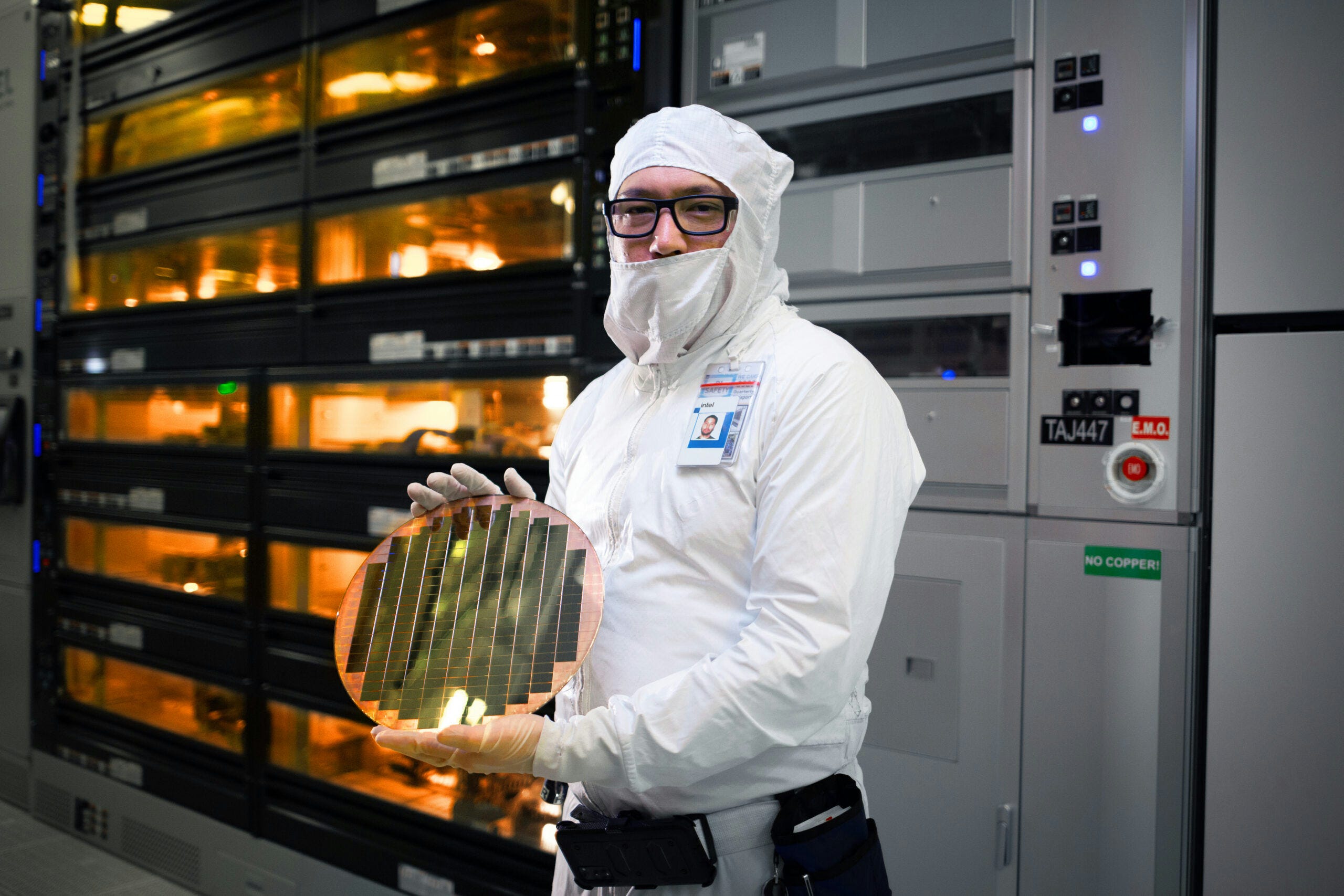
An Intel factory employee holds a wafer with 3D stacked Foveros technology at an Intel fab in Hillsboro, Oregon, in December 2023. (Intel Corporation)
It’s strange for a company worth $600 billion to have such a binary future. If Intel can get through the next few years and deploy 14A at scale, it could give TSMC a run for its money. That will have huge consequences not just for Intel shareholders and the big tech companies but for America’s role in the world. If Intel fails, the whole company could verge toward collapse. Intel would be back to where it was before Tan took over, only having burned through more cash and investor patience. TSMC’s status as an existential choke point would only deepen.
China, of course, is also working hard to increase its self-sufficiency in chips. If it succeeds and Intel fails, then the future of Taiwan—and America’s access to the best chips—could be in jeopardy. As things stand right now, if China were to cut off Taiwan’s chip supply, U.S. economic output would plunge by 11 percent, according to a 2022 report commissioned by the Semiconductor Industry Association. But China’s output would fall by 16 percent. That’s a solid reason for Chinese president Xi Jinping to avoid war.
That calculus changes dramatically, though, if China gets to the point where it no longer needs to import chips from elsewhere. Intel, in that scenario, would abruptly become America’s most important company. Whether Lip-Bu Tan can deliver matters a lot for shareholders. It matters even more for America.
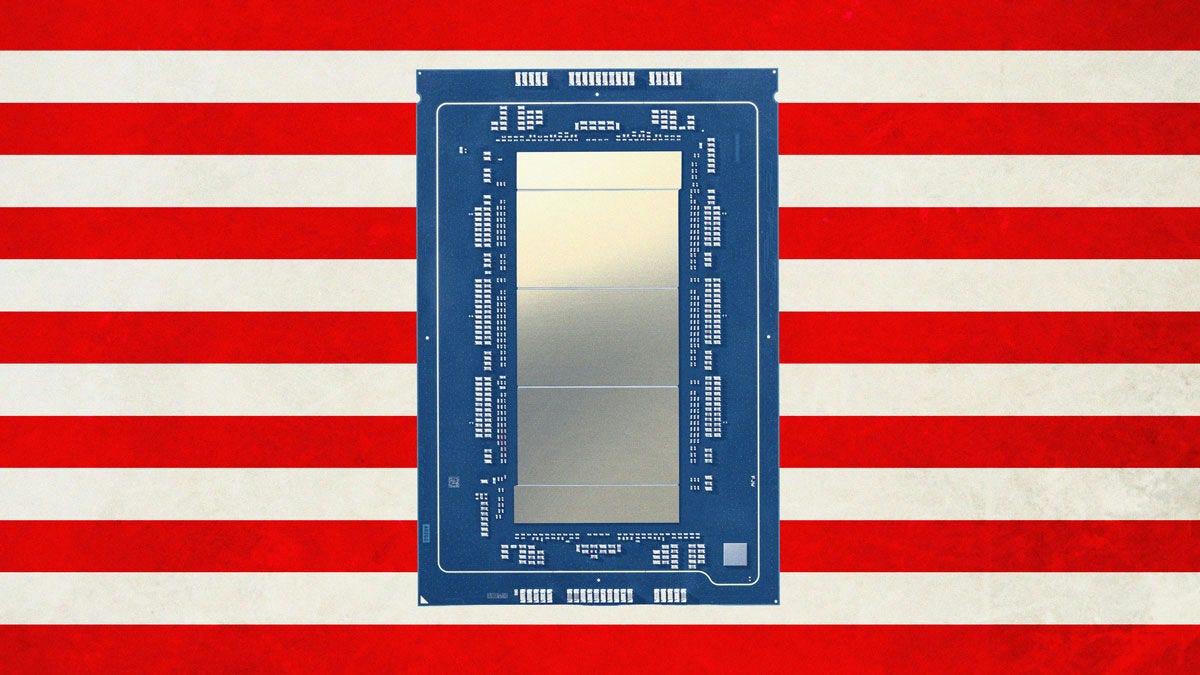
Can Intel Save America?
Semiconductors are the most consequential product of the modern world. If Intel can start making chips as advanced as the Taiwanese do, it could help secure America’s 21st-century economy, writes Patrick McGee.
 www.thefp.com